Article
Top 10 Best Stock Brokers for Online Trading in 2026
Choose the right stock broker for your investing needs. Our experts evaluated platforms, fees, tools, and service to identify the best online brokers for every type of investor.

Choosing the right stock broker can dramatically impact your investment success. The best online brokers combine low costs, powerful tools, extensive research, and reliable execution—whether you’re a beginner investing your first dollar or an active trader managing a substantial portfolio.
Our team evaluated platforms, tested tools, analyzed costs, and compared features across the leading online brokers. Here are the 10 best stock brokers for 2026.
Quick Comparison
| Broker | Best For | Stock Fee | Options Fee | Rating |
|---|---|---|---|---|
| 1. Fidelity Investments | Best Overall Stock Broker | $0 | $0.65/contract | ★5/5 |
| 2. Charles Schwab | Best for Comprehensive Services | $0 | $0.65/contract | ★4.9/5 |
| 3. Interactive Brokers | Best for Advanced Traders | $0 Lite / $0.0005-$0.0035 Pro | $0.65 Lite / $0.15-$0.65 Pro | ★4.8/5 |
| 4. E*TRADE | Best for Options Traders | $0 | $0.65 ($0.50 for 30+ trades/qtr) | ★4.7/5 |
| 5. Robinhood | Best for Simplicity | $0 | $0 | ★4.5/5 |
| 6. Webull | Best for Technical Analysis | $0 | $0 | ★4.6/5 |
| 7. Merrill Edge | Best for Bank of America Clients | $0 | $0.65/contract | ★4.5/5 |
| 8. Vanguard | Best for Buy-and-Hold Investors | $0 | $1/contract | ★4.4/5 |
| 9. Ally Invest | Best for Low Options Fees | $0 | $0.50/contract | ★4.4/5 |
| 10. tastytrade | Best for Options Specialists | $0 | $1 to open, $0 to close | ★4.3/5 |
Our Top Picks in Detail

Fidelity Investments
Fidelity earned a perfect 5 out of 5 stars and took home the Best Overall Stock Broker Award. With zero commissions, an extensive fund lineup, institutional-grade research, and top-tier customer service, Fidelity delivers everything from beginner-friendly simplicity to professional-grade tools.
Pros
- ✓Perfect 5-star overall rating
- ✓Exceptional research and analysis tools
- ✓3,300+ no-transaction-fee mutual funds
- ✓Fractional shares from $1
- ✓Outstanding customer service
Cons
- ✗Active Trader Pro desktop only
- ✗Options still cost $0.65 per contract
- ✗Some advanced features have learning curve

Charles Schwab
Charles Schwab earned the #1 broker ranking with over 50 years of experience and innovation. The TD Ameritrade acquisition brought the renowned thinkorswim platform to Schwab clients, creating an unbeatable combination of beginner accessibility and advanced trading capabilities.
Pros
- ✓#1 broker in industry testing
- ✓Legendary thinkorswim platform from TD merger
- ✓Thousands of no-transaction-fee funds
- ✓Branch locations nationwide
- ✓24/7 customer support
Cons
- ✗thinkorswim can overwhelm new users
- ✗Platform features spread across tools
- ✗Options fees standard at $0.65

Interactive Brokers
Interactive Brokers is the professional's choice, offering access to over 150 global markets with institutional-quality tools and execution. IBKR Lite provides commission-free U.S. trading, while IBKR Pro delivers advanced features, incredibly low costs, and unmatched international access.
Pros
- ✓Access to 150+ global markets
- ✓Institutional-grade tools and execution
- ✓Industry-lowest margin rates
- ✓IBKR Lite for commission-free trading
- ✓Best-in-class order routing
Cons
- ✗Complex interface for beginners
- ✗Pro tier has intricate fee structure
- ✗Mutual fund selection limited

E*TRADE
E*TRADE deserves consideration for its sophisticated options trading capabilities and the powerful Power E*TRADE platform. Active options traders benefit from reduced fees ($0.50 per contract) after 30 trades per quarter, while the extensive fund lineup serves long-term investors.
Pros
- ✓Excellent options trading tools
- ✓Power E*TRADE for active traders
- ✓Volume discounts on options (30+ trades)
- ✓5,000+ no-transaction-fee mutual funds
- ✓Futures and futures options available
Cons
- ✗Options fees higher than some competitors
- ✗Research spread across multiple platforms
- ✗Mobile app less polished

Robinhood
Robinhood revolutionized the industry with commission-free trading and an interface so simple anyone can start immediately. While lacking the depth of traditional brokers, its zero fees on stocks, options, and crypto—plus a 3% IRA match—make it compelling for straightforward investing.
Pros
- ✓Zero commissions on everything
- ✓Incredibly simple interface
- ✓3% IRA match with Gold membership
- ✓Extended hours trading
- ✓Cryptocurrency included
Cons
- ✗No mutual funds
- ✗Limited research tools
- ✗Customer service inconsistent

Webull
Webull delivers professional-grade technical analysis tools with zero commissions across stocks, ETFs, and options. The platform's sophisticated charting, paper trading mode, and extended hours access make it ideal for intermediate to advanced traders focused on technical strategies.
Pros
- ✓Advanced charting and technical tools
- ✓Paper trading for practice
- ✓3.5% IRA match for Premium members
- ✓About 50 cryptocurrencies
- ✓Zero commissions including options
Cons
- ✗Overwhelming for beginners
- ✗Limited mutual fund selection
- ✗No fractional shares for all stocks

Merrill Edge
Merrill Edge combines commission-free trading with Bank of America's Preferred Rewards program, offering cash bonuses and rewards boosts. The integration with BofA banking simplifies money management, while Merrill Lynch research provides institutional-quality analysis.
Pros
- ✓Preferred Rewards boosts across banking
- ✓Quality research from Merrill Lynch
- ✓Zero commissions on stocks and ETFs
- ✓Integration with BofA accounts
- ✓MarketPro for streaming data
Cons
- ✗Best benefits require Preferred Rewards status
- ✗IRA closure fee of $49.95
- ✗Fewer tools than pure online brokers

Vanguard
Vanguard pioneered index investing and remains the gold standard for long-term, buy-and-hold investors. While the platform lacks bells and whistles, its legendary low-cost funds, investor-owned structure, and focus on fundamentals make it ideal for patient, passive investors.
Pros
- ✓Legendary low-cost index funds
- ✓Perfect for buy-and-hold strategies
- ✓Investor-owned structure (no shareholders)
- ✓Strong retirement account options
- ✓Top-tier fund research
Cons
- ✗Options cost $1 per contract
- ✗Platform less modern than competitors
- ✗Limited tools for active traders
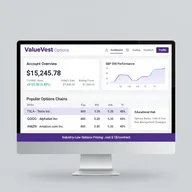
Ally Invest
Ally Invest stands out with the industry's lowest options commission at $0.50 per contract. The seamless integration with Ally Bank's high-yield savings simplifies cash management, while both self-directed and robo-advisor options accommodate different investing approaches.
Pros
- ✓Industry-best $0.50 options fee
- ✓Seamless Ally Bank integration
- ✓Robo-advisor option available
- ✓Quality screening tools
- ✓No account minimum
Cons
- ✗Platform less sophisticated
- ✗Limited mutual fund selection
- ✗Fewer advanced features

tastytrade
tastytrade (formerly tastyworks) is built by options traders for options traders. The unique pricing structure—$1 to open, $0 to close—encourages proper risk management. With probability-based tools and extensive educational content, it's perfect for serious options enthusiasts.
Pros
- ✓Free to close options positions
- ✓Options-focused education and tools
- ✓Probability-based analysis
- ✓Active trading community
- ✓Futures and futures options
Cons
- ✗$10 max commission capped
- ✗Not ideal for stock-only investors
- ✗No mutual funds
How We Evaluate Stock Brokers

Our expert team uses a comprehensive methodology to test and compare stock brokers. Here’s what we evaluate:
Trading Costs
We analyze the complete fee structure:
- Stock and ETF commissions: Now standard at $0 for most brokers
- Options contracts: Range from $0 to $1+ per contract
- Mutual fund fees: No-transaction-fee fund availability
- Other costs: Margin rates, transfer fees, broker-assisted trades
- Hidden fees: Inactivity fees, account closure costs
Platform and Tools
We test usability and features:
- Trading platforms: Web, mobile, and desktop applications
- Order types: Market, limit, stop, conditional orders
- Charting: Technical indicators and drawing tools
- Screening: Stock and fund screening capabilities
- Execution quality: Speed and price improvement
Research and Education
We evaluate analytical resources:
- Third-party research: Morningstar, CFRA, Thomson Reuters
- Proprietary analysis: In-house research teams
- Market data: Real-time quotes and Level 2 availability
- Educational content: Articles, videos, courses, webinars
- News feeds: Breaking news and market commentary
Investment Selection
We review available assets:
- Stocks: U.S. and international equities
- ETFs: Breadth of exchange-traded fund offerings
- Mutual funds: No-transaction-fee fund selection
- Options: Single and multi-leg strategies
- Other assets: Bonds, CDs, futures, forex, crypto
Account Features
We assess practical capabilities:
- Account types: Individual, joint, IRA, trust, 529, HSA
- Minimums: Initial funding requirements
- Fractional shares: Ability to buy partial shares
- Cash management: Interest rates on idle cash
- Dividend reinvestment: DRIP programs
Customer Service
We test support quality:
- Availability: Hours of operation and channels
- Response time: How quickly issues are resolved
- Expertise: Knowledge of representatives
- Branch access: Physical locations for in-person help
Frequently Asked Questions
What is the best stock broker for beginners?
Fidelity and Schwab both excel for beginners with zero minimums, commission-free trading, extensive educational resources, and excellent customer support. Robinhood offers the simplest interface but fewer learning tools.
Are online brokers safe?
Yes, reputable online brokers are regulated by FINRA and the SEC, offer SIPC protection covering up to $500,000, and use bank-level encryption. Stick with established firms like Fidelity, Schwab, or Interactive Brokers.
What fees do stock brokers charge?
Most brokers now offer $0 commissions on stocks and ETFs. Options typically cost $0-$0.65 per contract. Watch for other fees like margin interest, transfer fees, and mutual fund transaction costs. Always read the fee schedule.
Do I need a minimum amount to open a brokerage account?
Most major brokers have eliminated account minimums. Fidelity, Schwab, Interactive Brokers, E*TRADE, and many others let you open an account with $0, though you’ll need some money to start investing.
What’s the difference between a broker and a robo-advisor?
Brokers provide accounts for self-directed trading where you choose investments. Robo-advisors automatically manage portfolios for you based on your goals and risk tolerance. Many firms like Schwab and Fidelity offer both options.
Can I have accounts at multiple brokers?
Yes, and many investors do. You might use Fidelity for retirement accounts, Robinhood for experimental trades, and Interactive Brokers for international stocks. Just track everything for tax purposes.
How do I transfer my account to a new broker?
Most brokers offer free account transfers (ACATS) that take 5-7 business days. The new broker usually handles the paperwork and may cover transfer fees charged by your old broker. Avoid selling positions to move cash—transfer in-kind to avoid taxes.
What’s the best broker for retirement accounts?
Fidelity, Schwab, and Vanguard excel for retirement accounts with extensive fund selections, low costs, and strong planning tools. All offer traditional IRAs, Roth IRAs, SEP IRAs, and rollover options.