Article
Top 10 Best Spanish Learning Apps in 2026
Learn Spanish faster with the best apps and platforms. Our experts tested features, pricing, and effectiveness to find the top Spanish learning solutions.
Spanish is the world’s second-most spoken native language, opening doors to 21 countries and over 500 million speakers. Whether you’re planning travel to Spain or Latin America, advancing your career, or connecting with family, learning Spanish is one of the most valuable language investments you can make.
Our team tested over 40 Spanish learning apps, evaluating teaching methods, dialect coverage, pronunciation training, and real-world effectiveness. Here are the best Spanish learning apps for every goal and budget.
Quick Comparison
| App | Best For | Price | Rating |
|---|---|---|---|
| 1. Rocket Spanish | Best Overall | $150+ lifetime | ★4.9/5 |
| 2. Pimsleur Spanish | Best Audio-Based Learning | $20/month | ★4.8/5 |
| 3. Babbel Spanish | Best Structured Curriculum | $9/month | ★4.7/5 |
| 4. Duolingo Spanish | Best Free Option | Free (Super $12.99/mo) | ★4.7/5 |
| 5. italki Spanish Tutors | Best for Conversation Practice | $10+/lesson | ★4.8/5 |
| 6. Busuu Spanish | Best for Community Feedback | $6.86/month | ★4.6/5 |
| 7. Preply Spanish | Best Tutor Marketplace | $10-40/hour | ★4.7/5 |
| 8. Rosetta Stone Spanish | Best Immersion Method | $15/month | ★4.5/5 |
| 9. SpanishDict | Best Dictionary & Reference | $5/month | ★4.6/5 |
| 10. Beelinguapp Spanish | Best for Reading Practice | $7/month | ★4.4/5 |
Our Top Picks in Detail

Rocket Spanish
Rocket Spanish tops our rankings with the most comprehensive and deep content available. While competitors feel gamified or dumbed down, Rocket Spanish delivers a true language learning program with detailed grammar instruction, practical audio lessons, and cultural insights.
Pros
- ✓Most comprehensive Spanish program
- ✓Excellent grammar explanations
- ✓Lifetime access (one-time payment)
- ✓Covers all four skills equally
- ✓Cultural context and survival phrases
Cons
- ✗Higher upfront cost
- ✗Interface feels dated
- ✗No mobile offline mode

Pimsleur Spanish
Pimsleur Spanish excels at audio-based learning with 30-minute lessons perfect for busy schedules. Backed by U.S. State Department studies, the spaced repetition method delivers proven results—83% of users who complete level 1 improve oral proficiency by at least one level.
Pros
- ✓Perfect for commuters and drivers
- ✓Scientifically proven method
- ✓Excellent pronunciation training
- ✓83% of users improve proficiency
- ✓Separate courses for Spain/Latin America
Cons
- ✗Audio-only can feel slow
- ✗No grammar explanations
- ✗Only goes to 5 levels (not advanced)
Babbel Spanish
Babbel Spanish provides structured, linguist-designed lessons focused on practical conversations. The curriculum is methodical and comprehensive, with Babbel Live classes adding human interaction. Note that it teaches Castilian Spanish (Spain), not Latin American varieties.
Pros
- ✓Professionally designed by linguists
- ✓Strong grammar foundations
- ✓Live classes with native teachers
- ✓Real-world conversation focus
- ✓Mapped to CEFR standards
Cons
- ✗Only teaches Spain Spanish
- ✗Content repetitive at B1+
- ✗Less gamified than alternatives
Duolingo Spanish
Duolingo makes learning Spanish free, fun, and accessible to everyone. Its game-like approach keeps millions engaged daily, and it's genuinely effective for beginners. However, progress stalls at intermediate levels, requiring supplementation for fluency.
Pros
- ✓Completely free core experience
- ✓Highly engaging and fun
- ✓Perfect for beginners
- ✓Stories feature for comprehension
- ✓Mobile-optimized interface
Cons
- ✗Shallow for advanced learners
- ✗Heavy focus on translation
- ✗Ads in free version

italki Spanish Tutors
italki connects you with over 11,000 Spanish tutors for personalized 1-on-1 lessons. Whether you want to pass the DELE exam, improve conversational skills, or prepare for travel, tutors tailor lessons to your specific needs with real-time feedback.
Pros
- ✓11,300+ Spanish tutors available
- ✓Personalized lessons for your goals
- ✓Choose your dialect and tutor
- ✓Prices start at $10/lesson
- ✓Real conversation practice
Cons
- ✗Requires scheduling commitment
- ✗Cost varies by tutor quality
- ✗No structured curriculum

Busuu Spanish
Busuu Spanish combines structured CEFR-mapped lessons with community feedback from native speakers. Submit writing and speaking exercises to receive corrections from real Spanish speakers, adding authenticity and human interaction to your learning.
Pros
- ✓Native speakers correct your work
- ✓Comprehensive A1-C1 curriculum
- ✓Personalized study plans
- ✓Offline mode available
- ✓Official McGraw-Hill partnership
Cons
- ✗Free version very limited
- ✗Only Spain Spanish dialect
- ✗Premium can be expensive
Preply Spanish
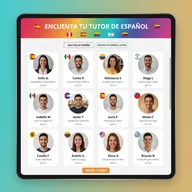
Preply's marketplace lets you select from thousands of Spanish tutors based on price, experience, and specialization. With lessons starting at $10/hour and a money-back guarantee on your first lesson, it's an accessible entry point to personalized tutoring.
Pros
- ✓Choose tutors by price and specialty
- ✓Lessons tailored to your needs
- ✓First lesson money-back guarantee
- ✓Vocabulary and practice tools included
- ✓In-person lessons in select US cities
Cons
- ✗Quality varies by tutor
- ✗Requires active scheduling
- ✗More expensive than apps
Rosetta Stone Spanish
Rosetta Stone Spanish uses full immersion—no English translations, just pictures, audio, and context. The TruAccent speech recognition ensures excellent pronunciation, making it ideal for beginners who want to develop natural Spanish intuition.
Pros
- ✓Excellent pronunciation with TruAccent
- ✓True immersion approach
- ✓Live tutoring sessions included
- ✓Lifetime access option available
- ✓Trusted 30-year brand
Cons
- ✗No grammar explanations
- ✗Expensive compared to alternatives
- ✗Immersion-only frustrates some learners
SpanishDict
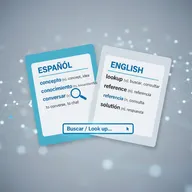
SpanishDict is the premier Spanish dictionary and reference tool, featuring comprehensive translations, verb conjugations, and example sentences. While not a complete learning program, it's an essential companion for any Spanish learner at $5/month or free.
Pros
- ✓Best Spanish dictionary online
- ✓Comprehensive verb conjugations
- ✓Example sentences from real usage
- ✓Word of the Day feature
- ✓Robust free tier
Cons
- ✗Not a complete learning program
- ✗Better as supplement than primary
- ✗Limited structured curriculum
Beelinguapp Spanish
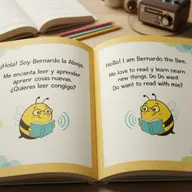
Beelinguapp helps you improve Spanish reading and listening comprehension through side-by-side bilingual texts with native speaker audio. The karaoke-style scrolling makes it easy to follow along, covering topics from science to literature at all levels.
Pros
- ✓Engaging bilingual stories
- ✓Narrated by native speakers
- ✓Karaoke-style text following
- ✓Topics from news to novels
- ✓Very affordable pricing
Cons
- ✗Limited grammar instruction
- ✗Passive learning only
- ✗No conversation practice
Understanding Spanish Dialects
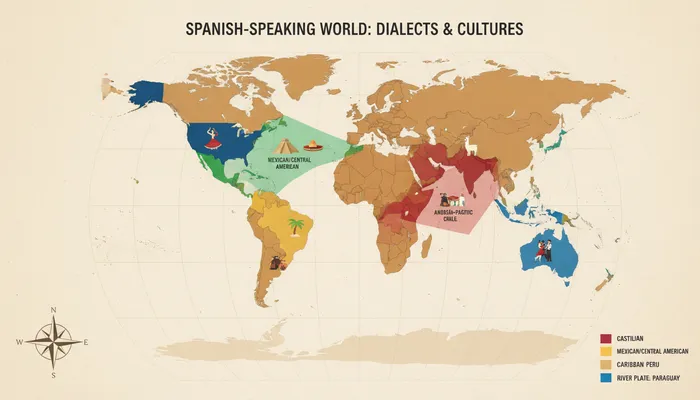
One of the most important decisions when learning Spanish is which dialect to focus on:
Castilian Spanish (Spain)
Spoken in Spain, characterized by:
- Pronunciation: The “th” sound for “c” and “z” (ceceo)
- Grammar: Vosotros form for plural “you”
- Vocabulary: Different words (coche vs. carro for “car”)
- Best for: Travel to Spain, studying European Spanish culture
Apps teaching Castilian: Babbel, Busuu
Latin American Spanish
Spoken across Mexico, Central and South America:
- Pronunciation: “C” and “z” pronounced as “s”
- Grammar: Ustedes instead of vosotros
- Vocabulary: Regional variations (but more mutually intelligible)
- Best for: Travel to Americas, largest number of speakers
Apps teaching Latin American: Duolingo, Rocket Spanish, Pimsleur, Rosetta Stone
Which Should You Choose?
For most learners, Latin American Spanish is recommended because:
- Spoken by 90% of Spanish speakers worldwide
- More useful for travel in the Americas
- Generally easier pronunciation
- Greater job market relevance in the U.S.
However, choose Castilian if you specifically plan to live, work, or study in Spain.
How We Test Spanish Learning Apps
Our Spanish-specific testing methodology includes:
Dialect Coverage
- Which Spanish variant(s) the app teaches
- Clarity about dialect from the beginning
- Accent consistency in audio content
- Cultural context for the target region
Pronunciation Training
- Speech recognition accuracy
- Feedback quality on accent
- Exposure to native speaker audio
- Practice opportunities for speaking
Grammar Instruction
Spanish has complex grammar including:
- Verb conjugations (present, preterite, imperfect, subjunctive)
- Gender agreement (masculine/feminine)
- Ser vs. estar (“to be” verbs)
- Por vs. para prepositions
We evaluate how thoroughly apps explain these concepts.
Real-World Application
- Conversational Spanish vs. textbook Spanish
- Practical vocabulary for travel, business, or daily life
- Cultural insights and context
- Progression to actual fluency
Learning Strategies for Spanish
For Complete Beginners
Start with Duolingo (free) or Pimsleur (audio-based). Build foundational vocabulary and basic grammar. Duolingo’s gamification makes daily practice addictive, while Pimsleur develops pronunciation through spaced repetition.
For Intermediate Learners
Transition to Rocket Spanish or Babbel for deeper grammar and structured progression. Add conversation practice through italki or Preply tutors to apply what you’ve learned.
For Advanced Learners
Focus on conversation with italki tutors, supplement with Beelinguapp for reading comprehension, and use SpanishDict as your reference tool. Consume native content like podcasts, TV shows, and news.
For Travelers
Pimsleur is ideal for learning practical travel Spanish quickly. The 30-minute audio lessons work perfectly for commutes, and the focus on conversation prepares you for real interactions.
For Career Advancement
Choose Rocket Spanish for comprehensive business Spanish, or Preply/italki for industry-specific tutoring. Many tutors specialize in business Spanish, legal Spanish, or medical Spanish.
Supplementing Your Spanish Learning
Immersion Resources
- Netflix: Change audio to Spanish with Spanish subtitles
- Podcasts: “Coffee Break Spanish,” “Notes in Spanish”
- Music: Listen to Spanish artists and read lyrics
- News: Read “El País” or “BBC Mundo”
Practice Communities
- HelloTalk: Language exchange with native speakers
- Tandem: Another excellent language exchange app
- Reddit: r/Spanish for questions and practice
- Discord: Spanish learning servers for real-time chat
Reference Tools
- SpanishDict: Best online dictionary and conjugation tool
- Conjuguemos: Practice verb conjugations
- Wordreference: Forums with usage examples
- Real Academia Española: Official Spanish grammar authority
Frequently Asked Questions
How long does it take to learn Spanish?
With consistent daily practice (30-60 minutes), expect to reach conversational ability (B1) in 6-12 months. The Foreign Service Institute estimates 600-750 hours for professional proficiency. Spanish is one of the easiest languages for English speakers to learn.
Should I learn Spain Spanish or Latin American Spanish?
Learn Latin American Spanish unless you specifically need Castilian for Spain. Latin American Spanish is spoken by 90% of Spanish speakers and is more useful for travel in the Americas. The differences are like British vs. American English—mutually intelligible.
Can I become fluent with just an app?
Apps can build strong intermediate skills (B1-B2), but fluency requires real conversation practice. Combine apps with speaking opportunities through tutors, language exchange, or immersion. Apps like italki and Preply connect you with native speakers.
Is Duolingo enough to learn Spanish?
Duolingo is excellent for beginners and building basic vocabulary, but it’s not sufficient alone for fluency. Supplement with conversation practice, grammar study, and exposure to native content. Many learners use Duolingo for daily practice while adding other resources.
What’s the fastest way to learn Spanish?
Combine structured lessons (Rocket Spanish, Babbel) with regular conversation practice (italki tutors 2-3x/week), daily immersion (Spanish podcasts, TV shows), and consistent study (30-60 minutes daily). Immersion in a Spanish-speaking country accelerates learning dramatically.
How important is pronunciation?
Very important for being understood, but don’t let perfectionism stop you from speaking. Use apps with speech recognition (Pimsleur’s spaced repetition, Rosetta Stone’s TruAccent) and practice with native speakers who can provide feedback.
Do I need to memorize verb conjugations?
Understanding conjugation patterns is essential, but memorization comes naturally through repeated exposure and practice. Use SpanishDict’s conjugation tool as reference, practice with Conjuguemos, and let conversation practice reinforce the patterns.
What Spanish words should I learn first?
Focus on high-frequency words: numbers, greetings, common verbs (ser, estar, ir, tener, hacer), question words (qué, dónde, cuándo), and practical vocabulary for your goals (travel phrases, work terms, etc.). Most apps prioritize useful vocabulary.