Article
Best Project Management Software in 2026
Streamline your team's workflow and boost productivity. We tested the leading project management platforms to help you find the perfect solution for your organization.
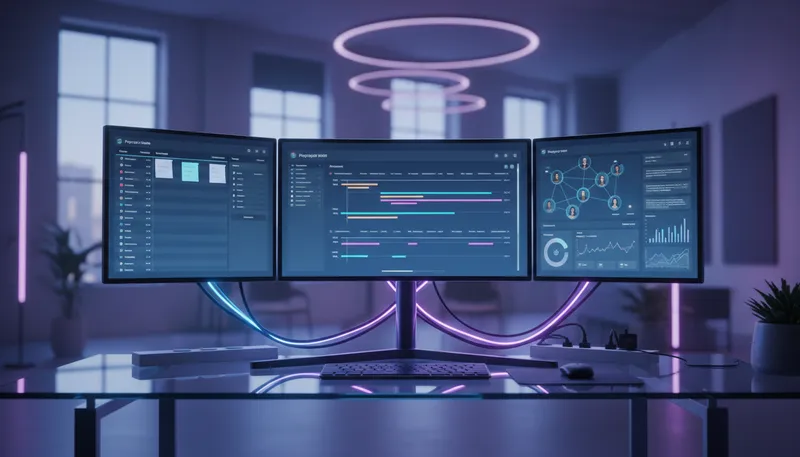
Managing projects effectively is crucial for business success in 2026. Whether you’re coordinating a small team or overseeing enterprise-scale initiatives, the right project management software can transform how you work.
Our team spent months testing the leading platforms, evaluating collaboration features, automation capabilities, pricing, and real-world performance. Here are the best project management tools for every team size and budget.
Quick Comparison
| Platform | Best For | Price | Rating |
|---|---|---|---|
| 1. Monday.com | Best Overall | $9/user/month | ★4.8/5 |
| 2. Asana | Best for Data Visualization | $10.99/user/month | ★4.7/5 |
| 3. ClickUp | Best for Customization | $7/user/month | ★4.6/5 |
| 4. Wrike | Best for Enterprise Teams | $9.80/user/month | ★4.5/5 |
| 5. Smartsheet | Best Spreadsheet-Based PM | $9/user/month | ★4.4/5 |
| 6. Basecamp | Best for Simplicity | $15/user/month | ★4.3/5 |
Our Top Picks in Detail

Monday.com
Monday.com excels at visual project management with its colorful, customizable boards and powerful automation features. The November 2026 Autopilot Hub gives users centralized control over all workflows and integrations, making it perfect for teams that want flexibility without complexity.
Pros
- ✓Highly customizable dashboards and workflows
- ✓Intuitive visual interface with color coding
- ✓Powerful automation capabilities (250+ actions)
- ✓Excellent third-party integrations (200+ apps)
- ✓Autopilot Hub for centralized automation management
Cons
- ✗Requires minimum 3 users for paid plans
- ✗Can get expensive as team grows
- ✗Learning curve for advanced features
Asana
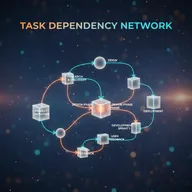
Asana's Fall 2026 Release introduced AI teammates that adapt to your workflow and handle complex tasks. Their data dashboards are the clearest in the industry, making it ideal for teams that need robust reporting and visualization without sacrificing usability.
Pros
- ✓Crystal-clear dashboards and reporting
- ✓Multiple simultaneous views per project
- ✓AI teammates feature for workflow automation
- ✓Strong free plan for small teams (up to 10)
- ✓Excellent task dependency management
Cons
- ✗Higher pricing than competitors ($24.99 Advanced plan)
- ✗Can feel complex for simple projects
- ✗Advanced features require higher-tier plans

ClickUp
ClickUp is a productivity powerhouse offering extreme customization at budget-friendly prices. With over 15 visualization options, built-in AI, and 1,000+ integrations, it's perfect for software teams and power users who want everything in one place.
Pros
- ✓Most affordable paid option at $7/user/month
- ✓Extremely flexible with 15+ view types
- ✓Built-in AI assistant (ClickUp Brain)
- ✓Native time tracking and goal management
- ✓No user limit on free plan
Cons
- ✗Can be overwhelming for new users
- ✗Performance issues with large datasets
- ✗Occasional stability problems reported

Wrike
Wrike targets enterprise teams with its sophisticated project planning, resource management, and AI-powered risk predictions. Their May 2024 Work Intelligence launch brought automated task creation and advanced analytics, making it perfect for large organizations managing complex projects.
Pros
- ✓Named Gartner Leader for third consecutive year
- ✓Excellent for complex multi-stage workflows
- ✓Work Intelligence AI for project risk prediction
- ✓Strong security features (SAML SSO, 2FA)
- ✓Robust resource management and budget tracking
Cons
- ✗Steep learning curve
- ✗Many features locked behind paywalls
- ✗Business plan requires minimum 5 seats

Smartsheet
Smartsheet brings enterprise-grade project management to teams who love spreadsheets. With AI-powered summaries and charts, native integrations with industry-leading tools, and proven scalability (85% of Fortune 500 use it), it's ideal for data-driven organizations.
Pros
- ✓Familiar spreadsheet interface
- ✓Used by 85% of Fortune 500 companies
- ✓Powerful automation and workflows
- ✓Enterprise-grade security and compliance
- ✓Excellent for data-heavy projects
Cons
- ✗Can get cluttered with many projects
- ✗Higher learning curve for non-spreadsheet users
- ✗Discontinued free plan in 2026

Basecamp
Basecamp champions a calm approach to work, prioritizing clear communication over feature density. With flat-rate pricing for unlimited users and a straightforward interface, it's perfect for small teams and creative agencies that value simplicity.
Pros
- ✓Flat-rate pricing ($299/month unlimited users)
- ✓Extremely simple and easy to learn
- ✓Focus on communication over features
- ✓Generous storage (5TB per user on Pro)
- ✓Great for creative agencies and consultants
Cons
- ✗Lacks advanced PM features (dependencies, resource planning)
- ✗Limited integrations compared to competitors
- ✗Interface is English-only
How We Test Project Management Software

Our testing methodology evaluates real-world performance and usability:
Team Collaboration
We assess how well teams can work together:
- Task assignment: Clarity and notification systems
- Communication tools: Built-in chat, comments, mentions
- File sharing: Storage limits and version control
- Real-time updates: Sync speed across devices
Workflow Automation
We test automation capabilities:
- Triggered actions: Automated task creation and assignments
- Conditional logic: If-then workflows and dependencies
- Integration automation: Cross-platform workflow triggers
- Template creation: Reusable workflow patterns
Visualization Options
We examine how well platforms display information:
- View variety: List, board, timeline, Gantt, calendar options
- Dashboard customization: Widget options and data sources
- Reporting quality: Charts, graphs, and export capabilities
- Mobile experience: Feature parity on iOS and Android
Value Assessment
We evaluate pricing and ROI:
- Free tier limitations: What’s included vs restricted
- Pricing transparency: Hidden fees and user minimums
- Scalability: Cost as teams grow
- Feature accessibility: What’s behind paywalls
Choosing the Right Platform
For Small Teams (5-15 people)
ClickUp or Basecamp offer the best value:
- ClickUp: No user limit on free plan, $7/user for unlimited features
- Basecamp: Simple interface, $15/user or $299/month unlimited users
For Mid-Size Teams (15-100 people)
Monday.com or Asana provide balanced features:
- Monday.com: Visual workflows and powerful automations
- Asana: Superior reporting and multiple view options
For Enterprise (100+ people)
Wrike or Smartsheet handle scale:
- Wrike: Advanced permissions, resource management, AI predictions
- Smartsheet: Spreadsheet familiarity, enterprise security, Fortune 500 proven
For Specific Use Cases
- Spreadsheet lovers: Smartsheet’s grid interface feels familiar
- Agile/software teams: ClickUp’s 15+ views and GitHub integration
- Creative agencies: Basecamp’s communication-first approach
- Data-driven orgs: Asana’s clear dashboards and reporting
Key Features to Consider
Essential Features
- Task management: Create, assign, track, and complete tasks
- Collaboration: Comments, mentions, file sharing
- Mobile apps: Full-featured iOS and Android applications
- Integrations: Connect with your existing tools
Advanced Features
- Automation: Reduce manual work with triggered actions
- Time tracking: Monitor hours spent on tasks and projects
- Resource management: Track team capacity and workload
- Custom fields: Capture project-specific information
- Dependencies: Link tasks in logical sequences
Enterprise Features
- SSO integration: Single sign-on for security
- Advanced permissions: Role-based access control
- API access: Custom integrations and data extraction
- Audit logs: Track changes and user activity
- Dedicated support: Priority assistance and onboarding
Frequently Asked Questions
What is project management software?
Project management software helps teams plan, organize, and track work from start to finish. These platforms centralize tasks, deadlines, files, and communication, making it easier to collaborate and deliver projects on time.
Do I need project management software for a small team?
Yes, even small teams benefit from centralized task management and clear accountability. Many platforms offer generous free tiers—ClickUp allows unlimited users free, while Asana supports up to 10 teammates at no cost.
What’s the difference between project management and task management?
Project management software handles complex workflows with multiple phases, dependencies, and team members. Task management tools focus on individual to-do lists and simple collaboration. Most modern PM platforms include robust task management features.
Can project management software integrate with our existing tools?
Most platforms offer extensive integrations. Monday.com connects with 200+ apps, ClickUp with 1,000+, and Wrike with 400+. Popular integrations include Slack, Microsoft Teams, Google Workspace, Salesforce, and Zoom.
Is there a free project management tool that’s actually good?
Yes. ClickUp offers a robust free plan with unlimited users and tasks. Asana’s free plan supports up to 10 users with unlimited tasks and projects. However, advanced features like timeline views and automation require paid plans.
How much does project management software cost?
Pricing ranges from $7-15 per user/month for basic plans to $25-35 for advanced features. Basecamp offers flat-rate pricing at $299/month for unlimited users, which can be more economical for larger teams.
What’s the easiest project management software to learn?
Basecamp wins for simplicity with its straightforward interface focused on communication. Monday.com is also highly visual and intuitive. ClickUp and Wrike have steeper learning curves due to extensive customization options.
Can I try before buying?
Yes, all platforms offer free trials. Asana and Wrike provide 14-day trials, while most others offer 30 days. ClickUp, Asana, and Monday.com also have permanently free plans with limitations.