Article
Best Payment Gateways in 2026
Compare the top payment gateways of 2026. Our experts analyzed leading providers to find the best options for accepting online payments, processing transactions, and growing your business.

Choosing the right payment gateway is crucial for your online business success. The best payment gateway enables seamless transactions, protects against fraud, and supports your customers’ preferred payment methods while keeping costs manageable.
Our team analyzed the leading payment gateway providers, comparing transaction fees, global reach, security features, and developer tools. Here are the 10 best payment gateways for online businesses in 2026.
Quick Comparison
| Provider | Best For | Online Rate | Rating |
|---|---|---|---|
| 1. Stripe | Best Overall for Online Businesses | 2.9% + $0.30 | ★4.8/5 |
| 2. PayPal | Best for Brand Recognition & Trust | 3.49% + $0.49 | ★4.5/5 |
| 3. Square | Best for Omnichannel Sales | 2.9% + $0.30 | ★4.6/5 |
| 4. Braintree | Best for Mobile & App Payments | 2.9% + $0.30 | ★4.7/5 |
| 5. Adyen | Best for Enterprise & Global Reach | Interchange + $0.12 | ★4.6/5 |
| 6. Authorize.net | Best for Traditional Gateway Services | 2.9% + $0.30 | ★4.3/5 |
| 7. Checkout.com | Best for Custom Pricing & Transparency | Interchange++ | ★4.5/5 |
| 8. 2Checkout (Verifone) | Best for International Markets | Varies by plan | ★4.4/5 |
| 9. Mollie | Best for European Businesses | 1.80% + €0.25 | ★4.3/5 |
| 10. Worldpay | Best for Large Enterprises | Custom | ★4.2/5 |
Our Top Picks in Detail

Stripe
Stripe is the leading payment gateway for online businesses and developers, offering powerful API capabilities, global payment support, and subscription billing tools. Its transparent pricing and ease of integration make it perfect for ecommerce platforms, SaaS companies, and businesses that need flexible payment solutions.
Pros
- ✓Powerful API for custom payment integrations and developer-friendly tools
- ✓Supports global payments in 135+ currencies across 45+ countries
- ✓Transparent pricing with no monthly fees or hidden charges
- ✓Excellent for subscription billing and recurring payments
- ✓Advanced fraud detection with Stripe Radar using machine learning
Cons
- ✗7-14 day fund holding period for new merchants
- ✗Limited phone support compared to traditional processors
- ✗Requires some technical knowledge for advanced customization

PayPal
PayPal is the most established online payment platform, offering instant fund access, global brand recognition, and robust security. While fees are higher than competitors, the trust factor and familiar checkout experience can increase conversion rates, especially for businesses processing under $10,000 monthly.
Pros
- ✓Most recognized and trusted payment brand globally with 400M+ users
- ✓Instant access to funds in PayPal balance for immediate use
- ✓Real-time payment processing with instant confirmation
- ✓Advanced fraud monitoring and 256-bit SSL encryption
- ✓Supports Venmo integration for P2P payments
Cons
- ✗Higher transaction fees than most competitors (3.49% vs 2.9%)
- ✗BNPL fees increased to 4.99% + $0.49 in 2026
- ✗International and currency conversion fees can add up quickly

Square
Square offers a complete payment ecosystem that seamlessly combines online, in-person, and mobile payments. With transparent flat-rate pricing, no contracts, and over 30 integrated products including Afterpay BNPL and loyalty programs, it's ideal for retail shops, restaurants, and businesses selling across multiple channels.
Pros
- ✓Unified platform for online, in-person, and mobile payments
- ✓No long-term contracts or cancellation fees
- ✓Free plan available with comprehensive features
- ✓Integrated ecosystem with payroll, invoicing, and inventory
- ✓Processes over $200 billion annually across 8 countries
Cons
- ✗Higher rates for high-volume merchants compared to interchange-plus
- ✗Risk of unexpected account holds reported by some users
- ✗Limited to 8 countries (less global reach than competitors)

Braintree
Braintree, a PayPal service, excels at mobile and app-based payments with developer-friendly APIs and customizable checkout experiences. Supporting major digital wallets and offering transparent pricing, it's trusted by companies like Uber for high-volume mobile transactions and subscription services.
Pros
- ✓Available in 45+ countries processing 130+ global currencies
- ✓Supports PayPal, Venmo, Apple Pay, and Google Pay natively
- ✓Strong mobile payment support ideal for apps like Uber
- ✓Customizable checkout via API integration with fraud protection
- ✓Interchange-plus pricing available for businesses over $80K monthly
Cons
- ✗Owned by PayPal, which may raise competitive concerns
- ✗Setup requires more technical knowledge than simple plugins
- ✗Customer support quality varies according to user reviews

Adyen
Adyen is the enterprise-grade payment platform powering global brands, offering unified commerce across online and in-person channels. With local acquiring in 150+ currencies, advanced fraud protection, and a single integration for all payment needs, it's perfect for multinational companies with complex, high-volume requirements.
Pros
- ✓Unified commerce platform for 150+ currencies and 45+ countries
- ✓Local payment methods and direct-to-scheme acquiring globally
- ✓Advanced fraud detection with RevenueProtect using machine learning
- ✓Single integration for both online and in-person payments
- ✓Deep risk orchestration for global retailers and enterprises
Cons
- ✗Custom pricing not transparent upfront
- ✗Better suited for high-volume businesses, not small startups
- ✗More complex setup than simple flat-rate processors
Authorize.net
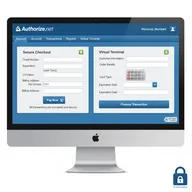
Authorize.net is one of the most established payment gateways, providing secure transaction infrastructure for online stores and businesses needing phone payment capabilities. With its recent 2.0 upgrade and 29 years of reliability, it's ideal for businesses wanting a traditional, proven gateway solution with virtual terminal access.
Pros
- ✓Trusted by over 370,000 merchants worldwide since 1996
- ✓Gateway-only option at $25/month + $0.10 per transaction
- ✓Virtual terminal for accepting payments over the phone
- ✓Negotiable rates as low as $0.05 per transaction for high volume
- ✓Visa rolled out Auth.net 2.0 with improved features in April 2026
Cons
- ✗Monthly gateway fee of $25 (vs $0 for Stripe/PayPal)
- ✗Daily batch fee of $0.10 adds to costs
- ✗Less modern interface compared to newer competitors

Checkout.com
Checkout.com offers enterprise-grade payment processing with transparent Interchange++ pricing that eliminates hidden fees. Supporting 150+ currencies and advanced fraud protection, it's ideal for businesses seeking competitive rates and detailed analytics, though best suited for higher-volume merchants who can negotiate favorable terms.
Pros
- ✓Transparent Interchange++ pricing with no hidden fees
- ✓Processes payments in 150+ currencies with 18+ payment methods
- ✓Advanced fraud monitoring powered by machine learning
- ✓Quick payouts with transaction-level analytics
- ✓Free payment processing for registered charities
Cons
- ✗Custom pricing makes it difficult to compare costs upfront
- ✗Some users report complicated fee structure despite transparency claims
- ✗Better suited for higher-volume businesses

2Checkout (Verifone)
2Checkout (Verifone) specializes in global commerce, supporting 197 countries with localized payment methods and currencies. Its mobile-friendly checkout, SaaS billing tools, and claim to recover 20% of revenue through account updater technology make it ideal for international businesses and subscription services.
Pros
- ✓Available in 197 countries with 97 currencies and 45+ payment methods
- ✓Supports 33 local languages for localized checkout experiences
- ✓2Subscribe feature for SaaS recurring billing models
- ✓Prebuilt integrations with 120+ popular software platforms
- ✓AI-powered fraud protection detecting fraudulent checkouts
Cons
- ✗Cross-border fees start at 2% for offshore payments
- ✗Chargeback fees range from $15-$45 based on ratio
- ✗Pricing can be complex with various add-on fees
Mollie
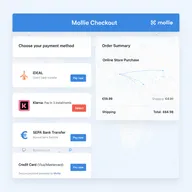
Mollie is Europe's leading payment service provider, offering seamless integration with local payment methods like iDEAL and Klarna. With competitive pricing starting at 1.80% + €0.25 and support for 34 countries, it's perfect for e-commerce brands, SaaS platforms, and subscription businesses operating in European markets.
Pros
- ✓No monthly contracts with simple, transparent pricing
- ✓Supports popular European methods like iDEAL, Klarna, and SEPA
- ✓Fast onboarding with no setup fees or hidden charges
- ✓Most popular payment gateway in Europe for e-commerce
- ✓Accepts payments from 34 European countries
Cons
- ✗FX markup of 2.5-3% on top of interbank rate for currency conversion
- ✗Does not refund original transaction fee when issuing refunds
- ✗Payout schedule (daily/weekly/monthly) may impact cash flow

Worldpay
Worldpay is a global payment processing giant offering enterprise-grade solutions for large businesses with complex needs. With omnichannel capabilities, robust fraud tools, and worldwide reach, it's ideal for major retailers and corporations, though smaller businesses may find more value in transparent, flat-rate alternatives.
Pros
- ✓One of the largest payment processors globally with extensive reach
- ✓Omnichannel capabilities for unified online and in-store payments
- ✓Robust rule-based fraud protection tools
- ✓Dedicated account management for enterprise clients
- ✓Extensive integration options with major platforms
Cons
- ✗Custom pricing lacks transparency for smaller businesses
- ✗Better suited for large enterprises, not ideal for startups
- ✗Some users report complex contract terms and fee structures
How We Evaluate Payment Gateways

Our expert team uses a comprehensive methodology to test and compare payment gateway providers. Here’s what we evaluate:
Transaction Fees and Pricing Models
We analyze the complete cost structure including:
- Online transaction rates: Card-not-present fees for ecommerce and digital payments
- In-person rates: Card-present transaction fees for retail and POS
- Flat-rate vs. interchange-plus: Understanding which pricing model saves you money
- Volume discounts: Negotiated rates for high-volume businesses
- Hidden fees: Monthly fees, setup costs, chargeback fees, and cross-border charges
Global Reach and Payment Methods
We test support for international commerce:
- Currency support and foreign exchange rates
- Local payment methods (iDEAL, Klarna, SEPA, etc.)
- Digital wallets (Apple Pay, Google Pay, Samsung Pay)
- Buy-now-pay-later services (Afterpay, Affirm, Klarna)
- Bank transfers and ACH payments
Integration and Developer Tools
We evaluate how well gateways work with existing systems:
- API quality: Developer-friendly documentation and tools
- Ecommerce platforms: Shopify, WooCommerce, BigCommerce, Magento
- Shopping carts: Custom integrations and hosted checkout pages
- Mobile SDKs: Native support for iOS and Android apps
Security and Fraud Prevention
We verify security measures and compliance standards:
- PCI DSS compliance and certification
- Fraud detection using machine learning and AI
- 3D Secure and additional authentication
- Data encryption, tokenization, and secure storage
- Chargeback management and protection
Support and Reliability
We examine customer service and uptime:
- Support channels (phone, email, chat)
- Documentation quality and developer resources
- Service level agreements and uptime guarantees
- Account management for enterprise clients
Frequently Asked Questions
What is a payment gateway?
A payment gateway is a technology that securely captures and transfers payment information from your customer to your merchant account for processing. It acts as the digital equivalent of a point-of-sale terminal, encrypting sensitive card data to ensure secure online transactions.
What’s the difference between a payment gateway and a payment processor?
A payment gateway authorizes and transfers payment data securely, while a payment processor handles the actual movement of funds between banks. Some providers like Stripe and Square combine both functions, while others like Authorize.net are gateway-only services that require a separate processor.
How much do payment gateways cost?
Costs vary widely. Flat-rate providers like Stripe and PayPal charge 2.9-3.49% + $0.30 per transaction with no monthly fees. Traditional gateways like Authorize.net charge $25/month plus $0.10 per transaction. Interchange-plus pricing offers lower rates for high-volume businesses but requires understanding variable costs.
Which payment gateway is best for small businesses?
Stripe and Square are excellent for small businesses due to transparent pricing, no monthly fees, and easy setup. PayPal is ideal if brand recognition and customer trust are priorities. For international sales, 2Checkout offers the widest global reach with 197 countries supported.
Can I use multiple payment gateways?
Yes, many businesses use multiple gateways to offer customers more payment options, reduce dependency on a single provider, and optimize costs. However, this increases complexity and may require additional integration work. Tools like Spreedly can help manage multiple gateways through a single integration.
How do I choose between flat-rate and interchange-plus pricing?
Flat-rate pricing (e.g., 2.9% + $0.30) is simpler and better for businesses processing under $20,000 monthly. Interchange-plus pricing charges the actual interchange rate plus a markup, which can save money for high-volume businesses but requires understanding variable costs and typically includes monthly fees.
Are payment gateways secure?
Yes, reputable payment gateways use industry-standard security measures including PCI DSS compliance, 256-bit SSL encryption, tokenization, and fraud detection. Providers like Stripe, Adyen, and Checkout.com use machine learning to identify and prevent fraudulent transactions in real-time.
How long does it take to receive funds?
Timing varies by provider. PayPal offers instant transfers for 1-1.5% fee. Stripe holds funds 7-14 days for new merchants, then 2 business days. Square offers instant transfer for 1.5% or standard 1-2 day transfers. Always clarify the funding schedule before choosing a gateway.