Article
Top 10 Best Language Learning Apps in 2026
Master a new language with the best language learning apps. Our experts tested features, pricing, and effectiveness to find the top platforms for every learning style.

Learning a new language opens doors to career opportunities, travel experiences, and cultural connections. in 2026, language learning apps have evolved beyond simple vocabulary drills to offer immersive experiences powered by AI, native speaker communities, and even virtual reality.
Our team tested over 30 language learning platforms, evaluating teaching methods, content quality, pricing, and real-world effectiveness. Here are the best language learning apps for every goal and budget.
Quick Comparison
| App | Best For | Price | Rating |
|---|---|---|---|
| 1. Duolingo | Best Free Option | Free (Premium $12.99/mo) | ★4.8/5 |
| 2. Babbel | Best for Structured Learning | $9/month | ★4.7/5 |
| 3. Rosetta Stone | Best Immersion Method | $15/month | ★4.6/5 |
| 4. Busuu | Best for Community Feedback | $6.86/month | ★4.6/5 |
| 5. Pimsleur | Best Audio-Based Learning | $20/month | ★4.7/5 |
| 6. Memrise | Best for Vocabulary Building | $8.49/month | ★4.5/5 |
| 7. Rocket Languages | Best Comprehensive Program | $150+ lifetime | ★4.8/5 |
| 8. Mondly | Best for AR/VR Learning | $9.99/month | ★4.4/5 |
| 9. italki | Best for Live Tutoring | $10+/lesson | ★4.6/5 |
| 10. LingoDeer | Best for Asian Languages | $14.99/month | ★4.5/5 |
Our Top Picks in Detail
Duolingo
Duolingo revolutionized language learning by making it free, fun, and accessible to everyone. Its game-like approach with points, streaks, and leaderboards keeps millions of users engaged daily. While it's unbeatable for beginners (A1-B1), progress may stall at intermediate levels.
Pros
- ✓Completely free core experience
- ✓Highly engaging gamification
- ✓Perfect for beginners
- ✓Largest selection of languages
- ✓Mobile-first design works offline
Cons
- ✗Limited depth for advanced learners
- ✗Heavy focus on translation exercises
- ✗Ads in free version

Babbel
Babbel positions itself as the serious alternative to Duolingo, with lessons designed by linguists and structured around practical conversations. The curriculum is methodical and comprehensive, though it can feel repetitive once you reach intermediate proficiency.
Pros
- ✓Professionally designed curriculum
- ✓Strong grammar explanations
- ✓Real-world conversation focus
- ✓Babbel Live classes included
- ✓Mapped to CEFR standards
Cons
- ✗Less gamified than competitors
- ✗Content repetitive at B1+ levels
- ✗No community features

Rosetta Stone
Rosetta Stone pioneered the immersion approach, teaching languages the way children learn—through pictures, audio, and context without translations. While effective for pronunciation and foundational skills, the lack of grammar explanations can frustrate adult learners.
Pros
- ✓Excellent pronunciation training
- ✓TruAccent speech technology
- ✓No English translations (true immersion)
- ✓Lifetime access option available
- ✓Trusted brand with 30-year history
Cons
- ✗Rigid immersion-only approach
- ✗Expensive compared to alternatives
- ✗Lacks grammar explanations

Busuu
Busuu's unique selling point is community feedback—submit writing and speaking exercises to receive corrections from native speakers. Combined with structured CEFR-mapped lessons, it provides authentic learning with real human interaction.
Pros
- ✓Native speakers correct your work
- ✓Mapped to official CEFR levels
- ✓Personalized study plans
- ✓Learn up to 12 languages (Premium Plus)
- ✓Offline mode for mobile learning
Cons
- ✗Free version very limited
- ✗Smaller language selection
- ✗Can be pricey at full price

Pimsleur
Pimsleur specializes in audio-based learning with 30-minute daily lessons perfect for commuting. Their scientifically-backed spaced repetition method has been proven effective, with 83% of users improving oral proficiency by at least one level.
Pros
- ✓Perfect for commuters and drivers
- ✓Proven spaced repetition method
- ✓Excellent for pronunciation
- ✓U.S. State Department endorsed
- ✓Hands-free learning capability
Cons
- ✗Audio-only can feel slow
- ✗No visual learning aids
- ✗Limited to 5 levels (not truly advanced)

Memrise
Memrise excels at vocabulary retention through spaced repetition and authentic video clips of native speakers. The new AI-powered MemBot provides conversation practice, while the free tier offers 90% of features—making it an excellent value.
Pros
- ✓90% of features free
- ✓Native speaker video clips
- ✓AI chatbot for conversations
- ✓Highly effective spaced repetition
- ✓Custom vocabulary lists
Cons
- ✗Limited grammar instruction
- ✗Free tier has ads
- ✗Less structured than competitors

Rocket Languages
Rocket Languages offers the most thorough language learning program available, combining audio lessons with detailed grammar instruction and cultural insights. While expensive upfront, the lifetime access and comprehensive coverage make it worthwhile for serious learners.
Pros
- ✓Most comprehensive content
- ✓Excellent grammar explanations
- ✓Lifetime access (one-time payment)
- ✓Covers all four skills equally
- ✓Cultural context included
Cons
- ✗High upfront cost
- ✗Interface feels dated
- ✗No mobile app offline mode

Mondly
Mondly stands out with cutting-edge augmented and virtual reality features that create immersive learning experiences. While the technology is impressive and perfect for beginners, content depth doesn't match more established platforms at higher levels.
Pros
- ✓Innovative AR and VR features
- ✓40+ languages available
- ✓AI chatbot conversations
- ✓Great for visual learners
- ✓Affordable annual pricing
Cons
- ✗Limited content for advanced learners
- ✗AR/VR require additional hardware
- ✗Less polished than top competitors
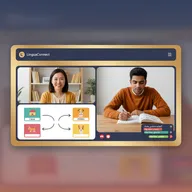
italki
italki connects learners with professional tutors and community teachers for personalized 1-on-1 video lessons. With over 150 languages and flexible pricing starting at $10/lesson, it's perfect for learners who want human interaction and customized instruction.
Pros
- ✓Real human tutors (not AI)
- ✓Personalized lessons for your goals
- ✓150+ languages including rare ones
- ✓Flexible pricing (choose your tutor)
- ✓Trial lessons available
Cons
- ✗Requires scheduling and commitment
- ✗Cost varies widely by tutor
- ✗No structured curriculum

LingoDeer
LingoDeer was specifically designed for learning Asian languages like Chinese, Japanese, and Korean. It excels at teaching complex writing systems and grammar in digestible lessons, making it more effective than general apps for these languages.
Pros
- ✓Excellent for Chinese, Japanese, Korean
- ✓Strong grammar instruction
- ✓Alphabet/character training included
- ✓Offline learning available
- ✓More affordable than competitors
Cons
- ✗Limited language selection
- ✗Smaller vocabulary per lesson
- ✗Less known than major brands
How We Test Language Learning Apps
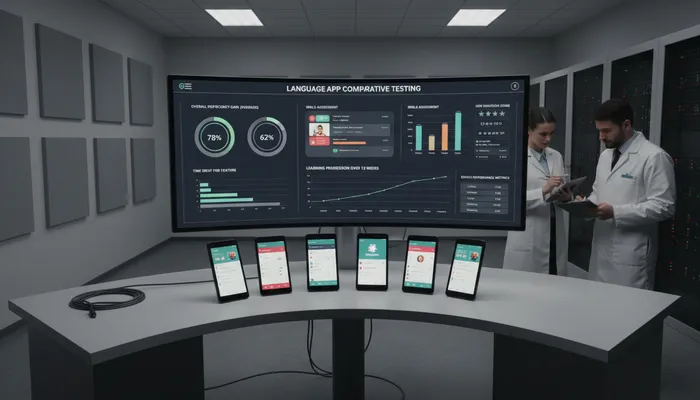
Our testing methodology evaluates apps across multiple dimensions:
Learning Effectiveness
We measure actual language acquisition:
- CEFR alignment: Whether apps map to official proficiency standards
- Skill coverage: Balance of speaking, listening, reading, and writing
- Retention rates: How well users remember what they learn
- Real-world application: Can learners actually use the language?
Content Quality
We examine the curriculum design:
- Grammar instruction: Clarity and depth of explanations
- Vocabulary selection: Usefulness of words taught
- Cultural context: Understanding beyond just words
- Progression structure: Logical skill building
User Experience
We test the practical aspects:
- Mobile and desktop experience: App quality and features
- Engagement features: What keeps users motivated
- Offline capability: Learning without internet
- Progress tracking: Clear feedback on advancement
Value Assessment
We evaluate cost versus benefits:
- Free tier limitations: What’s available without paying
- Pricing structure: Monthly, annual, or lifetime options
- Feature completeness: What premium tiers unlock
- Money-back guarantees: Risk-free trial periods
Choosing the Right Language Learning App
For Complete Beginners
Start with Duolingo or Rosetta Stone. Duolingo’s gamification makes daily practice addictive, while Rosetta Stone’s immersion builds natural language intuition. Both are excellent for establishing foundational vocabulary and basic grammar.
For Serious Learners
Choose Babbel or Rocket Languages for structured, comprehensive programs. These apps provide the grammar depth and cultural context needed to reach conversational fluency. Babbel Live classes add human interaction.
For Auditory Learners
Pimsleur is unmatched for audio-based learning. The 30-minute daily format fits perfectly into commutes, and the spaced repetition method ensures long-term retention. Perfect for hands-free learning.
For Conversational Practice
italki connects you with native tutors for personalized lessons. Nothing beats real conversation with a human teacher who can adapt to your specific needs and provide immediate feedback.
For Asian Languages
LingoDeer was purpose-built for Chinese, Japanese, and Korean. Unlike general apps that struggle with complex writing systems, LingoDeer excels at teaching characters and tones from the ground up.
For Budget-Conscious Learners
Memrise offers 90% of features free, while Duolingo provides a complete beginner-to-intermediate course at no cost. Both include ads but deliver genuine value without payment.
Language Learning Methodology Explained
Gamification Approach
Apps like Duolingo use points, streaks, and leaderboards to maintain motivation. This works exceptionally well for beginners but may lack depth for advanced learners seeking fluency.
Immersion Method
Rosetta Stone teaches without translation, mimicking how children learn languages. Effective for pronunciation and thinking in the target language, but can frustrate learners who want explicit grammar rules.
Structured Curriculum
Babbel and Rocket Languages follow traditional pedagogy with clear lessons, grammar explanations, and progressive difficulty. Best for learners who want to understand the “why” behind the language.
Spaced Repetition
Memrise and Pimsleur use scientifically-proven spacing to optimize retention. Content is reviewed at precisely timed intervals to move knowledge into long-term memory.
Community Learning
Busuu leverages native speakers to review your work, providing authentic feedback. This social element adds accountability and cultural authenticity.
Tutoring-Based
italki follows the oldest method—direct instruction from a teacher. While more expensive, it’s the fastest path to conversational ability with personalized attention.
Frequently Asked Questions
How long does it take to learn a language with these apps?
Most apps can bring you to conversational ability (B1 level) in 6-12 months with daily practice. Duolingo estimates 34 hours of study to complete a beginner course. However, reaching fluency (C1-C2) typically requires 600-1200 hours and real-world practice beyond apps.
Can I actually become fluent using just an app?
Apps are excellent for building foundation and intermediate skills, but true fluency requires real conversation practice. Combine apps with speaking opportunities through tutors (italki), language exchange partners, or immersion experiences.
Which app is best for learning multiple languages?
Duolingo offers 40+ languages free, while Busuu Premium Plus unlocks 12 languages for one price. Mondly allows you to learn all languages with an annual subscription at $47.99/year.
Are free language learning apps worth it?
Yes. Duolingo and Memrise offer genuinely valuable free tiers that can take you from beginner to intermediate. The main limitations are ads and missing premium features like offline mode or detailed grammar explanations.
Do language learning apps work for children?
Absolutely. Duolingo’s game-like approach is particularly effective for kids. However, younger children (under 13) may benefit from apps with more visual content and less reading, like Mondly or LingoDeer.
What’s the difference between apps and live tutoring?
Apps provide structured, self-paced learning ideal for vocabulary and grammar. Live tutoring (italki, Preply) offers personalized instruction, immediate feedback, and conversational practice. Most effective learners combine both approaches.
How do I stay motivated learning a language?
Choose an app with engagement features that match your personality. Duolingo’s streaks work for competitive types, while Babbel Live classes create accountability. Set specific goals (trip to Spain, business presentation) rather than vague “learn Spanish” aspirations.
Can I learn a language while driving?
Pimsleur was specifically designed for hands-free learning with a driving mode. Each 30-minute audio lesson requires only listening and speaking—no screen needed. Perfect for commuters.