Article
Top 10 Best Investment Apps for Trading Stocks in 2026
Find the perfect investment app for your trading style. Our experts compared fees, features, and user experience across the top stock trading platforms to help you invest smarter.

The best investment apps combine zero commissions, powerful tools, and intuitive interfaces to make trading accessible to everyone. Whether you’re a beginner making your first investment or an active trader executing complex strategies, today’s mobile-first platforms offer institutional-grade capabilities right from your smartphone.
Our team tested user experience, analyzed fees, evaluated research tools, and compared features across dozens of investment apps. Here are the 10 best stock trading platforms for 2026.
Quick Comparison
| App | Best For | Stock Fee | Options Fee | Rating |
|---|---|---|---|---|
| 1. Charles Schwab | Best Overall Investment App | $0 | $0.65/contract | ★4.9/5 |
| 2. Fidelity | Best for Research & Tools | $0 | $0.65/contract | ★4.9/5 |
| 3. Robinhood | Best for Beginners | $0 | $0 | ★4.6/5 |
| 4. Webull | Best for Active Traders | $0 | $0 | ★4.7/5 |
| 5. E*TRADE | Best for Options Trading | $0 | $0.65/contract ($0.50 for 30+ trades/qtr) | ★4.7/5 |
| 6. Interactive Brokers | Best for Global Investing | $0 (IBKR Lite) | $0.65 (Lite) / $0.15-$0.65 (Pro) | ★4.8/5 |
| 7. Public | Best for Social Investing | $0 | $0 | ★4.5/5 |
| 8. Moomoo | Best for Free Tools | $0 | $0 | ★4.4/5 |
| 9. SoFi Invest | Best for Member Perks | $0 | $0 | ★4.5/5 |
| 10. Ally Invest | Best for Low Options Fees | $0 | $0.50/contract | ★4.4/5 |
Our Top Picks in Detail

Charles Schwab
Charles Schwab took home over a dozen industry awards including #1 Overall Broker and #1 Mobile Trading App. The platform combines zero commissions, powerful tools like thinkorswim, thousands of no-transaction-fee funds, and exceptional research capabilities—all backed by 24/7 customer support.
Pros
- ✓Won #1 Overall Broker and #1 Mobile App awards
- ✓$0 commissions on stocks and ETFs
- ✓Industry-leading thinkorswim platform
- ✓Extensive research and educational content
- ✓24/7 customer support
Cons
- ✗Interface can overwhelm beginners
- ✗Options contracts cost $0.65 each
- ✗Some advanced features have learning curve

Fidelity
Fidelity combines institutional-grade research with commission-free trading and an extensive fund lineup. The platform supports stocks, ETFs, options, mutual funds, and crypto—all with no account minimum. Fidelity's deep library of educational content and top-tier customer service make it ideal for serious investors.
Pros
- ✓Won NerdWallet's best investing app 2026
- ✓Exceptional research and analysis tools
- ✓3,300+ no-transaction-fee mutual funds
- ✓Fractional shares starting at $1
- ✓Cryptocurrency trading available
Cons
- ✗Mobile app less intuitive than competitors
- ✗Crypto limited to 3 coins
- ✗Some features buried in menus

Robinhood
Robinhood pioneered zero-commission trading with an interface so simple anyone can start investing immediately. Trade stocks, ETFs, options, and crypto all commission-free, with extended hours trading on weekdays. Robinhood Gold ($5/month) adds a compelling 3% IRA match on contributions.
Pros
- ✓Zero commissions on everything
- ✓Incredibly simple, intuitive interface
- ✓3% IRA contribution match with Gold
- ✓Extended hours trading
- ✓Crypto trading included
Cons
- ✗Limited research and educational tools
- ✗Fewer account types than competitors
- ✗Customer service can be slow

Webull
Webull delivers professional-grade tools with zero commissions on stocks, ETFs, and options. The platform excels for intermediate to advanced traders with sophisticated charting, paper trading for practice, and extended hours trading. Webull Premium ($40/year) adds an impressive 3.5% IRA contribution match.
Pros
- ✓Advanced charting and technical analysis
- ✓Paper trading mode for practice
- ✓3.5% IRA contribution match (Premium)
- ✓About 50 cryptocurrencies available
- ✓No commission on options contracts
Cons
- ✗Can overwhelm new investors
- ✗Limited mutual fund selection
- ✗No fractional shares for all stocks

E*TRADE
E*TRADE offers multiple highly rated platforms including the sophisticated Power E*TRADE for active traders. The broker excels at options trading with robust tools and discounted fees ($0.50 per contract) for high-volume traders making 30+ trades per quarter.
Pros
- ✓Excellent options trading platform
- ✓Power E*TRADE for advanced traders
- ✓Options fees drop to $0.50 for active traders
- ✓5,000+ no-transaction-fee mutual funds
- ✓Futures and futures options available
Cons
- ✗Options still cost $0.65 per contract
- ✗Mobile app less polished than competitors
- ✗Research tools spread across platforms

Interactive Brokers
Interactive Brokers is a powerhouse for serious investors wanting global market access and professional tools. IBKR Lite offers commission-free U.S. trading, while IBKR Pro provides advanced features, incredibly low margin rates, and access to over 150 international markets.
Pros
- ✓Access to 150+ global markets
- ✓Institutional-grade tools and data
- ✓Incredibly low margin rates
- ✓IBKR Lite offers commission-free trading
- ✓Best-in-class order execution
Cons
- ✗Steep learning curve for beginners
- ✗Complex fee structure on Pro tier
- ✗Interface less intuitive than competitors

Public
Public stands out with its social investing approach and access to alternative assets like music royalties and collectibles alongside traditional stocks and ETFs. The platform makes investing engaging with community features, though it lacks retirement account options.
Pros
- ✓Unique social investing community
- ✓Alternative assets (music royalties, collectibles)
- ✓U.S. Treasury bonds available
- ✓Commission-free stock and crypto trading
- ✓Fractional shares accessible
Cons
- ✗Only offers taxable brokerage accounts (no IRAs)
- ✗$3.99/month inactivity fee for small accounts
- ✗Limited account types
Moomoo
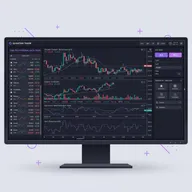
Moomoo offers premium tools usually reserved for paid subscribers—including Level 2 market data and advanced charting—completely free. Combined with zero commissions on stocks and options, the platform delivers exceptional value for cost-conscious active traders.
Pros
- ✓Free Level 2 market data (usually $10-20/month)
- ✓Advanced charting tools at no cost
- ✓Paper trading for practice
- ✓Zero commissions on stocks and options
- ✓Competitive interest on idle cash
Cons
- ✗Lesser-known brand
- ✗Limited educational resources
- ✗Customer service developing

SoFi Invest
SoFi Invest combines commission-free trading with unique lifestyle benefits including career coaching, member events, and unemployment protection. The platform offers both active trading and automated investing, making it ideal for young professionals building wealth and careers simultaneously.
Pros
- ✓Active and automated investing options
- ✓Cryptocurrency trading available
- ✓Career coaching and resume review
- ✓Member events and networking
- ✓Unemployment protection benefits
Cons
- ✗Smaller selection of investment options
- ✗Less sophisticated tools than competitors
- ✗Research capabilities limited

Ally Invest
Ally Invest offers the industry's lowest options commission at just $0.50 per contract, plus zero commissions on stocks and ETFs. The seamless integration with Ally Bank simplifies money management, while both self-directed and robo-advisor options suit different investing styles.
Pros
- ✓Industry-best $0.50 options fee
- ✓Seamless Ally Bank integration
- ✓Both active and robo-advisor options
- ✓Quality research and screening tools
- ✓No account minimum
Cons
- ✗Platform less modern than competitors
- ✗Limited cryptocurrency options
- ✗Fewer advanced trading features
How We Evaluate Investment Apps

Our expert team uses a rigorous methodology to test and compare investment apps. Here’s what we evaluate:
Trading Costs
We analyze the complete fee structure:
- Stock and ETF commissions: Almost all platforms now offer $0
- Options contracts: Range from $0 to $0.65 per contract
- Mutual fund fees: Transaction fees and fund selection
- Other costs: Margin rates, transfer fees, inactivity fees
Platform Quality
We test user experience across devices:
- Mobile app: Interface design, speed, and functionality
- Desktop platform: Advanced features and customization
- Order entry: Ease of placing trades
- Performance: Reliability during market hours
Investment Options
We evaluate available assets:
- Stocks and ETFs: Coverage and access
- Options: Single-leg and multi-leg strategies
- Mutual funds: Selection and fees
- Alternatives: Cryptocurrency, futures, forex, fractional shares
Research and Tools
We assess analytical capabilities:
- Market data: Real-time quotes, Level 2 data availability
- Charting: Technical analysis indicators
- Screening: Stock and ETF screeners
- Research: Third-party reports and analysis
- News: Market commentary and breaking news
Account Features
We review practical capabilities:
- Account types: Taxable, IRA, joint, trust, 529
- Funding: Deposit methods and speed
- Cash management: Interest on idle funds
- Promotions: Sign-up bonuses and incentives
Education and Support
We evaluate learning resources:
- Educational content: Articles, videos, courses
- Customer service: Availability and response quality
- Community: Social features and forums
- Paper trading: Practice accounts
Frequently Asked Questions
Are investment apps safe?
Yes, reputable investment apps are regulated by FINRA and the SEC, offer SIPC protection up to $500,000, and use bank-level encryption. Choose established brokers like Schwab, Fidelity, or Interactive Brokers for maximum security and reliability.
What’s the best investment app for beginners?
Robinhood offers the simplest interface for complete beginners, but Fidelity and Schwab provide better education and research tools to help you learn. All three have $0 minimums and commission-free trading.
Can I really trade stocks for free?
Yes, zero-commission trading on stocks and ETFs is now standard. Brokers make money through payment for order flow, margin interest, and premium services. Options may still have per-contract fees ($0-$0.65).
What’s the difference between an app and a platform?
Most brokers offer both mobile apps and desktop/web platforms. Apps prioritize simplicity and quick trades, while desktop platforms provide advanced charting, research, and multi-monitor setups for serious traders.
Do I need a lot of money to start?
No. Most investment apps have $0 account minimums, and many offer fractional shares letting you invest with as little as $1. You can start building a portfolio with any amount you’re comfortable investing.
Should I use multiple investment apps?
Many investors use multiple apps—perhaps Robinhood for quick trades, Fidelity for retirement accounts, and Webull for advanced charting. Just ensure you can track your complete portfolio and understand the tax implications.
What are the best apps for options trading?
E*TRADE and Interactive Brokers offer the most sophisticated options tools. Robinhood and Webull provide commission-free options, while Ally Invest has the lowest contract fees at $0.50.
Can I day trade on investment apps?
Yes, but you need $25,000 minimum to avoid pattern day trader restrictions. Most apps support extended hours trading. Be aware that frequent trading can trigger tax consequences and may not outperform buy-and-hold strategies.