Article
Identity Theft Protection Services Review 2026
Complete guide to identity theft and the best protection services available. Learn how identity theft happens and how to protect yourself with top-rated services.
Identity theft remains one of the fastest-growing crimes in America, with millions of victims and billions in losses every year. Protecting yourself requires understanding the threats and using comprehensive protection services that monitor, detect, and help recover from identity theft.
Here’s everything you need to know about identity theft and the best services to protect yourself in 2026.
Quick Comparison
| Service | Best For | From/Month | Rating |
|---|---|---|---|
| 1. Aura | Best Overall Protection | $12.00 | ★4.9/5 |
| 2. LifeLock | Most Trusted Brand | $11.99 | ★4.8/5 |
| 3. Identity Guard | Best AI Technology | $8.99 | ★4.7/5 |
| 4. IDShield | Best Recovery Service | $14.95 | ★4.6/5 |
| 5. Experian IdentityWorks | Best Credit Bureau Service | $24.99 | ★4.5/5 |
Protection Services in Detail

Aura
Aura delivers the most complete identity theft protection package, combining proactive data removal, comprehensive monitoring, digital security tools, and industry-leading insurance coverage.
Pros
- ✓Most comprehensive protection available
- ✓Removes data from 140+ data brokers
- ✓VPN, antivirus, password manager included
- ✓Up to $5M family coverage
- ✓14-day free trial
Cons
- ✗Higher renewal pricing
- ✗May exceed basic needs
- ✗Feature learning curve

LifeLock
LifeLock remains the most recognized name in identity theft protection with decades of experience. Their integration with Norton provides comprehensive digital security alongside identity monitoring.
Pros
- ✓Industry leader since 2005
- ✓Norton antivirus integration available
- ✓Up to $1M stolen funds coverage
- ✓24/7 U.S.-based support
- ✓Extensive monitoring network
Cons
- ✗Premium pricing tier
- ✗Renewal price increases
- ✗Basic plans have limited monitoring

Identity Guard
Identity Guard leverages IBM Watson AI to predict and detect identity theft threats before they escalate. Their technology-forward approach offers advanced protection at competitive prices.
Pros
- ✓IBM Watson AI technology
- ✓Predictive threat detection
- ✓Competitive starting price
- ✓Excellent family plans
- ✓$1M coverage on all plans
Cons
- ✗No VPN or antivirus included
- ✗Value tier lacks credit monitoring
- ✗Fewer digital security tools

IDShield
IDShield excels in identity theft recovery with licensed private investigators assigned to your case. Their $3 million insurance coverage is among the highest in the industry.
Pros
- ✓Licensed PIs for restoration
- ✓Industry-leading $3M insurance
- ✓PrivacyCheck data removal
- ✓30-day free trial
- ✓Reputation management included
Cons
- ✗Mobile-only VPN
- ✗No annual billing option
- ✗Limited to 3 devices for digital tools

Experian IdentityWorks
Experian IdentityWorks offers unique direct bureau access with instant credit lock capabilities. Being from a major credit bureau provides authoritative data access.
Pros
- ✓Direct credit bureau access
- ✓One-click Experian credit lock
- ✓FICO score simulator
- ✓Daily monitoring updates
- ✓600K+ dark web sites scanned
Cons
- ✗Higher monthly pricing
- ✗Non-Experian updates quarterly
- ✗No annual discount option
Types of Identity Theft
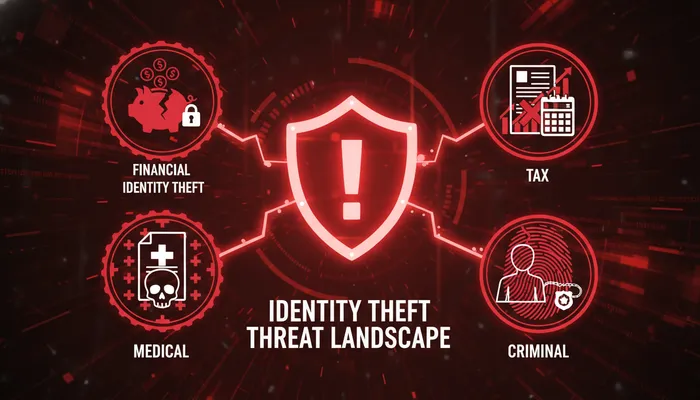
Financial Identity Theft
The most common type—criminals use your information to open credit accounts, make purchases, or access your existing accounts.
Medical Identity Theft
Thieves use your insurance information to receive medical care, resulting in false medical records and bills you didn’t incur.
Tax Identity Theft
Criminals file fraudulent tax returns using your Social Security number to steal your refund.
Criminal Identity Theft
Someone provides your information when arrested, leaving you with a criminal record for crimes you didn’t commit.
Synthetic Identity Theft
Criminals combine real and fake information to create new identities, often using children’s or deceased individuals’ SSNs.
Warning Signs of Identity Theft
- Unfamiliar accounts on credit reports
- Bills for services you didn’t order
- IRS notices about duplicate tax returns
- Debt collection calls for unknown debts
- Medical bills for treatments you didn’t receive
- Denied credit applications unexpectedly
- Missing mail or bank statements
Frequently Asked Questions
What is identity theft?
Identity theft occurs when someone steals your personal information—such as your Social Security number, credit card numbers, or bank account details—and uses it for fraud, to open accounts, make purchases, or commit crimes in your name.
How does identity theft happen?
Identity theft occurs through data breaches, phishing scams, mail theft, social engineering, stolen wallets, unsecured public WiFi, and purchasing stolen data on the dark web.
What should I do if I’m a victim of identity theft?
Immediately freeze your credit at all three bureaus, place fraud alerts, file a report at IdentityTheft.gov, contact affected financial institutions, file a police report, and consider enrolling in an identity protection service for ongoing monitoring and restoration help.
Is identity theft protection worth it?
Identity theft protection is worth it for the time savings, peace of mind, and expert assistance it provides. The average identity theft case takes over 200 hours to resolve without professional help, and insurance covers financial losses up to policy limits.
How much does identity theft cost victims?
The average victim spends $1,343 and 165 hours resolving identity theft. With professional protection services, these costs are reduced through insurance coverage and expert restoration support that handles much of the work for you.