Article
Best Hearing Aids in 2025
Rediscover clear conversations and rich sound. Our experts tested comfort, sound quality, and value to find the best over-the-counter and prescription hearing aids.
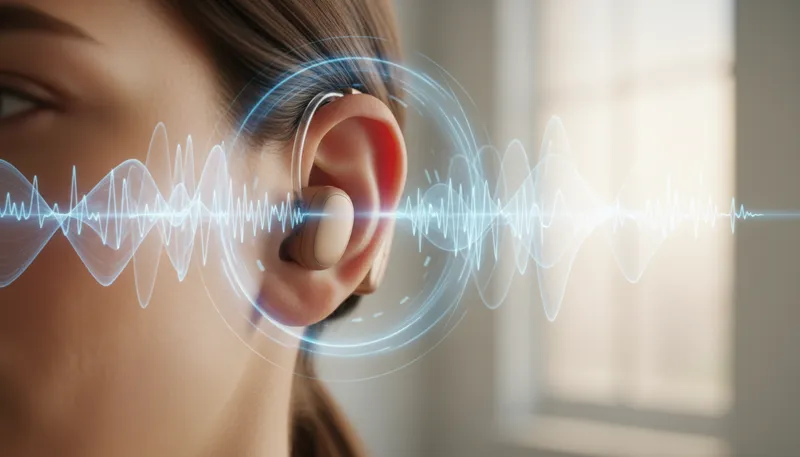
Hearing loss affects over 48 million Americans, but only 20% of those who could benefit from hearing aids actually use them. Modern over-the-counter and direct-to-consumer hearing aids have made treatment more accessible and affordable than ever.
Our team tested sound quality, evaluated comfort, and compared features across leading hearing aid brands. Here are the best options for 2025.
Quick Comparison
| Brand | Best For | Price Per Pair | Rating |
|---|---|---|---|
| 1. Eargo | Best for Invisibility | $1,439 | ★4.8/5 |
| 2. Jabra Enhance | Best Overall Value | $1,195 | ★4.7/5 |
| 3. Audicus | Best for Customization | $1,498 | ★4.6/5 |
| 4. MDHearing | Best Budget Option | $297 | ★4.5/5 |
| 5. Lively (Jabra Enhance) | Best Customer Support | $1,195 | ★4.6/5 |
Our Top Picks in Detail

Eargo
Eargo delivers the most discreet hearing aids available with their patented Flexi Palms design that sits completely in the ear canal. The Eargo 8's Smart Sound Adjust technology learns from your environments to provide increasingly personalized sound over time.
Pros
- ✓Nearly invisible completely-in-canal design
- ✓Smart Sound Adjust learns your preferences
- ✓14 days of portable charging included
- ✓IP68 waterproof and dust-proof rating
- ✓45-day money-back guarantee
Cons
- ✗No Bluetooth streaming capability
- ✗Higher price point ($1,439-$2,699)
- ✗Only for mild to moderate hearing loss
Jabra Enhance
Jabra Enhance (formerly Lively) combines premium ReSound technology with direct-to-consumer pricing. The Select 700 is 25% smaller than previous models and includes cutting-edge features like Auto Focus for speech clarity in noise.
Pros
- ✓Exceptional sound quality with SoundScape technology
- ✓Bluetooth streaming and hands-free calling
- ✓30-hour battery life with portable charging
- ✓100-day money-back guarantee
- ✓ReSound technology at lower prices
Cons
- ✗Based in Netherlands (acquired Lively)
- ✗Limited to behind-the-ear style
- ✗Requires smartphone for full features
Audicus
Audicus offers exceptional flexibility with four models ranging from $1,498-$2,498 and a unique membership program. Their Omni 2 features advanced Speech Finder technology, while remote professional adjustments ensure optimal performance.
Pros
- ✓Prices reduced by up to $1,000 in recent years
- ✓Remote adjustment by audiologists
- ✓100-day trial period with 2-year warranty
- ✓Audicus Plus membership ($99/mo) with free upgrades
- ✓A+ Better Business Bureau rating
Cons
- ✗CIC model uses disposable batteries
- ✗Financing interest rates can be high
- ✗Some advanced features cost extra

MDHearing
MDHearing makes hearing aids accessible with prices starting at just $297 per pair. While lacking advanced features like Bluetooth, their VOLT and VOLT MAX models provide reliable amplification and noise reduction for budget-conscious buyers.
Pros
- ✓Extremely affordable ($297-$597 per pair)
- ✓45-day risk-free trial
- ✓Rechargeable options available
- ✓Simple, easy-to-use design
- ✓Frequent BOGO sales
Cons
- ✗No Bluetooth streaming
- ✗Basic features compared to premium models
- ✗Advertised 'sale' prices can be misleading

Lively (Jabra Enhance)
Lively built its reputation on outstanding customer care and has now joined forces with Jabra Enhance. Their focus on unlimited audiologist support and premium service packages makes them ideal for first-time hearing aid users needing guidance.
Pros
- ✓Exceptional customer support and audiologist access
- ✓Music Mode for improved music quality
- ✓Hands-free calling for iOS and Android
- ✓100-day trial with free returns
- ✓Three-year warranty with loss coverage
Cons
- ✗Now merged with Jabra (same products)
- ✗Requires professional fitting support
- ✗Premium pricing for support services
How We Evaluate Hearing Aids

Our comprehensive evaluation examines every aspect of hearing aid performance:
Sound Quality Testing
We assess real-world hearing performance:
- Speech clarity: Understanding conversations in quiet and noisy environments
- Noise reduction: Effectiveness of background noise suppression
- Sound processing: Natural vs. artificial audio quality
- Feedback elimination: Freedom from whistling and distortion
Comfort and Fit
We evaluate all-day wearability:
- Design style: BTE, RIC, CIC, and ITC options
- Weight and size: Comfort during extended wear
- Ear tip options: Variety of sizes and materials
- Stability: Security during movement and activity
Technology and Features
We examine modern capabilities:
- Bluetooth connectivity: Music and call streaming quality
- Mobile apps: Ease of adjustment and control
- Rechargeable batteries: Convenience vs. disposable
- Environmental adaptation: Automatic program switching
Value Analysis
We calculate total cost of ownership:
- Upfront device pricing and financing options
- Professional support and audiologist access
- Warranty coverage and loss protection
- Trial periods and return policies
Types of Hearing Aids
Behind-the-Ear (BTE)
Traditional style that sits behind the ear:
- Pros: Most powerful amplification, easiest to handle, longest battery life
- Cons: Most visible style, can interfere with glasses
- Best for: Severe hearing loss, dexterity issues, active lifestyles
- Price range: $297-$1,500 per pair
Receiver-in-Canal (RIC)
Modern discreet style with speaker in ear canal:
- Pros: Natural sound quality, less visible, comfortable fit
- Cons: Receiver vulnerable to moisture, requires cleaning
- Best for: Mild to moderate loss, first-time users
- Price range: $1,195-$2,699 per pair
Completely-in-Canal (CIC)
Tiny devices that sit entirely in ear canal:
- Pros: Nearly invisible, natural sound, comfortable
- Cons: Limited features, smaller batteries, difficult to handle
- Best for: Mild to moderate loss, discretion priority
- Price range: $1,439-$2,498 per pair
In-the-Canal (ITC)
Mid-size option that partially fills ear canal:
- Pros: Balance of discretion and features
- Cons: Still somewhat visible, custom fitting required
- Best for: Moderate loss, balance of priorities
- Price range: $1,800-$3,000 per pair
OTC vs. Prescription Hearing Aids
Over-the-Counter (OTC) Hearing Aids
Available without professional fitting:
- Advantages: Lower cost ($300-$1,500), no appointment needed, try at home
- Limitations: For mild to moderate loss only, limited customization
- Best brands: MDHearing, Eargo SE, Jabra Enhance Select
- Who should consider: Budget-conscious, tech-savvy individuals
Prescription Hearing Aids
Professionally fitted by audiologist:
- Advantages: Customized to your audiogram, full feature set, ongoing support
- Limitations: Higher cost ($2,000-$7,000), requires appointments
- Best for: Severe loss, complex needs, maximum performance
- Who should consider: Those with insurance coverage, severe loss
Key Features to Consider
Bluetooth Connectivity
Stream audio directly from devices:
- Phone calls, music, podcasts, and videos
- Hands-free calling on most smartphones
- TV streaming with separate accessory
- Essential for active smartphone users
Rechargeable Batteries
Convenient overnight charging:
- Eliminate battery changes
- 16-30 hours per charge typical
- Portable charging cases available
- Better for environment and convenience
Noise Reduction
Improve hearing in challenging environments:
- Reduces background noise automatically
- Enhances speech clarity in crowds
- Adaptive algorithms learn preferences
- Critical for restaurants and social settings
Smartphone Apps
Control hearing aids from your phone:
- Adjust volume and programs discreetly
- Fine-tune sound for specific situations
- Remote audiologist adjustments
- Track usage and battery life
Frequently Asked Questions
How much do good hearing aids cost?
Quality hearing aids range from $300-$3,000 per pair. OTC models like MDHearing start at $297, mid-range options like Audicus run $1,500-$2,000, and premium models like Eargo 8 cost $2,699. Prescription hearing aids from audiologists typically cost $2,000-$7,000 per pair.
Are OTC hearing aids as good as prescription?
OTC hearing aids work well for mild to moderate hearing loss and cost significantly less. However, prescription devices offer superior customization, more powerful amplification for severe loss, and professional fitting. The FDA approved OTC hearing aids in 2022, making quality devices accessible without prescriptions.
Do I need a hearing test before buying hearing aids?
While not required for OTC hearing aids, a professional hearing test is recommended. Many OTC brands include app-based hearing tests (like Eargo’s Sound Match), but comprehensive audiograms identify the type and degree of hearing loss, ensuring you choose appropriate devices.
How long do hearing aids last?
Hearing aids typically last 3-7 years with proper care. Battery life varies: rechargeable models provide 16-30 hours per charge, while disposable batteries last 3-14 days depending on size and usage. Most brands offer 1-3 year warranties, and some include loss and damage protection.
Can I wear hearing aids while sleeping?
It’s not recommended to wear hearing aids while sleeping. Your ears need a break from amplification, ear wax needs to drain naturally, and you risk damaging the devices. Remove hearing aids at night and store them in a protective case or charging dock.
Will hearing aids restore my hearing to normal?
Hearing aids amplify and clarify sound but don’t restore hearing to normal. They help you hear better in most situations, especially conversations. Expectations should be realistic—there’s an adjustment period, and challenging environments (loud restaurants) remain difficult even with aids.
Do hearing aids help with tinnitus?
Many hearing aids help reduce tinnitus (ringing in ears) by amplifying external sounds, which can mask the ringing. Some models include dedicated tinnitus masking programs that play soothing sounds. Addressing hearing loss often reduces tinnitus perception significantly.
Can I use just one hearing aid?
If you have hearing loss in both ears, two hearing aids are recommended for balanced hearing, better sound localization, and understanding speech in noise. However, if you have single-sided hearing loss or limited budget, one hearing aid is better than none.