Article
Best Hair Loss Treatments in 2026 - Expert Reviews & Comparisons
Combat thinning hair with proven solutions. Our experts tested prescription medications, supplements, and transplant services to find the most effective hair loss treatments for men.
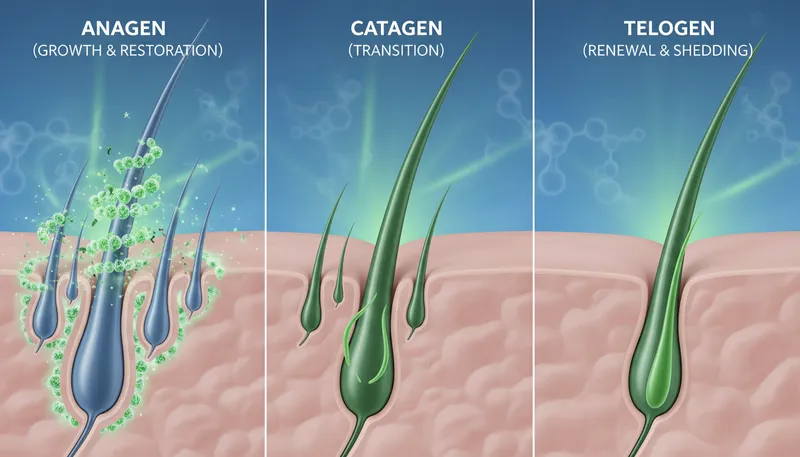
Hair loss affects over 50 million men in the United States, but today’s treatments offer real solutions. From FDA-approved medications to natural supplements and surgical transplants, effective options exist for every stage of hair loss and budget.
Our team analyzed prescription telehealth services, over-the-counter treatments, natural supplements, and transplant clinics to find the most effective hair loss solutions available in 2026.
Quick Comparison
| Provider | Best For | Monthly From | Rating |
|---|---|---|---|
| 1. Hims | Best Overall | $15 | ★4.8/5 |
| 2. Keeps | Best Value | $10 | ★4.7/5 |
| 3. Nutrafol | Best Natural Supplement | $79 | ★4.6/5 |
| 4. Rogaine | Best Over-the-Counter | $13.73 | ★4.5/5 |
| 5. Bosley | Best Hair Transplant | N/A | ★4.4/5 |
Our Top Picks in Detail
Hims
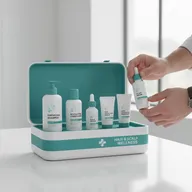
Hims leads the telehealth hair loss market with clinically proven treatments at competitive prices. Their platform offers the widest variety of treatment options and delivery formats, from traditional pills to innovative chewables and mints. With unlimited provider access and comprehensive subscription options, Hims makes consistent treatment easy and affordable.
Pros
- ✓Most affordable with long-term subscriptions
- ✓Chewable hair loss medication available
- ✓Multiple form factors (pills, foam, solution, mints)
- ✓Free unlimited provider messaging
- ✓FDA-approved finasteride and minoxidil
Cons
- ✗Requires subscription commitment for best pricing
- ✗Not available in all countries
- ✗Results take 3-6 months to appear

Keeps
Keeps delivers exceptional value with the most affordable entry point for proven hair loss treatments. Their no-frills approach focuses on the two FDA-approved medications that work—finasteride and minoxidil—without unnecessary add-ons. Quarterly delivery reduces hassle, though shipping fees and consultation charges add to total costs.
Pros
- ✓Lowest starting price at $10/month
- ✓Simple, straightforward treatment options
- ✓3-month, 6-month, and 12-month plans
- ✓Same FDA-approved medications as competitors
- ✓Recently expanded to sexual health treatments
Cons
- ✗Charges $5 per shipment
- ✗$5 fee for follow-up consultations
- ✗Limited treatment variety compared to Hims

Nutrafol
Nutrafol stands alone with its holistic, supplement-based approach to hair wellness. Instead of prescription medications, their clinically tested formulas address hormones, stress, nutrition, and inflammation. While pricier and slower-acting than finasteride or minoxidil, Nutrafol appeals to those seeking natural solutions without potential medication side effects.
Pros
- ✓Drug-free, natural ingredient approach
- ✓No sexual side effects
- ✓5 formulas tailored to life stages
- ✓Additional benefits for stress, sleep, and skin
- ✓NSF Contents Certified and clinically tested
Cons
- ✗Significantly more expensive ($70-88/month)
- ✗Results take 3-6 months minimum
- ✗Less research backing than FDA-approved drugs
Rogaine
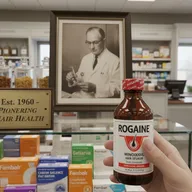
Rogaine pioneered topical minoxidil treatment and remains the go-to over-the-counter option. With decades of proven results and availability both online and in stores, it offers immediate access without consultations. However, you'll miss out on finasteride (which Rogaine can't provide) and the convenience of telehealth prescriptions.
Pros
- ✓No prescription or consultation needed
- ✓Available in stores for immediate purchase
- ✓Longest track record (since 1980s)
- ✓Lower monthly cost with subscriptions
- ✓First FDA-approved topical treatment
Cons
- ✗Only offers minoxidil (no finasteride)
- ✗No telehealth or prescription options
- ✗Must apply twice daily for best results
Bosley
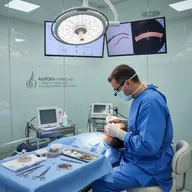
Bosley is the gold standard for surgical hair restoration with over 50 years of experience. Their FUE and FUT transplant procedures provide permanent results for advanced hair loss that medications can't address. While significantly more expensive than topical or oral treatments, Bosley offers surgical solutions that medications alone cannot achieve.
Pros
- ✓50+ years of hair restoration expertise
- ✓Permanent surgical solutions (FUE/FUT)
- ✓70+ locations across the United States
- ✓Combines transplants with medical treatments
- ✓Financing options available
Cons
- ✗Expensive ($6,000-$18,000 typical range)
- ✗Surgical procedure with recovery time
- ✗Not suitable for all types of hair loss
How We Evaluate Hair Loss Treatments
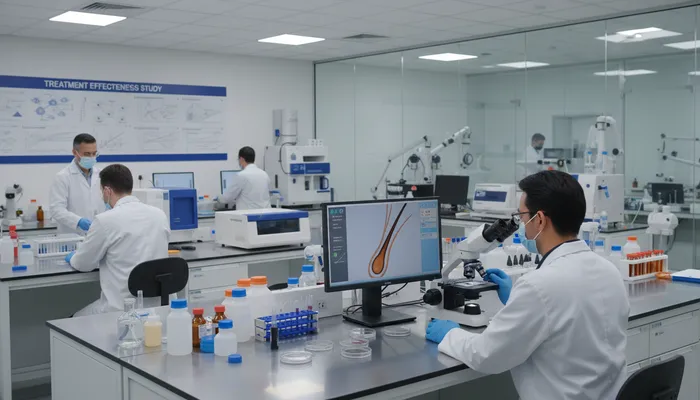
Our evaluation process examines multiple dimensions of hair loss treatment quality:
Clinical Effectiveness
We prioritize treatments with proven results:
- FDA approval status: Finasteride and minoxidil are the only FDA-approved medications
- Clinical studies: Published research demonstrating efficacy
- Success rates: Percentage of users seeing measurable improvement
- Timeline to results: How long before visible changes appear
Cost Analysis
We calculate total treatment costs:
- Monthly pricing: Base subscription costs
- Hidden fees: Shipping, consultation, and follow-up charges
- Long-term value: Discounts for 3-month, 6-month, or annual plans
- Alternative options: Generic vs. brand name pricing
Convenience & Accessibility
We assess ease of use:
- Prescription requirements: Telehealth vs. in-person consultations
- Delivery options: Shipping speed and frequency
- Application method: Pills, topical solutions, foam, or chewables
- Provider access: Ongoing support and follow-ups
Safety Profile
We examine side effects and risks:
- Common side effects: Sexual dysfunction, scalp irritation, initial shedding
- Contraindications: Who should avoid certain treatments
- Long-term safety: Years of clinical use and monitoring
- Monitoring requirements: Need for blood work or check-ups
Understanding Hair Loss Treatment Options
FDA-Approved Medications
Finasteride (Propecia): A prescription pill that blocks DHT, the hormone responsible for male pattern baldness. Clinical studies show it stops hair loss in 90% of men and regrows hair in 65%. Potential side effects include sexual dysfunction in 2-4% of users.
Minoxidil (Rogaine): An over-the-counter topical treatment applied directly to the scalp. It increases blood flow to hair follicles and extends the growth phase. About 60% of users see regrowth after 3-6 months of consistent use.
Combination Therapy: Using both finasteride and minoxidil together often produces better results than either alone, as they work through different mechanisms.
Natural Supplements
Natural supplements like Nutrafol use botanicals, vitamins, and minerals to address underlying causes of hair loss including stress, inflammation, and hormonal imbalances. While they avoid medication side effects, they typically take longer to show results and have less robust clinical evidence.
Surgical Solutions
Hair transplant surgery (FUE or FUT) permanently relocates hair follicles from dense areas to thinning regions. Results are permanent and natural-looking but require significant upfront investment ($6,000-$18,000) and recovery time. Best for advanced hair loss where medications aren’t sufficient.
Frequently Asked Questions
How long does it take to see results from hair loss treatment?
Most treatments require 3-6 months of consistent use before visible improvements appear. Initial shedding in the first 2-8 weeks is normal and actually indicates the treatment is working by pushing out old hair to make room for new growth. Full results typically appear after 6-12 months.
What’s the difference between finasteride and minoxidil?
Finasteride is a prescription pill that blocks DHT production, preventing further hair loss at the hormonal level. Minoxidil is a topical treatment that stimulates blood flow to follicles and extends the growth phase. Finasteride is generally more effective for stopping loss, while minoxidil promotes regrowth. Many users combine both for optimal results.
Are hair loss treatments safe?
FDA-approved finasteride and minoxidil have been used safely by millions of men for decades. The most common finasteride side effect is sexual dysfunction (2-4% of users), which typically resolves when stopping treatment. Minoxidil may cause scalp irritation. Always consult a healthcare provider before starting treatment.
Will hair loss return if I stop treatment?
Yes, medication-based treatments require ongoing use to maintain results. If you stop taking finasteride or using minoxidil, you’ll gradually lose the improvements over 3-6 months and return to your baseline hair loss pattern. This is why subscription-based telehealth services are popular—they ensure consistent treatment.
Can women use these hair loss treatments?
Some treatments are appropriate for women, but not all. Minoxidil is FDA-approved for women at 2% concentration (vs. 5% for men). Finasteride is NOT recommended for women of childbearing age due to birth defect risks. Nutrafol offers specific formulas designed for women at different life stages.
How much do hair loss treatments cost?
Costs vary widely: Generic finasteride or minoxidil runs $10-40/month through telehealth services. Natural supplements like Nutrafol cost $70-88/month. Hair transplant surgery ranges from $6,000-$18,000 as a one-time procedure. Most people find prescription medications offer the best balance of effectiveness and affordability.
Do I need a prescription for hair loss medication?
Finasteride requires a prescription, which you can obtain through online telehealth services like Hims and Keeps without an in-person doctor visit. Minoxidil (Rogaine) is available over-the-counter without a prescription. Natural supplements require no prescription.
What are the side effects of finasteride?
About 2-4% of men experience sexual side effects (decreased libido, erectile dysfunction) from finasteride. These typically resolve when stopping the medication. Other less common side effects include testicular pain, depression, and breast tenderness. Most men tolerate finasteride well with no side effects.