Article
Top 10 Best Genealogy Sites for Family History Research in 2026
Discover your family history with the best genealogy websites. Our experts compared DNA testing, historical records, and family tree tools to help you trace your ancestry.
Discovering your family history connects you to the past and helps you understand who you are. Whether you’re searching for birth records, taking a DNA test, or building a family tree, today’s genealogy sites make ancestral research accessible to everyone.
Our team evaluated record collections, DNA databases, research tools, and user experience across all major genealogy platforms. Here are the best genealogy sites for tracing your roots in 2026.
Quick Comparison
| Site | Best For | Price | Rating |
|---|---|---|---|
| 1. Ancestry.com | Best Overall | $24.99/month | ★4.9/5 |
| 2. FamilySearch | Best Free Option | $0/month | ★4.8/5 |
| 3. MyHeritage | Best for International Research | $129/year | ★4.7/5 |
| 4. FamilyTreeDNA | Best for Advanced DNA | $79one-time | ★4.6/5 |
| 5. Findmypast | Best for British/Irish Ancestry | $189.95/year | ★4.6/5 |
| 6. 23andMe | Best DNA Ethnicity Report | $119one-time | ★4.5/5 |
| 7. WikiTree | Best Collaborative Platform | $0/month | ★4.5/5 |
| 8. Archives.com | Best Budget Subscription | $39.95/year | ★4.3/5 |
| 9. Newspapers.com | Best for Newspaper Records | $7.95/month | ★4.4/5 |
| 10. GenealogyBank | Best Historical Newspaper Archive | $19.95/month | ★4.2/5 |
Our Top Picks in Detail
Ancestry.com
Ancestry.com sets the gold standard for genealogy research with the world's largest collection of historical records and DNA database. Their ThruLines feature uses DNA matches and family trees to identify potential ancestors, making breakthroughs easier than ever.
Pros
- ✓Largest collection of historical records
- ✓Biggest DNA testing database (22+ million)
- ✓Excellent U.S., European, and Latin American coverage
- ✓Intuitive family tree builder with hints
- ✓Strong integration between DNA and records
Cons
- ✗Subscription required for full access
- ✗Can get expensive with add-ons
- ✗Some records duplicated across databases
FamilySearch
FamilySearch is an incredible free resource operated by the LDS Church, offering billions of records at no cost. It's the perfect starting point for beginners and essential for researchers on any budget, with particularly strong international coverage.
Pros
- ✓Completely free to use forever
- ✓Massive 16.8 billion record collection
- ✓Collaborative family tree encourages sharing
- ✓Strong international record coverage
- ✓Regular addition of new record collections
Cons
- ✗No DNA testing service
- ✗Collaborative tree can have accuracy issues
- ✗Interface less polished than paid services

MyHeritage
MyHeritage excels at international research with extensive European, Latin American, and Asian records. Their innovative photo tools bring old family photos to life, and DNA matching works well for cross-border families.
Pros
- ✓Exceptional European and international records
- ✓Accepts DNA transfers from other companies
- ✓2,114 genetic groups for precise ethnicity
- ✓AI photo enhancement and animation tools
- ✓Strong non-English record collections
Cons
- ✗Smaller DNA database than Ancestry/23andMe
- ✗Interface can feel cluttered
- ✗U.S. records not as comprehensive
FamilyTreeDNA
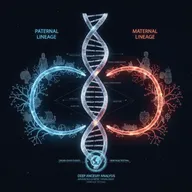
FamilyTreeDNA is essential for serious genetic genealogists. Their unique Y-DNA and mtDNA tests trace paternal and maternal lines far beyond what autosomal DNA can reveal, perfect for breaking through brick walls in your research.
Pros
- ✓Only company offering Y-DNA testing (paternal line)
- ✓mtDNA testing traces maternal line back thousands of years
- ✓Pioneered genetic genealogy since 2000
- ✓Advanced tools for serious DNA researchers
- ✓Strong surname project community
Cons
- ✗Limited historical records database
- ✗More expensive for specialized tests
- ✗Interface dated compared to competitors

Findmypast
If your ancestors came from England, Scotland, Wales, or Ireland, Findmypast is indispensable. Their partnership with the British Library provides unrivaled access to parish records, census data, and newspapers from the British Isles.
Pros
- ✓Unmatched British and Irish record collections
- ✓Exclusive access to British Newspaper Archive
- ✓Complete UK census collection including 1921
- ✓Strong parish records and military documents
- ✓Intuitive search for UK records
Cons
- ✗Limited value for non-British ancestry
- ✗No DNA testing service
- ✗Smaller overall record collection
23andMe
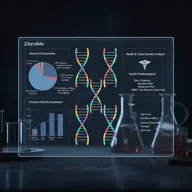
23andMe provides the most sophisticated DNA ethnicity breakdowns and health insights. While lacking historical records, their genetic analysis is unparalleled—ideal for understanding your ethnic makeup and finding DNA relatives.
Pros
- ✓Most detailed ethnicity estimates available
- ✓Comprehensive ancestry composition reports
- ✓Chromosome browser for advanced matching
- ✓Large DNA database for finding relatives
- ✓Regular ancestry updates with new research
Cons
- ✗No historical records database
- ✗Requires separate genealogy site for tree building
- ✗Company went through bankruptcy (now under new ownership)
WikiTree
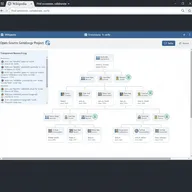
WikiTree takes a unique collaborative approach with one shared family tree connecting all humanity. The community-driven verification process ensures high-quality sourcing, making it ideal for researchers who value accuracy and cooperation.
Pros
- ✓Completely free with no premium tiers
- ✓One unified world family tree
- ✓Strong emphasis on source citation
- ✓Active community of 1.2+ million members
- ✓DNA matching helps confirm relationships
Cons
- ✗No proprietary record collections
- ✗Requires community collaboration (slower)
- ✗Learning curve for wiki-style editing
Archives.com
Archives.com offers Ancestry-owned records at a fraction of the cost. While there's overlap with its parent company, the rock-bottom $39.95 annual price makes it perfect for budget-conscious researchers needing occasional record access.
Pros
- ✓Extremely affordable annual subscription
- ✓11.6 billion U.S. and international records
- ✓7-day free trial available
- ✓Owned by Ancestry (some record overlap)
- ✓Good value for casual researchers
Cons
- ✗Significant overlap with Ancestry records
- ✗Smaller unique record collection
- ✗Basic features compared to premium sites

Newspapers.com
Newspapers.com specializes in historical newspapers, unlocking obituaries that reveal maiden names, family relationships, and ancestral villages. It's an essential complement to traditional genealogy records for filling in life details.
Pros
- ✓Massive 700+ million newspaper pages
- ✓Excellent for finding obituaries and stories
- ✓Reveals maiden names, relatives, life details
- ✓OCR text search across all papers
- ✓Included with Ancestry All Access
Cons
- ✗Specialized—only newspaper records
- ✗Requires separate genealogy platform
- ✗Publisher Extra tier needed for some papers

GenealogyBank
GenealogyBank offers the deepest historical newspaper coverage, with records stretching back over 340 years to colonial America. Researchers with 18th and 19th century American ancestors will find unique records unavailable on other platforms.
Pros
- ✓Newspapers dating back to 1690
- ✓Extensive early American coverage
- ✓Historical documents and books
- ✓Social Security Death Index access
- ✓Unique collections not found elsewhere
Cons
- ✗More expensive than Newspapers.com
- ✗Narrower focus than general genealogy sites
- ✗Interface feels dated
Understanding Genealogy Research Methods
DNA Testing for Genealogy
DNA tests reveal ethnic origins and connect you with genetic relatives:
Autosomal DNA (atDNA)
- Tests chromosomes from both parents
- Shows ethnicity estimate by percentage
- Finds relatives within 5-7 generations
- Best for: Recent ancestry, finding living relatives
- Available from: AncestryDNA, 23andMe, MyHeritage, FamilyTreeDNA
Y-DNA Testing
- Tests Y chromosome (males only)
- Traces direct paternal line back thousands of years
- Matches surname lineages
- Best for: Deep paternal ancestry, surname projects
- Available from: FamilyTreeDNA exclusively
mtDNA Testing
- Tests mitochondrial DNA (males and females)
- Traces direct maternal line back thousands of years
- Identifies ancient maternal haplogroup
- Best for: Deep maternal ancestry, ancient origins
- Available from: FamilyTreeDNA exclusively
What DNA Can Tell You:
- Ethnicity breakdown by region
- Genetic relatives and how you’re related
- Migration patterns of your ancestors
- Potential health predispositions (with health + ancestry tests)
What DNA Cannot Tell You:
- Exact names of ancestors beyond living relatives
- Specific dates and locations without supporting records
- Complete family tree (shows connections, not full lineage)
Historical Records Research
Traditional genealogy relies on documented evidence:
Vital Records
- Birth, marriage, death certificates
- Most reliable primary sources
- Usually found: State/county vital records offices, FamilySearch
Census Records
- Taken every 10 years in most countries
- Shows household members, ages, birthplaces, occupations
- Usually found: Ancestry, FamilySearch, MyHeritage
Immigration Records
- Ship passenger lists, naturalization papers
- Critical for identifying ancestral origin countries
- Usually found: Ancestry, FamilySearch, Ellis Island database
Military Records
- Draft registrations, service records, pension files
- Rich biographical details and family information
- Usually found: Fold3, Ancestry, National Archives
Newspaper Archives
- Obituaries reveal family relationships and life stories
- Marriage announcements, birth notices, local news
- Usually found: Newspapers.com, GenealogyBank, Chronicling America
Church/Parish Records
- Baptisms, marriages, burials before civil registration
- Essential for pre-1850 research in many countries
- Usually found: FamilySearch, Findmypast, local church archives
Combining DNA and Records
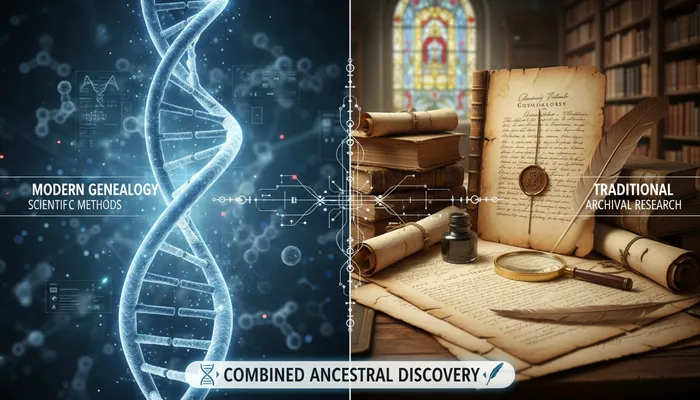
The most powerful genealogy research combines both methods:
- DNA identifies the connection: Find DNA matches suggesting you’re 2nd-3rd cousins
- Records prove the relationship: Use census, birth, marriage records to trace back to common ancestor
- Build complete picture: DNA confirms biological relationship; records provide names, dates, locations
Getting Started with Genealogy Research
Step 1: Talk to Family Members
Start with what you know:
- Interview older relatives (record or video if possible)
- Ask about names, dates, places, stories
- Request copies of family bibles, photos, documents
- Focus on maiden names (crucial for tracing female lines)
Step 2: Begin with Free Resources
Before paying for subscriptions:
- FamilySearch.org: 16.8 billion free records
- WikiTree.com: Collaborative free family tree
- Family History Library: Free access to Ancestry at LDS Family History Centers
- Local libraries: Often provide free Ancestry/Fold3 access
Step 3: Consider DNA Testing
DNA provides breakthroughs when records are missing:
- AncestryDNA ($99): Best for combining DNA with records
- 23andMe ($119): Most detailed ethnicity breakdown
- FamilyTreeDNA ($79+): Y-DNA/mtDNA for deep ancestry
Step 4: Subscribe Based on Your Ancestry
Choose platforms matching your research needs:
- U.S. ancestors: Ancestry.com U.S. Discovery ($24.99/month)
- British/Irish: Findmypast ($189.95/year)
- European: MyHeritage ($129/year)
- International mix: Ancestry World Explorer ($39.99/month)
Step 5: Document Everything
Maintain proper research standards:
- Cite sources for every fact (which record, where found, date accessed)
- Save images of original documents (don’t just copy transcriptions)
- Note conflicting information (records often contradict—document all versions)
- Backup regularly (export GEDCOM files, save to cloud storage)
Common Genealogy Brick Walls and Solutions
Problem: Ancestor with Common Name
Solution:
- Use middle names and initials to distinguish
- Research siblings and neighbors (cluster genealogy)
- Find unique identifiers (occupation, property ownership)
- Use DNA to confirm correct family line
Problem: Female Ancestors (Maiden Names Unknown)
Solution:
- Check marriage records (often list bride’s parents)
- Search obituaries of her children (may mention maternal grandparents)
- Review her parents’ wills (daughters listed by married names)
- Use DNA matches to identify her family line
Problem: Immigrant Ancestor Origins Unknown
Solution:
- Search naturalization papers (state place of birth)
- Check church records in ethnic communities
- Research neighbors from same ethnicity (chain migration patterns)
- Use DNA ethnicity to narrow geographic regions
Problem: Adoption or Unknown Parentage
Solution:
- DNA testing essential (prioritize Ancestry for largest database)
- Learn genetic genealogy techniques (Leeds Method, etc.)
- Join DNA search angels groups
- Consider Y-DNA/mtDNA for paternal/maternal lines
AI Tools Revolutionizing Genealogy
Record Image Search (FamilySearch)
AI makes handwritten historical records searchable by converting images to searchable text, finding ancestors even when names are misspelled or indexed incorrectly.
Photo Enhancement (MyHeritage)
- Photo repair: Removes scratches, repairs damaged photos
- Colorization: Adds realistic color to black and white photos
- Animation: Brings faces to life with subtle movements
- Enhancement: Improves quality of low-resolution images
AI Research Assistants (Beta)
Ancestry and FamilySearch are testing AI chatbots that:
- Answer questions about your family tree
- Suggest next research steps
- Explain how records connect to ancestors
- Summarize what’s known about specific individuals
Frequently Asked Questions
How far back can I trace my family tree?
Most people can reliably trace 4-6 generations (to mid-1800s) with census and vital records. Well-documented families may reach 8-12 generations. Royal or noble lines sometimes trace back 20+ generations, but most families hit brick walls in the 1700s-1800s when records become scarce.
Which DNA test is best for genealogy?
AncestryDNA ($99) is best for most people due to its massive 22+ million person database and integration with historical records. 23andMe ($119) offers more detailed ethnicity but lacks genealogy records. FamilyTreeDNA ($79+) is essential for Y-DNA and mtDNA deep ancestry testing.
Can I use DNA to find biological parents?
Yes, DNA testing has helped thousands find biological parents through genetic genealogy. AncestryDNA’s large database provides the best odds of finding close matches. Consider hiring a search angel or genetic genealogist if you’re overwhelmed by the process.
Are free genealogy sites good enough?
FamilySearch offers 16.8 billion free records—absolutely sufficient for many researchers. However, paid sites provide exclusive collections, better search tools, and convenience. Start with free resources, then subscribe to paid sites targeting your specific ancestry when needed.
How accurate are DNA ethnicity estimates?
Ethnicity estimates are approximations, not exact science. They’re accurate at continental level (European vs. African vs. Asian) but regional breakdowns (Irish vs. Scottish) are educated guesses. Estimates improve as databases grow, so they’re updated periodically.
Should I build my tree on multiple sites?
Focus primarily on one platform to avoid maintenance headaches. FamilySearch is ideal for collaborative research. Ancestry offers best tools and hints. Export your tree as GEDCOM periodically to backup and share across platforms if needed.
How much does genealogy research cost?
Free research: $0 using FamilySearch, WikiTree, and free library resources Budget researcher: $99/year (DNA test + Archives.com subscription) Serious hobbyist: $500/year (Ancestry World Explorer + DNA test + Newspapers.com) Comprehensive: $1,000+/year (Multiple subscriptions, DNA tests, professional help)
Can I find living relatives through genealogy sites?
Yes, DNA testing is particularly good for finding living relatives. Close DNA matches (1st-3rd cousins) are often people you’ve never met. Many family reunions and connections happen through genealogy sites—always approach new contacts respectfully and explain your relationship interest.