Article
Best Fitness Trackers in 2026 - Expert Reviewed & Ranked
Discover the top fitness trackers and smartwatches that actually work. Our experts evaluated Fitbit, Garmin, Apple Watch, Whoop, and more to help you track your health goals accurately.
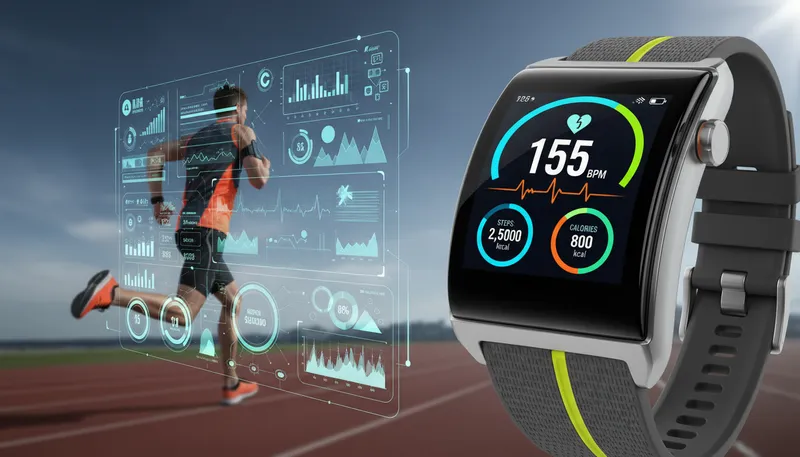
Finding the right fitness tracker can transform your health journey, but with dozens of options from budget bands to premium smartwatches, choosing can be overwhelming. Whether you’re a casual walker or serious athlete, we’ve tested the leading trackers to find the best for every need and budget.
Our team evaluated devices based on accuracy, battery life, features, and value. Here are the best fitness trackers for 2026.
Quick Comparison
| Device | Best For | Price | Rating |
|---|---|---|---|
| 1. Fitbit Charge 6 | Best Overall Value | $159 | ★4.8/5 |
| 2. Garmin Vivoactive 6 | Best for Serious Athletes | $299 | ★4.9/5 |
| 3. Apple Watch Series 10 | Best for iPhone Users | $399 | ★4.7/5 |
| 4. Whoop 4.0 | Best for Recovery Tracking | $239/year | ★4.6/5 |
| 5. Oura Ring 4 | Best for Sleep Tracking | $349 | ★4.7/5 |
| 6. Samsung Galaxy Watch 8 | Best for Android Users | $299 | ★4.5/5 |
| 7. Polar Loop | Best No-Subscription Tracker | $199 | ★4.3/5 |
| 8. Coros Pace 4 | Best for Runners | $249 | ★4.6/5 |
| 9. Apple Watch SE 3 | Best Budget Smartwatch | $249 | ★4.4/5 |
| 10. Fitbit Inspire 3 | Best Entry-Level Tracker | $99 | ★4.2/5 |
Our Top Picks in Detail
Fitbit Charge 6
The Fitbit Charge 6 delivers exceptional value for casual fitness enthusiasts, combining accurate health tracking with Google ecosystem integration at a competitive price. Perfect for those who want comprehensive metrics without smartwatch complexity.
Pros
- ✓Excellent value at $159 with comprehensive features
- ✓Google ecosystem integration (Wallet, Maps, Music)
- ✓Accurate heart rate and ECG monitoring
- ✓7-day battery life reduces charging frequency
- ✓Physical button for easy navigation
Cons
- ✗No subscription required but premium unlocks extra features
- ✗Doesn't track naps as sleep
- ✗Smaller display than smartwatches
- ✗Limited third-party app support
Garmin Vivoactive 6
The Garmin Vivoactive 6 strikes the perfect balance between smartwatch features and serious fitness tracking. With exceptional battery life, detailed training metrics, and a gorgeous display, it's ideal for athletes who want data-driven insights.
Pros
- ✓Outstanding 12-day battery life (21 days battery saver)
- ✓Beautiful 1.2-inch AMOLED display
- ✓Advanced training load and recovery metrics
- ✓Smart wake alarm for optimal sleep cycles
- ✓No subscription required for any features
Cons
- ✗Higher price at $299.99
- ✗No onboard navigation or route tracking
- ✗Lacks ECG functionality
- ✗No barometric altimeter for stair tracking
Apple Watch Series 10
The Apple Watch Series 10 offers the most complete smartwatch experience for iPhone users, combining fitness tracking with communication, apps, and ecosystem integration. Best for those prioritizing overall functionality over battery life.
Pros
- ✓Seamless integration with iPhone and Apple ecosystem
- ✓Most polished user interface and app selection
- ✓Comprehensive health tracking including ECG
- ✓Barometric altimeter for elevation tracking
- ✓No subscription needed for features
Cons
- ✗Only 18-hour battery requires daily charging
- ✗Most expensive option at $399+
- ✗Requires iPhone (not Android compatible)
- ✗Shorter battery than fitness-focused competitors
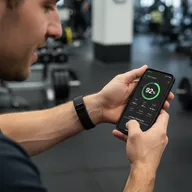
Whoop 4.0
Whoop 4.0 focuses purely on recovery, strain, and sleep for serious athletes and biohackers. The subscription model includes hardware, but the lack of a screen and step tracking make it unsuitable as a standalone fitness tracker.
Pros
- ✓Subscription includes free hardware upgrades
- ✓Advanced recovery and HRV tracking for athletes
- ✓No screen means longer battery life
- ✓WHOOP Body clothing integration
- ✓Deep sleep and strain analysis
Cons
- ✗Requires $239/year subscription (no one-time purchase)
- ✗No built-in display for quick stats
- ✗Doesn't track steps or basic activity
- ✗Dependent on smartphone app constantly
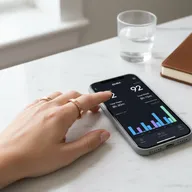
Oura Ring 4
The Oura Ring 4 offers premium sleep and recovery tracking in an elegant, discreet form factor. Perfect for those who prioritize wellness insights over active workout tracking and don't want to wear a bulky watch.
Pros
- ✓Most discreet form factor (smart ring)
- ✓Exceptional sleep tracking accuracy
- ✓Tracks steps unlike Whoop
- ✓Four daily scores: Sleep, Activity, Readiness, Resilience
- ✓No charging during day (7-day battery)
Cons
- ✗Expensive at $349-$499 plus $5.99/month subscription
- ✗No built-in GPS for run tracking
- ✗Limited real-time workout tracking
- ✗Requires proper sizing (get sizing kit first)
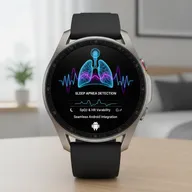
Samsung Galaxy Watch 8
The Samsung Galaxy Watch 8 brings advanced health features including sleep apnea detection and Galaxy AI to Android users. Best for Samsung Galaxy phone owners who want comprehensive health tracking and smartwatch features.
Pros
- ✓Sleep apnea detection FDA cleared
- ✓Galaxy AI for personalized health insights
- ✓Exceptional 2,000 nit display brightness
- ✓Body composition analysis (body fat, muscle)
- ✓Strong Android ecosystem integration
Cons
- ✗Best features require Samsung Galaxy phone
- ✗Battery life shorter than Garmin alternatives
- ✗Some health features need Samsung Health app
- ✗Limited iOS compatibility
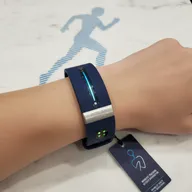
Polar Loop
The Polar Loop challenges subscription-based models by offering advanced training insights without monthly fees. Perfect for budget-conscious athletes who want Polar's renowned heart rate accuracy without the premium price.
Pros
- ✓No subscription required ever
- ✓Similar insights to expensive Polar Vantage series
- ✓8-day battery life
- ✓Advanced Polar Precision Prime HR sensor
- ✓Training load and recovery metrics included
Cons
- ✗No built-in GPS (requires phone)
- ✗No screen for quick stat viewing
- ✗Limited smart features
- ✗Smaller ecosystem than major brands
Coros Pace 4
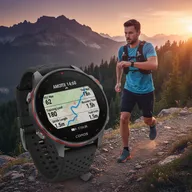
The Coros Pace 4 delivers pro-level GPS tracking and running metrics without smartwatch bulk. With incredible battery stamina and dual-frequency GPS, it's perfect for serious runners and outdoor athletes who value performance.
Pros
- ✓Exceptional 41-hour GPS battery life
- ✓Dual-frequency GPS for improved accuracy
- ✓Sharp AMOLED display with always-on option
- ✓Advanced running-specific metrics
- ✓No subscription for any features
Cons
- ✗Less smart features than Apple or Samsung
- ✗Smaller app ecosystem
- ✗Interface less intuitive for beginners
- ✗Limited lifestyle/wellness features
Apple Watch SE 3
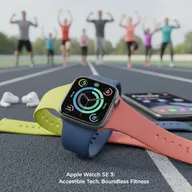
The Apple Watch SE 3 brings essential Apple Watch features at a budget-friendly price. Perfect for iPhone users who want ecosystem integration and basic fitness tracking without paying for premium health sensors.
Pros
- ✓Most affordable Apple Watch at $249
- ✓Full Apple ecosystem integration
- ✓Crash and fall detection included
- ✓Great for families with Family Setup
- ✓Access to Apple Fitness+ workouts
Cons
- ✗No ECG or blood oxygen monitoring
- ✗No always-on display option
- ✗18-hour battery requires daily charging
- ✗Missing advanced health sensors
Fitbit Inspire 3
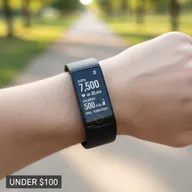
The Fitbit Inspire 3 offers the best entry point for fitness tracking beginners. At $99 with 10-day battery life and a Premium trial, it's perfect for those starting their fitness journey without breaking the bank.
Pros
- ✓Most affordable at just $99
- ✓Impressive 10-day battery life
- ✓Includes 6-month Fitbit Premium trial
- ✓Simple, beginner-friendly interface
- ✓Comprehensive sleep tracking
Cons
- ✗No built-in GPS (uses phone GPS)
- ✗Small display harder to read
- ✗Limited advanced metrics
- ✗Premium subscription needed for best insights
How We Evaluated Fitness Trackers

Our comprehensive evaluation examines both performance and real-world usability:
Tracking Accuracy
We test:
- Heart rate monitoring: Accuracy during rest and intense exercise
- GPS precision: Route tracking and distance measurement
- Sleep tracking: Sleep stage detection and accuracy
- Step counting: Accuracy across different activities
Battery Performance
We evaluate:
- Advertised vs. actual: Real-world battery life testing
- GPS impact: Battery drain with location tracking
- Charging speed: Time from empty to full
- Longevity: Battery degradation over time
Features & Sensors
We assess:
- Health metrics: ECG, SpO2, temperature, stress
- Smart features: Notifications, payments, music
- Workout modes: Activity variety and auto-detection
- Data insights: Quality of health recommendations
User Experience
We consider:
- Comfort: Wearability during sleep and exercise
- Display quality: Readability in sunlight and darkness
- App ecosystem: Quality and ease of use
- Value: Features relative to price and subscriptions
Understanding Fitness Tracker Categories
Basic Fitness Bands (Under $150)
Focus on core tracking like steps, heart rate, and sleep. Perfect for beginners wanting basic metrics without complexity. Examples: Fitbit Inspire 3, Xiaomi Mi Band.
Advanced Fitness Trackers ($150-$250)
Add GPS, advanced metrics, and better displays while maintaining week-long battery life. Ideal for serious fitness enthusiasts. Examples: Fitbit Charge 6, Polar Loop.
Fitness Smartwatches ($250-$400)
Balance fitness tracking with smartwatch features like apps, payments, and communications. Best for all-day wear. Examples: Garmin Vivoactive 6, Samsung Galaxy Watch.
Premium Smartwatches ($400+)
Full-featured computers on your wrist with the best displays, sensors, and ecosystem integration. Examples: Apple Watch Series 10, Garmin Fenix series.
Recovery-Focused Trackers
Prioritize sleep, HRV, and recovery over active workout tracking. Designed for optimization and longevity. Examples: Whoop 4.0, Oura Ring 4.
Frequently Asked Questions
Which fitness tracker is most accurate?
Garmin devices generally provide the most accurate GPS and heart rate tracking, particularly for serious athletes. For casual users, the Fitbit Charge 6 and Apple Watch Series 10 offer excellent accuracy. Chest strap heart rate monitors remain most accurate for intense workouts.
Do I need to pay a subscription?
It depends on the brand. Fitbit, Whoop, and Oura require subscriptions for full features ($5.99-$30/month). Apple Watch, Garmin, Samsung, and Coros have no subscriptions—you get all features with purchase. Always check before buying.
How important is battery life?
Very important for convenience. Devices requiring daily charging (Apple Watch, Samsung) can be frustrating. Week-long battery life (Fitbit, Garmin) means less hassle. Consider your charging habits—some people don’t mind nightly charging for added features.
Can fitness trackers detect health problems?
Some can detect irregular heart rhythms (AFib), low/high heart rate, and sleep apnea. The Apple Watch ECG is FDA-cleared, as is Samsung’s sleep apnea detection. However, trackers aren’t medical devices—always consult doctors about concerning readings.
Which tracker works best with my phone?
Apple Watch only works with iPhone. For Android, Samsung Galaxy Watch works best with Samsung phones, though it supports other Android devices. Fitbit, Garmin, and Whoop work equally well with both iOS and Android.
Are fitness trackers waterproof?
Most modern trackers are water-resistant to 50m (5ATM), suitable for swimming. The Oura Ring is rated to 100m. Always check specific ratings—“water-resistant” doesn’t mean unlimited submersion. Remove for hot showers as steam can damage seals.
How accurate is sleep tracking?
Sleep tracking accuracy varies. Oura Ring and Whoop excel at sleep stage detection. Most trackers accurately detect sleep/wake but struggle with precise sleep stage timing compared to medical polysomnography. They’re useful for trends, not absolute accuracy.
Should I get a fitness tracker or smartwatch?
Choose a fitness tracker if you prioritize battery life, fitness metrics, and simplicity. Choose a smartwatch if you want apps, communication features, and full ecosystem integration. Devices like Garmin Vivoactive 6 bridge both categories well.
Do fitness trackers help with weight loss?
Trackers help by increasing awareness and accountability, but don’t guarantee weight loss. Studies show people using trackers lose 2-3 pounds more on average than those without. Success depends on using insights to change behavior, not just wearing the device.
How long do fitness trackers last?
Most quality trackers last 2-4 years before battery degradation or software obsolescence. Premium brands like Garmin and Apple provide longer software support. Subscription devices like Whoop offer hardware upgrades, extending usable life.