Article
Best FHA Lenders for Low Down Payment Mortgages in 2026
Compare the best FHA lenders of 2026. Our experts reviewed rates, down payment requirements, and approval processes from top lenders including Rocket Mortgage, PennyMac, Guild Mortgage, and LoanDepot to help you find the right FHA loan.

FHA loans remain one of the most accessible paths to homeownership, requiring just 3.5% down with a credit score as low as 580. But not all FHA lenders offer the same rates, assistance programs, or borrower experience.
Our team analyzed the nation’s leading FHA-approved lenders, comparing interest rates, down payment assistance, customer service ratings, and approval flexibility. Here are the 10 best FHA lenders for financing your home in 2026.
Quick Comparison
| Lender | Best For | Min. Credit | Rating |
|---|---|---|---|
| 1. Rocket Mortgage | Best Overall FHA Lender | 1.75% upfront MIP | ★4.7/5 |
| 2. PennyMac | Best for Flexible Requirements | Lower than average costs | ★4.6/5 |
| 3. Guild Mortgage | Best for Low Down Payment Options | Competitive fees | ★4.5/5 |
| 4. LoanDepot | Best for Down Payment Assistance | Standard FHA fees | ★4.4/5 |
| 5. Rate (Guaranteed Rate) | Best for Affordability | Competitive closing costs | ★4.5/5 |
| 6. New American Funding | Best for FHA 203(k) Renovation Loans | Standard FHA + renovation fees | ★4.3/5 |
| 7. CrossCountry Mortgage | Best for Quick Closing | Competitive fees | ★4.2/5 |
| 8. NBKC Bank | Best for Customer Service | Lower than average closing costs | ★4.6/5 |
| 9. Better Mortgage | Best for Digital Experience | Minimal lender fees | ★4.1/5 |
| 10. Wells Fargo | Best for Existing Bank Customers | Standard FHA fees | ★4.2/5 |
Our Top Picks in Detail

Rocket Mortgage
Rocket Mortgage leads the FHA lending market as a top-five lender by volume with consistently above-average customer satisfaction ratings. Their innovative ONE+ program provides down payment assistance, while the RentRewards program gives renters closing cost credits equal to 10% of rent paid.
Pros
- ✓Top-five FHA lender by volume
- ✓Above-average customer satisfaction (J.D. Power)
- ✓Fast closing times (30-50 days vs 40-65 industry avg)
- ✓ONE+ program: 1% down + 2% grant
- ✓RentRewards program for closing cost credits
- ✓Fully online application process
Cons
- ✗Higher origination fees than some competitors
- ✗Rates not published online
- ✗May require larger down payment in some cases

PennyMac
PennyMac stands out for accommodating borrowers with higher debt-to-income ratios (up to 55% vs the typical 43% maximum), making homeownership accessible for more people. With lower costs and transparent rate information, it's an excellent choice for borrowers who need flexibility.
Pros
- ✓Accepts debt-to-income ratios up to 55%
- ✓Lower loan costs than competitors
- ✓Easy-to-find rate information online
- ✓Above-average J.D. Power servicer rating
- ✓Quick online application process
- ✓Multiple promotional offers available
Cons
- ✗No physical branch locations
- ✗Limited loan product variety
- ✗USDA loans not available

Guild Mortgage
Guild Mortgage's innovative 1% Down Program requires just 1% from the borrower while Guild contributes the remaining 2%, making FHA loans even more accessible. With second-highest customer satisfaction ratings and partnerships offering up to 40% down payment assistance, Guild excels at helping buyers with limited savings.
Pros
- ✓1% Down Program with Guild's 2% contribution
- ✓12th-largest lender in the nation
- ✓#2 in J.D. Power customer satisfaction (2026)
- ✓350+ branch locations nationwide
- ✓Shared appreciation financing up to 40%
- ✓Minimum credit score of 540 for FHA
Cons
- ✗Not available in New York State
- ✗Rates not published online
- ✗Recently acquired by Bayview Asset Management

LoanDepot
LoanDepot's AccessONE+ program provides up to $9,000 in down payment and closing cost assistance, making it one of the most generous assistance programs available. With a minimum credit score of just 520 and willingness to work with limited credit histories, it's ideal for first-time buyers who need extra help.
Pros
- ✓AccessONE+ program: $9,000 assistance
- ✓Works with limited credit history borrowers
- ✓Available in all 50 states
- ✓Minimum credit score of 520
- ✓Strong borrower experience ratings
- ✓Multiple assistance programs available
Cons
- ✗Application process can be slower
- ✗Limited online rate transparency
- ✗May have higher interest rates for some borrowers

Rate (Guaranteed Rate)
Rate earned Bankrate's 2026 Award for best FHA lender based on affordability, availability, and customer experience. With competitive rates and a streamlined digital process, Rate delivers excellent value without sacrificing service quality.
Pros
- ✓Bankrate 2026 Award for best FHA lender
- ✓Strong affordability and availability scores
- ✓Competitive interest rates
- ✓Transparent rate information
- ✓Digital-first application process
- ✓Excellent customer service ratings
Cons
- ✗Less name recognition than larger competitors
- ✗Smaller branch network
- ✗Limited specialty loan programs
New American Funding
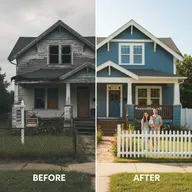
New American Funding specializes in FHA 203(k) loans that let you roll home improvement costs into your mortgage—perfect for buying fixer-uppers. Their unique five-year rate protection pledge allows refinancing without lender or appraisal fees, adding long-term value and flexibility.
Pros
- ✓FHA 203(k) loans for renovations
- ✓Five-year rate protection pledge
- ✓No refinance fees within 5 years
- ✓Strong customer service focus
- ✓Flexible lending guidelines
- ✓Quick application process
Cons
- ✗Fewer branch locations
- ✗Renovation loan complexity
- ✗Higher fees for 203(k) products
CrossCountry Mortgage
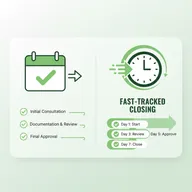
CrossCountry Mortgage excels at speed, offering closings in as little as 10 days for preapproved buyers—half the industry average. With 700+ branches and ultra-low credit requirements, they combine local service with national reach for borrowers who need to close quickly.
Pros
- ✓Close in as little as 10 days with preapproval
- ✓Average closing time of 21 days
- ✓700+ branches nationwide
- ✓Among largest U.S. lenders by volume
- ✓Ultra-low credit score requirements
- ✓Many loan term options available
Cons
- ✗Rates vary significantly by location
- ✗Limited online rate transparency
- ✗Customer service ratings vary by branch

NBKC Bank
NBKC Bank earns the highest customer service ratings in the industry with 95% five-star reviews and an exceptional 4.8/5 rating. Their closing cost guarantee and consistently below-average rates demonstrate commitment to both service quality and affordability.
Pros
- ✓4.8/5 customer service rating
- ✓95% of reviews are 5-star ratings
- ✓Closing cost guarantee
- ✓Rates consistently below national average
- ✓A+ BBB rating with 4.85 stars
- ✓Low origination fees and closing costs
Cons
- ✗Smaller lender with less brand recognition
- ✗Limited branch network
- ✗Fewer loan product options

Better Mortgage
Better Mortgage revolutionizes the FHA application with a fully digital process delivering preapproval in three minutes and commitment letters in 24 hours. Low fees powered by investor-matching technology make it ideal for tech-savvy buyers who prefer online convenience.
Pros
- ✓Entirely online application process
- ✓Preapproval in 3 minutes (soft credit check)
- ✓Commitment letter within 24 hours
- ✓Above-average J.D. Power satisfaction
- ✓Minimal lender fees thanks to technology
- ✓4.13/5 stars on BBB (1,100+ reviews)
Cons
- ✗No in-person branch visits
- ✗VA loans not available
- ✗HELOCs not offered

Wells Fargo
Wells Fargo rewards existing customers with relationship discounts and up to $5,000 in closing cost credits through the Dream.Plan.Home program. With a massive branch network and multiple down payment assistance options, it's convenient for those who prefer working with their current bank.
Pros
- ✓Relationship discounts for existing customers
- ✓Up to $5,000 closing cost credit (Dream.Plan.Home)
- ✓Interest rate discounts on eligible assets
- ✓3% down payment conventional options
- ✓Nationwide branch network
- ✓Multiple assistance programs
Cons
- ✗Rates higher than online-only competitors
- ✗Complex fee structures
- ✗Customer service varies by branch
How We Evaluate FHA Lenders

Our expert team uses a comprehensive methodology to evaluate and rank FHA lenders. Here’s what we consider:
Interest Rates and Fees
We analyze the total cost of borrowing:
- Fixed APR ranges: Understanding rate competitiveness
- Origination fees: Lender charges for processing loans
- Closing costs: Total out-of-pocket expenses
- Rate transparency: How easy it is to find rate information
Down Payment Requirements
We evaluate accessibility:
- Minimum down payment: Standard 3.5% vs special programs
- Down payment assistance: Grants, credits, and co-contributions
- Gift funds accepted: Whether family assistance is allowed
- Total cash needed: Down payment plus closing costs
Credit Score Flexibility
We look at borrower accessibility:
- Minimum FICO requirements: Typically 580, some allow 500-540
- Credit history requirements: How long you’ve had credit
- Alternative credit data: Rent and utility payments considered
- Second-chance lending: Options after bankruptcy or foreclosure
Borrower Experience
We evaluate the customer journey:
- Application process: Online, in-person, or hybrid options
- Approval timeline: How quickly you get a decision
- Closing speed: Time from approval to closing
- Customer service ratings: J.D. Power and BBB scores
Understanding FHA Loans
What is an FHA Loan?
FHA loans are mortgages insured by the Federal Housing Administration, designed to help Americans—especially first-time buyers—achieve homeownership with lower barriers to entry.
FHA Loan Requirements in 2026
- Credit Score: Minimum 580 for 3.5% down; 500-579 requires 10% down
- Down Payment: As low as 3.5% of purchase price
- Debt-to-Income: Maximum 43% (some lenders allow up to 55-57%)
- Loan Limits: $524,225 for single-family homes (up to $1,209,750 in high-cost areas)
- Mortgage Insurance: 1.75% upfront MIP + 0.15%-0.75% annual premium
FHA vs. Conventional Loans
FHA Advantages:
- Lower credit score requirements (580 vs 620+)
- Smaller down payment (3.5% vs 5%+)
- More lenient debt-to-income ratios
- Easier qualification after bankruptcy/foreclosure
Conventional Advantages:
- No upfront mortgage insurance
- PMI can be removed at 20% equity
- Higher loan limits for expensive homes
- Often better rates for excellent credit
Frequently Asked Questions
What credit score do I need for an FHA loan?
The minimum credit score for an FHA loan with 3.5% down is 580. If your score is between 500-579, you can still qualify with 10% down. Some lenders in our list, like LoanDepot, accept scores as low as 520, while Guild Mortgage goes down to 540.
How much do I need for a down payment?
FHA loans require just 3.5% down with a 580+ credit score. On a $300,000 home, that’s only $10,500. However, several lenders offer assistance programs—Guild’s 1% Down Program requires just $3,000, and LoanDepot’s AccessONE+ provides up to $9,000 in assistance.
What is FHA mortgage insurance (MIP)?
FHA loans require two types of mortgage insurance: an upfront premium of 1.75% of the loan amount (can be rolled into the loan), plus an annual premium of 0.15%-0.75% paid monthly. Unlike PMI on conventional loans, FHA MIP typically lasts for the life of the loan.
Can I use an FHA loan to buy a fixer-upper?
Yes! The FHA 203(k) loan program allows you to finance both the purchase price and renovation costs in a single mortgage. New American Funding specializes in these loans, making it easier to buy homes that need repairs.
How long does FHA approval take?
Approval timelines vary by lender. CrossCountry Mortgage can close in as little as 10 days with preapproval, while most lenders average 21-30 days. Better Mortgage offers preapproval in 3 minutes and commitment letters within 24 hours for qualified borrowers.
What is the maximum FHA loan amount?
For 2026, FHA loan limits are $524,225 for single-family homes in most areas. High-cost areas have limits up to $1,209,750. The limit varies by county based on local housing costs.
Can I refinance an FHA loan later?
Yes, FHA loans can be refinanced through the FHA Streamline Refinance program (if rates drop) or refinanced into a conventional loan once you have 20% equity (to eliminate mortgage insurance). New American Funding offers a five-year rate protection pledge with no refinance fees.
Do all lenders accept the same debt-to-income ratio?
While most FHA lenders cap debt-to-income ratios at 43%, some are more flexible. PennyMac accepts ratios up to 55%, and the FHA maximum is 57% with strong compensating factors like high credit scores or cash reserves.