Article
Top 10 Best Extended Car Warranty Companies in 2025
Protect your vehicle with the best extended car warranties of 2025. Our experts compared coverage options, costs, and customer reviews from top providers to help you avoid costly repairs.

Extended car warranties—more accurately called vehicle service contracts—can save you thousands in unexpected repair costs after your manufacturer’s warranty expires. With the cost of car repairs jumping 15% year-over-year in 2025, protection has never been more valuable.
Our team analyzed over 30 extended warranty companies, comparing coverage options, costs, customer reviews, and claims experiences. The average extended warranty costs $1,000-$4,000 per year, but can save you from repair bills exceeding $10,000. Here are the 10 best extended car warranty providers for 2025.
Quick Comparison
| Provider | Best For | Avg Cost | Rating |
|---|---|---|---|
| 1. Endurance | Best Overall Coverage | $130-$250/month | ★4.9/5 |
| 2. CARCHEX | Best Plan Variety | $100-$300/month | ★4.8/5 |
| 3. CarShield | Best for High-Mileage Vehicles | $99-$170/month | ★4.6/5 |
| 4. Olive | Best for Affordability | $80-$150/month | ★4.7/5 |
| 5. Autopom | Best Customer Service | $110-$200/month | ★4.8/5 |
| 6. Premier Auto Protect | Best for Multiple Vehicle Types | $120-$220/month | ★4.6/5 |
| 7. Protect My Car | Best Rewards Program | $100-$180/month | ★4.5/5 |
| 8. Toco Warranty | Best User Reviews | $95-$175/month | ★4.6/5 |
| 9. Chaiz | Best Online Marketplace | $90-$160/month | ★4.4/5 |
| 10. American Auto Shield | Best Traditional Coverage | $105-$190/month | ★4.5/5 |
Our Top Picks in Detail

Endurance
Endurance stands out by administering its own warranty claims directly rather than outsourcing to third parties. This means faster service and a single point of contact when issues arise. Their willingness to cover high-mileage vehicles without caps (on certain plans) makes them ideal for drivers who rack up miles quickly.
Pros
- ✓Direct claims administration (no third party)
- ✓No mileage limit on select plans
- ✓30-day money-back guarantee
- ✓12 months of Elite Benefits included
- ✓Roadside assistance and towing
Cons
- ✗Higher monthly costs than some competitors
- ✗Coverage caps vary by plan level
- ✗Some plans have maintenance requirements
CARCHEX
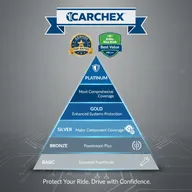
CARCHEX has earned its reputation through industry recognition and extensive plan variety. As a broker working with top warranty companies like American Auto Shield and Zurich, they offer unmatched flexibility. With 21 different contracts across 5 coverage levels, you can fine-tune protection to your exact needs and budget.
Pros
- ✓21 different contract options
- ✓Partners with premier warranty companies
- ✓Accolades from Edmunds, Carfax, KBB
- ✓Flexible deductible options
- ✓Excellent broker network
Cons
- ✗As a broker, quality varies by partner
- ✗Can be more expensive than direct providers
- ✗Complex to navigate 21 different options

CarShield
CarShield pushes the boundaries on vehicle acceptance, covering cars up to 300,000 miles—twice the industry average. Founded in 2005, they've protected over 2 million vehicles including specialty, foreign, and luxury cars often excluded elsewhere. Their EV-specific plan is a standout feature, though customer reviews are mixed.
Pros
- ✓Accepts vehicles up to 300,000 miles
- ✓No vehicle age restrictions
- ✓Electric vehicle coverage available
- ✓Covers specialty and luxury vehicles
- ✓A+ BBB rating
Cons
- ✗Only 2.9/5 star customer rating despite A+ BBB
- ✗Over 2,700 complaints in 3 years
- ✗Coverage exclusions vary by plan

Olive
Olive prioritizes simplicity and affordability with three straightforward coverage tiers and transparent pricing. Their fully digital platform makes comparing deductible options ($100, $250, $500) effortless. Best suited for newer vehicles with moderate mileage, Olive delivers value without overwhelming complexity.
Pros
- ✓Lower cost than most competitors
- ✓Simple online purchasing process
- ✓Three clear deductible options
- ✓Straightforward coverage tiers
- ✓Quick quote generation
Cons
- ✗Lower mileage cap (125,000 miles)
- ✗Only covers vehicles up to 10 years old
- ✗Not available in Massachusetts

Autopom
Autopom has built an enviable reputation for exceptional customer service, earning a 4.7 TrustPilot rating and A+ from the Better Business Bureau. When you need to file a claim, their knowledgeable agents provide quick responses and guide you through the process. Customer satisfaction is their differentiator in a crowded market.
Pros
- ✓A+ BBB rating with strong reviews
- ✓4.7 out of 5 stars on TrustPilot
- ✓Knowledgeable service agents
- ✓Quick response times
- ✓Comprehensive support throughout claims
Cons
- ✗Fewer plan options than CARCHEX
- ✗Not the cheapest option available
- ✗Limited information online without quote

Premier Auto Protect
Premier Auto Protect expands beyond traditional auto warranties to protect motorcycles, ATVs, UTVs, scooters, and personal watercraft. If you own multiple types of vehicles, consolidating coverage under one provider simplifies management. Their seven plans accommodate both gas and electric powertrains across vehicle categories.
Pros
- ✓Covers gas and electric vehicles
- ✓Motorcycle and ATV protection available
- ✓Personal watercraft coverage offered
- ✓Scooter and UTV plans
- ✓Seven distinct protection levels
Cons
- ✗Complexity from multiple vehicle types
- ✗Pricing varies significantly by vehicle
- ✗Less focused on traditional auto coverage

Protect My Car
Founded in 2008, Protect My Car differentiates itself with a rewards program and maintenance inclusions like annual oil changes and tire rotations. Their three-tier structure (Essential, Deluxe, Ultimate) provides clarity without overwhelming choices. The added perks help offset warranty costs for conscientious vehicle owners.
Pros
- ✓Rewards program for members
- ✓Annual oil changes included
- ✓Tire rotations covered
- ✓Three clear coverage levels
- ✓Established since 2008
Cons
- ✗Moderate mileage and age limits
- ✗Fewer plan options than top competitors
- ✗Customer reviews are mixed

Toco Warranty
Toco Warranty has quickly built a strong reputation through consistently positive customer reviews. While they may lack the name recognition of established players, their focus on transparent pricing and reliable claims processing resonates with customers. User feedback suggests they deliver on their promises without the runaround.
Pros
- ✓Highly positive user reviews
- ✓Strong online reputation
- ✓Competitive pricing
- ✓Straightforward coverage options
- ✓Transparent claims process
Cons
- ✗Lower mileage cap than leaders
- ✗Newer player with less market history
- ✗Limited brand recognition

Chaiz
Founded in 2021, Chaiz is the new kid on the block, operating as a marketplace that provides instant quotes from multiple warranty providers. Their fully digital approach eliminates sales calls and high-pressure tactics. While their A+ BBB rating is promising, their limited history means less customer data to evaluate long-term reliability.
Pros
- ✓Instant price quotes from multiple providers
- ✓Entirely online purchasing
- ✓A+ BBB rating
- ✓Compare options efficiently
- ✓No sales pressure
Cons
- ✗Very new (founded 2021, BBB accredited 2025)
- ✗Limited track record
- ✗Coverage varies widely by partner

American Auto Shield
American Auto Shield represents traditional extended warranty coverage done well. Without flashy gimmicks or complex options, they offer four straightforward protection levels backed by a nationwide mechanic network. As a partner provider in CARCHEX's broker network, they focus on reliable, no-surprises coverage.
Pros
- ✓Established traditional provider
- ✓Four clear coverage levels
- ✓Works with CARCHEX network
- ✓Nationwide mechanic network
- ✓Standard industry terms
Cons
- ✗Less innovative than newer competitors
- ✗No standout unique features
- ✗Average customer service ratings
How We Evaluate Extended Warranties

Our expert team uses a comprehensive methodology to test and compare extended warranty providers. Here’s what we evaluate:
Coverage Types and Depth
We analyze what’s actually protected:
- Powertrain coverage: Engine, transmission, drive axles
- Stated-component coverage: Specific systems like electrical, AC, brakes
- Bumper-to-bumper (exclusionary): Everything except listed exclusions
- Component count: Some cover 50 parts, others cover 5,000+
- Wear-and-tear items: Whether routine maintenance is included
Vehicle Eligibility Requirements
We assess how flexible providers are:
- Maximum vehicle age accepted
- Maximum mileage limits
- Pre-existing condition policies
- Inspection requirements before coverage
- Special categories (luxury, electric, high-mileage)
Cost and Value
We calculate the complete financial picture:
- Monthly or annual premium costs
- Deductible amounts per repair visit
- Coverage caps and limits
- Cost versus potential repair savings
- Money-back guarantee periods
Claims Process
We evaluate the actual experience of getting repairs covered:
- How to file a claim (phone, app, online)
- Approval rates and speed
- Direct administration vs. third-party
- Network of approved repair shops
- Reimbursement policies for out-of-network
Customer Experience
We consider real-world satisfaction:
- BBB ratings and complaint history
- TrustPilot and consumer review scores
- Customer service responsiveness
- Contract clarity and transparency
- Cancellation policies and refunds
Types of Extended Warranty Coverage
Powertrain Warranty
The most basic and affordable option, covering:
- Engine and engine components
- Transmission and transaxle
- Drive axles and differentials
- Transfer case (4WD/AWD vehicles)
Best for: Owners of reliable vehicles who want catastrophic failure protection only.
Average cost: $1,000-$1,500/year
Stated-Component Warranty
Mid-level coverage for specific named systems:
- All powertrain components
- Electrical systems
- Air conditioning
- Fuel system
- Steering components
- Brake system
Best for: Those wanting more than powertrain but less than comprehensive coverage.
Average cost: $1,500-$2,500/year
Bumper-to-Bumper (Exclusionary) Warranty
The most comprehensive coverage, protecting:
- Everything except specifically excluded items
- Typically excludes: maintenance, wear items, glass, interior
- Some providers cover over 5,000 components
Best for: Owners of older vehicles, luxury cars, or those who want maximum peace of mind.
Average cost: $2,000-$4,000/year
Specialty Coverage
Additional options some providers offer:
- Electric vehicle coverage: Battery, electric motor, charging systems
- Hybrid coverage: Both gas and electric components
- Luxury vehicle coverage: High-end brands with expensive parts
- Motorcycle/ATV coverage: Two-wheeled and recreational vehicles
What Extended Warranties Typically Don’t Cover
Be aware of common exclusions:
- Routine maintenance: Oil changes, filter replacements, fluid top-offs
- Wear and tear: Brake pads, tires, wiper blades, clutches
- Pre-existing conditions: Problems that existed before coverage started
- Accident damage: Collision and comprehensive insurance covers this
- Cosmetic issues: Paint, upholstery, trim unless affecting function
- Aftermarket modifications: Non-factory parts and installations
- Maintenance-related failures: Damage from not maintaining the vehicle
Always read the contract carefully to understand what’s excluded.
Is an Extended Warranty Worth It?
Consider these factors when deciding:
When It Makes Sense
- You own a vehicle known for expensive repairs (luxury brands, German cars)
- Your car is approaching 100,000 miles or 7+ years old
- You can’t afford a $2,000-$5,000 unexpected repair bill
- You plan to keep the vehicle for several more years
- Your manufacturer’s warranty is expiring soon
When to Skip It
- You have a reliable vehicle with excellent repair history
- You’re financially able to pay for repairs out of pocket
- You have a healthy emergency fund
- The vehicle is very old (15+ years) with high mileage
- You plan to trade in or sell within 1-2 years
The Math
Average extended warranty: $2,000/year Average annual repair cost (without warranty): $1,200 However, only about 1 in 10 people who buy extended warranties actually use them.
If you’re disciplined, setting aside $150-200/month in a “repair fund” might be smarter than buying a warranty. But warranties provide peace of mind and budget certainty.
Tips for Getting the Best Extended Warranty
Shop Multiple Providers
Don’t buy from the dealer without comparing. Independent providers often offer 30-40% savings with identical or better coverage.
Read the Entire Contract
Pay attention to:
- Exact components covered vs. excluded
- Claims procedures and approval process
- Deductible amounts
- Maximum payout limits
- Cancellation and refund terms
Verify Repair Shop Flexibility
Some warranties require approved shops, while others let you choose any ASE-certified mechanic. Flexibility is valuable.
Check the Money-Back Guarantee
Look for 30-60 day money-back periods. This lets you review the contract thoroughly after purchase and cancel if unsatisfied.
Ask About Transferability
If you sell the vehicle, can the warranty transfer to the new owner? This adds resale value.
Understand Deductible Options
Higher deductibles lower monthly costs. If you can afford a $200-500 deductible per visit, you’ll save on premiums.
Look for Added Benefits
Some warranties include:
- Roadside assistance
- Rental car reimbursement
- Trip interruption coverage
- Tire and wheel protection
These extras add value beyond basic repair coverage.
Frequently Asked Questions
What’s the difference between an extended warranty and a service contract?
Technically, “extended warranty” is a misnomer—they’re actually vehicle service contracts. True warranties come from manufacturers. Service contracts are agreements where a company pays for covered repairs. The terms are often used interchangeably.
Can I buy an extended warranty after my factory warranty expires?
Yes, but your vehicle may require a pre-purchase inspection. Some providers have time or mileage limits after factory warranty expiration (e.g., within 12 months or 12,000 miles).
Do I have to use dealer service centers?
Not usually. Most third-party warranties allow any ASE-certified mechanic or licensed repair facility. This provides more flexibility and often lower repair costs than dealers.
What if I move to a different state?
Reputable national providers cover you anywhere in the U.S. Verify this before purchasing, especially if you might relocate.
Can I cancel my extended warranty and get a refund?
Most providers offer pro-rated refunds if you cancel before filing claims. Terms vary—some offer full refunds within 30-60 days, then pro-rated refunds based on time and mileage used.
How do I file a claim?
Typically:
- Contact the warranty provider before repairs
- Get authorization for the work
- Take your vehicle to an approved (or any certified) shop
- The shop confirms the issue and gets approval
- Repairs are completed, and you pay your deductible
Some providers pay shops directly; others require you to pay and seek reimbursement.
Are extended warranties tax deductible?
Generally no for personal vehicles. If you use your vehicle for business, a portion may be deductible—consult a tax professional.
Do extended warranties cover rental cars while my car is repaired?
Some do. Check for “rental car reimbursement” benefits, which typically provide $30-50/day for a limited number of days during covered repairs.