Article
Best Email Marketing Software & Automation Tools in 2026
Grow your audience and boost conversions with the right email marketing platform. We tested automation, deliverability, and features to find the best solutions for every business.
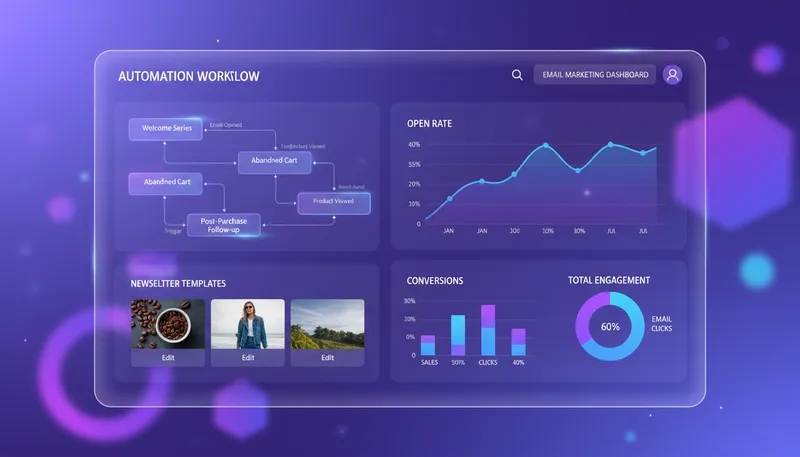
Email marketing remains the highest-ROI marketing channel in 2026, with 41% of marketers rating it as their most effective tool—far ahead of social media at 16%. Whether you’re a creator building an audience, an ecommerce store recovering abandoned carts, or an enterprise nurturing complex customer journeys, the right email marketing platform can transform your business.
Our team tested 20+ email marketing platforms, evaluating automation capabilities, deliverability rates, ease of use, and pricing. Here are the best email marketing solutions for every need and budget.
Quick Comparison
| Platform | Best For | Price | Rating |
|---|---|---|---|
| 1. Mailchimp | Best Overall | $13/month | ★4.7/5 |
| 2. Brevo | Best Free Plan | $25/month | ★4.6/5 |
| 3. ActiveCampaign | Best for Automation | $29/month | ★4.8/5 |
| 4. Constant Contact | Best for Beginners | $12/month | ★4.5/5 |
| 5. Kit | Best for Creators | $29/month | ★4.6/5 |
| 6. AWeber | Best Budget Option | $15/month | ★4.4/5 |
Our Top Picks in Detail

Mailchimp
Mailchimp is the most recognized name in email marketing for good reason. With over 20 million users worldwide, it combines powerful automation, extensive integrations, and excellent deliverability. The platform has evolved into a complete marketing suite with CRM, landing pages, and social ads.
Pros
- ✓Industry-leading deliverability rates
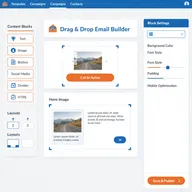
- ✓Intuitive drag-and-drop email builder
- ✓Comprehensive marketing automation on Standard plan
- ✓Extensive integration ecosystem
- ✓Built-in CRM and landing page tools
Cons
- ✗Free plan very limited (500 contacts, 1000 emails/mo)
- ✗Charges for unsubscribed contacts
- ✗Price increases quickly with contact growth

Brevo
Brevo (formerly Sendinblue) offers the most generous free plan in email marketing with unlimited contacts and 300 daily emails. Its unique pay-per-email pricing model and multi-channel capabilities (SMS, WhatsApp) make it ideal for businesses with large contact lists but moderate sending volume.
Pros
- ✓Truly unlimited contacts on free plan
- ✓Pay per email sent, not per contact
- ✓Multi-channel marketing (email, SMS, WhatsApp)
- ✓Advanced automation on free plan for 2K contacts
- ✓Built-in CRM and transactional emails
Cons
- ✗Free plan limited to 300 emails daily
- ✗Smaller template library than competitors
- ✗Less polished interface than Mailchimp

ActiveCampaign
ActiveCampaign is the automation powerhouse for serious marketers. Its visual workflow builder, predictive sending, and deep integration between email marketing and CRM make it the top choice for businesses that want to automate complex customer journeys and nurture leads through the entire sales funnel.
Pros
- ✓Most powerful automation platform available
- ✓Built-in CRM combines sales and marketing
- ✓Advanced segmentation and personalization
- ✓Predictive sending and machine learning
- ✓Excellent for customer lifecycle automation
Cons
- ✗Steeper learning curve for beginners
- ✗Higher starting price than basic platforms
- ✗Can be overwhelming with features
Constant Contact
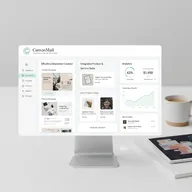
Constant Contact excels at simplicity and support, making it perfect for beginners and small businesses. With 300+ templates, guided setup, and exceptional customer service, you can create professional campaigns without technical expertise. Ideal for newsletters, events, and basic marketing needs.
Pros
- ✓Extremely easy to use (87% ease-of-use score)
- ✓300+ professional email templates
- ✓Excellent customer support and training
- ✓Event marketing and RSVP tracking
- ✓Great for small businesses and non-profits
Cons
- ✗Limited automation capabilities
- ✗Basic compared to advanced platforms
- ✗Higher cost for larger contact lists
Kit
Kit (formerly ConvertKit) is purpose-built for creators, bloggers, and online course sellers. Its subscriber-focused approach, generous free tier, and built-in tools for selling digital products make it the platform of choice for over 500,000 creators building direct relationships with their audience.
Pros
- ✓Built specifically for creators and bloggers
- ✓Generous free plan (10,000 subscribers)
- ✓Unlimited landing pages and forms on free plan
- ✓Easy subscriber tagging and segmentation
- ✓Digital product sales and newsletter referrals
Cons
- ✗Limited automation on free plan
- ✗Fewer templates than general platforms
- ✗Less suitable for traditional businesses
AWeber
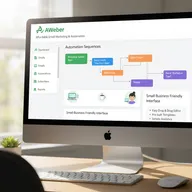
AWeber offers the best value as your list grows, with pricing that stays competitive even at higher contact counts. Its AI content creator, robust automation features, and reliable deliverability make it an excellent budget-friendly choice for small businesses and solopreneurs.
Pros
- ✓Most affordable paid plans as you scale
- ✓Free plan for up to 500 subscribers
- ✓AI content creator for email copy and subject lines
- ✓Advanced automation at lower price points
- ✓Web push notifications included
Cons
- ✗Interface feels dated compared to newer platforms
- ✗Smaller template selection
- ✗Less comprehensive than premium options
How We Test Email Marketing Software

Our email marketing evaluation process is thorough and data-driven:
Deliverability Testing
We measure real-world inbox placement:
- Inbox Rate: Percentage of emails reaching primary inbox vs spam
- Authentication: SPF, DKIM, and DMARC implementation
- Sender Reputation: IP warming and domain reputation management
- Spam Score Testing: Content analysis and filter avoidance
Automation Capabilities
We evaluate workflow sophistication:
- Trigger Options: Behavioral, time-based, and conditional triggers
- Visual Builder: Ease of creating complex multi-step automations
- Personalization: Dynamic content and conditional logic
- Testing Tools: A/B testing, multivariate testing, and analytics
Template & Design Tools
We assess creative capabilities:
- Template Library: Quantity, quality, and variety of pre-built designs
- Email Builder: Drag-and-drop ease vs coding flexibility
- Mobile Optimization: Responsive design and preview tools
- Brand Customization: Custom fonts, colors, and saved content blocks
Pricing & Value Analysis
We calculate true cost of ownership:
- Contact-Based vs Usage-Based: Which pricing model saves money
- Hidden Fees: Extra charges for features, sends, or users
- Scalability: How costs increase as your list grows
- Free Plan Limitations: What you can actually accomplish for free
Essential Email Marketing Features
List Management & Segmentation
- Contact Import: Easy upload from CSV, CRM, or other platforms
- Segmentation: Group subscribers by behavior, demographics, or engagement
- Tagging: Flexible organization beyond traditional list structure
- Signup Forms: Embedded, popup, and landing page creation
Email Design & Content
- Template Editor: Drag-and-drop builder for custom designs
- Dynamic Content: Personalization based on subscriber data
- AI Writing Tools: Generate subject lines and email copy
- Image Library: Stock photos and easy image editing
Marketing Automation
- Welcome Series: Automated onboarding for new subscribers
- Abandoned Cart: Recover lost sales with triggered reminders
- Lead Nurturing: Multi-touch sequences that guide prospects
- Re-engagement: Win back inactive subscribers automatically
Analytics & Optimization
- Open & Click Rates: Core engagement metrics
- Revenue Attribution: Track sales generated by campaigns
- Heatmaps: See where subscribers click in your emails
- A/B Testing: Test subject lines, content, and send times
Frequently Asked Questions
What is email marketing software?
Email marketing software enables businesses to send bulk emails, automate campaigns, and track performance. Modern platforms include list management, drag-and-drop email builders, marketing automation workflows, segmentation tools, and analytics—everything needed to build relationships and drive conversions through email.
How much does email marketing software cost?
Most platforms offer free plans with 500-10,000 contacts. Paid plans typically start at $10-30 monthly. Pricing scales with contacts: expect $50-100 monthly for 5,000 contacts, $100-300 for 25,000 contacts. Premium automation platforms like ActiveCampaign start higher but include advanced features.
What’s the best email marketing platform for beginners?
Constant Contact (87% ease-of-use score) offers the gentlest learning curve with guided setup and exceptional support. Mailchimp provides an intuitive interface with helpful templates. For creators specifically, Kit simplifies subscriber management with a creator-focused approach that’s easy to learn.
Can I use email marketing software for free?
Yes. Brevo offers unlimited contacts free (300 emails daily). Kit provides 10,000 subscribers free with basic features. Mailchimp’s free plan includes 500 contacts and 1,000 monthly sends. AWeber offers 500 subscribers free. These plans work well for getting started before upgrading.
What’s the difference between email marketing and marketing automation?
Email marketing focuses on sending newsletters and promotional campaigns. Marketing automation includes email plus advanced workflows that trigger based on subscriber behavior—like sending different content based on link clicks, tagging subscribers automatically, or creating complex multi-channel customer journeys.
How do I improve my email deliverability?
Improve deliverability by authenticating your domain (SPF, DKIM, DMARC), maintaining list hygiene by removing inactive subscribers, avoiding spam trigger words, sending consistently rather than sporadically, and encouraging engagement with valuable content. Choose providers with strong sender reputations like Mailchimp or Brevo.
Should I use a contact-based or send-based pricing model?
Contact-based pricing (most platforms) charges for list size regardless of sending frequency—ideal if you email regularly. Send-based pricing (Brevo) charges per email sent—better if you have a large list but send infrequently. Calculate your typical sends per month to determine which model costs less.
Can email marketing software integrate with my website and CRM?
Yes, all major platforms integrate with popular website builders (WordPress, Shopify, Wix) and CRMs (Salesforce, HubSpot, Zoho). Mailchimp offers 300+ integrations, ActiveCampaign has 900+, and most platforms provide API access for custom integrations. Check specific integrations before committing.