Article
Best Cheap Hearing Aids in 2026
Quality hearing aids don't have to cost thousands. Our experts tested affordable OTC options under $500 to find the best value devices that actually work.
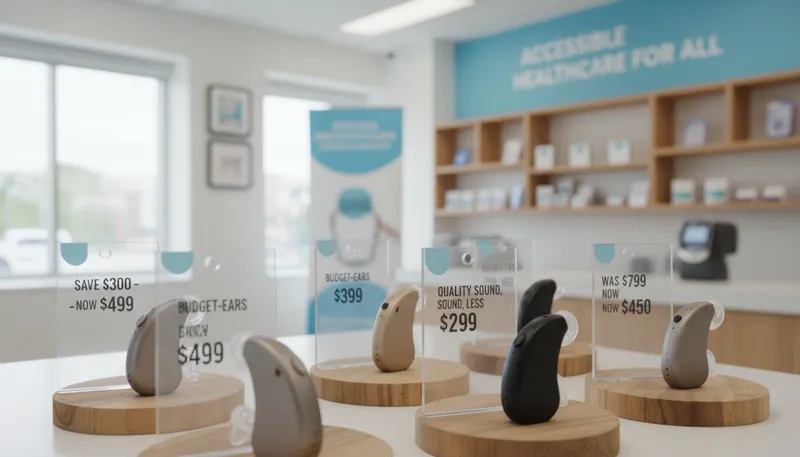
Affordable hearing aids have transformed from impossible dream to reality thanks to FDA approval of over-the-counter devices in 2022. Quality hearing assistance now starts under $100, with feature-rich options available for $200-$500.
Our team tested budget hearing aids across all price points, evaluating sound quality, features, and value. Here are the best cheap hearing aids that actually work in 2026.
Quick Comparison
| Brand | Best For | Price Per Pair | Rating |
|---|---|---|---|
| 1. Elehear Beyond | Best Overall Under $500 | $399 | ★4.7/5 |
| 2. MDHearing VOLT MAX | Best Budget Rechargeable | $597 | ★4.5/5 |
| 3. Audien Atom Pro 2 | Best Discreet Design Under $300 | $249 | ★4.4/5 |
| 4. Apple AirPods Pro 3 | Best Multi-Purpose Option | $249 | ★4.3/5 |
| 5. Go Hearing Prime II | Best True Budget OTC | $199 | ★4.3/5 |
| 6. MDHearing AIR | Best Entry-Level Option | $297 | ★4.2/5 |
| 7. Audien Atom 2 | Best Under $200 | $199 | ★4.1/5 |
| 8. Walmart Hearing Aids | Best Retail Availability | $199-$499 | ★3.9/5 |
| 9. Amazon OTC Hearing Aids | Best Selection Variety | $89-$499 | ★3.8/5 |
| 10. Audien Atom (Original) | Best Ultra-Budget ($99) | $99 | ★3.7/5 |
Our Top Picks in Detail

Elehear Beyond
The Elehear Beyond stands out as the clear winner in the under-$500 category, offering features typically found in $2,000+ hearing aids. Its combination of Bluetooth streaming, comprehensive mobile app, advanced noise reduction, and tinnitus support makes it exceptional value at $399 per pair.
Pros
- ✓Exceptional features for $399 price point
- ✓Full Bluetooth streaming capability
- ✓Robust app for personalized adjustments
- ✓Effective noise reduction technology
- ✓Built-in tinnitus masking programs
Cons
- ✗Newer brand with limited track record
- ✗Fewer retail locations than major brands
- ✗Customer support still developing

MDHearing VOLT MAX
MDHearing's VOLT MAX delivers reliable rechargeable performance at budget prices. While lacking Bluetooth, its four environmental presets, noise reduction, and long-standing company reputation make it a solid choice for those prioritizing affordability and simplicity over advanced connectivity.
Pros
- ✓Often available for $297-$397 on sale
- ✓Rechargeable convenience included
- ✓Four preset listening environments
- ✓45-day risk-free trial period
- ✓Simple, easy-to-use design
Cons
- ✗No Bluetooth streaming
- ✗Advertised 'sales' can be misleading
- ✗Behind-the-ear style more visible
Audien Atom Pro 2
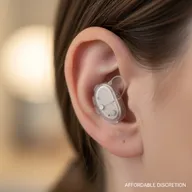
The Audien Atom Pro 2 offers impressive discretion and features at just $249. Its UV-sanitizing case, multiple listening modes, and tiny size appeal to those wanting nearly invisible hearing aids without premium pricing, though feedback issues and small controls may frustrate some users.
Pros
- ✓Nearly invisible in-canal design
- ✓UV-sanitizing portable charging case
- ✓Background noise cancellation
- ✓Four listening mode options
- ✓Excellent $249 price point
Cons
- ✗Small size challenging for dexterity issues
- ✗Feedback/whistling problems reported
- ✗No professional fitting support

Apple AirPods Pro 3
Apple transformed the AirPods Pro 3 into FDA-cleared hearing aids through software updates, creating a unique dual-purpose device. At $249, you get premium earbuds that also provide hearing assistance, though shorter battery life and iPhone requirement limit their appeal as full-time hearing aids.
Pros
- ✓Also functions as premium earbuds
- ✓FDA-cleared hearing aid features
- ✓Excellent noise cancellation
- ✓Seamless Apple ecosystem integration
- ✓Regular software updates and improvements
Cons
- ✗Shorter battery life than dedicated aids
- ✗Best for iPhone users only
- ✗Earbud appearance not traditional aid look
Go Hearing Prime II
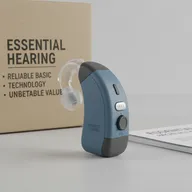
Go Hearing Prime II ranks consistently as one of the strongest true budget OTC hearing aids. At $199, it provides reliable FDA-registered hearing assistance with rechargeable convenience, making it ideal for first-time users or those needing basic amplification without premium features.
Pros
- ✓Consistently strong budget performer
- ✓Rechargeable battery convenience
- ✓FDA-registered OTC hearing aid
- ✓Reliable basic amplification
- ✓Good customer service reputation
Cons
- ✗Basic features only
- ✗Limited advanced technology
- ✗Behind-the-ear visibility

MDHearing AIR
MDHearing AIR provides affordable entry into hearing assistance at $297 per pair. Its simple four-environment system and traditional behind-the-ear design offer straightforward operation, though disposable batteries add ongoing costs that rechargeable competitors avoid.
Pros
- ✓Lowest MDHearing price at $297
- ✓Simple four-environment presets
- ✓Trusted brand with track record
- ✓45-day money-back guarantee
- ✓Good for first-time users
Cons
- ✗Uses disposable batteries (ongoing cost)
- ✗No recharging convenience
- ✗Watch for inflated 'sale' pricing

Audien Atom 2
The Audien Atom 2 delivers four listening modes and improved sound quality at just $199, making it one of the best values in the Audien lineup. While lacking the UV case of the Pro 2, it provides solid performance for budget-conscious buyers prioritizing discretion.
Pros
- ✓Excellent $199 price point
- ✓Four adjustable listening modes
- ✓Improved sound chip vs. basic Atom
- ✓Small, discreet in-canal fit
- ✓Rechargeable battery convenience
Cons
- ✗No UV-sanitizing case (Pro 2 feature)
- ✗Feedback management issues
- ✗Small buttons difficult for some

Walmart Hearing Aids
Walmart offers diverse OTC hearing aid options both online and in-store, including brands like Elehear, Audien, and others. While convenient and familiar, carefully verify devices are FDA-registered hearing aids rather than PSAPs, and be prepared for limited staff expertise compared to specialty retailers.
Pros
- ✓Wide selection of OTC brands
- ✓Try before buying at some stores
- ✓Easy returns to local store
- ✓Price matching often available
- ✓Familiar retail environment
Cons
- ✗Quality varies widely by brand
- ✗Limited staff expertise
- ✗Some models are PSAPs, not hearing aids
Amazon OTC Hearing Aids
Amazon offers the widest selection of budget hearing aids and amplifiers, but buyer beware: many cheap devices are PSAPs or low-quality amplifiers rather than legitimate OTC hearing aids. Read reviews carefully, verify FDA registration, and stick to known brands like Elehear, Audien, or MDHearing.
Pros
- ✓Widest selection of budget models
- ✓Customer reviews for guidance
- ✓Fast Prime shipping available
- ✓Easy return process
- ✓Competitive pricing
Cons
- ✗Difficult to distinguish quality from junk
- ✗Many PSAPs marketed as hearing aids
- ✗Limited customer support
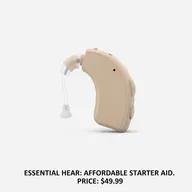
Audien Atom (Original)
At just $99 per pair, the original Audien Atom is the most affordable FDA-registered hearing aid available. While lacking advanced features, modes, or long battery life, it eliminates the financial barrier for those needing basic amplification who cannot afford hundreds or thousands of dollars.
Pros
- ✓Lowest FDA-registered aid at $99
- ✓Removes financial barrier completely
- ✓Small, nearly invisible design
- ✓Rechargeable with included dock
- ✓Good for testing hearing aid concept
Cons
- ✗Very basic amplification only
- ✗No adjustable modes or settings
- ✗Shorter battery life than newer models
Understanding Budget Hearing Aid Categories
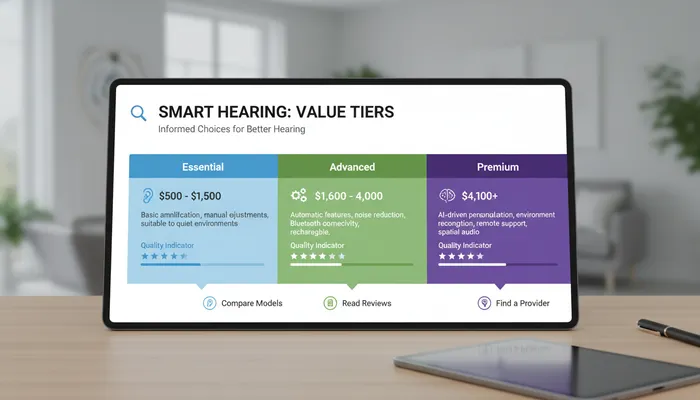
Budget hearing aids fall into distinct price tiers with different capabilities:
Ultra-Budget: $89-$199
What you get:
- Basic sound amplification
- Simple or no environmental presets
- Rechargeable or disposable batteries
- Minimal advanced features
- FDA-registered OTC devices
Best models:
- Audien Atom: $99
- Go Hearing Prime II: $199
- Audien Atom 2: $199
Who should consider:
- Extremely tight budgets
- First-time users testing concept
- Mild hearing loss only
- Low expectations for features
Mid-Budget: $200-$399
What you get:
- Multiple listening environments
- Better noise reduction
- Rechargeable batteries standard
- Some advanced features
- Improved sound quality
Best models:
- Audien Atom Pro 2: $249
- Apple AirPods Pro 3: $249
- MDHearing AIR/VOLT: $297-$397
- Elehear Beyond: $399
Who should consider:
- Balancing price and features
- Need discretion or specific features
- Mild to moderate hearing loss
- Tech-comfortable users
Premium Budget: $400-$500
What you get:
- Bluetooth streaming capability
- Smartphone app control
- Advanced noise reduction
- Professional-level features
- Strong performance
Best models:
- Elehear Beyond: $399
- MDHearing VOLT MAX: $597 (often on sale)
Who should consider:
- Maximum features under $500
- Need Bluetooth streaming
- Active smartphone users
- Best value without premium pricing
What to Expect from Cheap Hearing Aids
Realistic Benefits
Budget hearing aids CAN provide:
- Improved conversations: Better hearing in quiet settings
- TV clarity: Reduced need to raise volume
- Basic amplification: Making soft sounds audible
- Social confidence: Reduced isolation from hearing loss
- Affordable access: Hearing help without thousands invested
Realistic Limitations
Budget hearing aids struggle with:
- Complex noise: Restaurants, crowds, parties remain challenging
- Speech clarity: Less sophisticated processing than premium aids
- Customization: No audiogram-based fitting
- Durability: May not last as long as premium models
- Advanced features: Limited or no Bluetooth, apps, streaming
Setting Proper Expectations
Budget aids work best for:
- Mild hearing loss (not severe)
- Quiet to moderately noisy environments
- Supplementing rather than replacing all hearing
- First-time users exploring options
Budget aids are NOT ideal for:
- Severe or profound hearing loss
- Very noisy work/social environments
- Complex hearing loss patterns
- Those needing maximum customization
How Budget Aids Compare to Premium
The $99-$500 Budget Range
Typical features:
- Basic to moderate amplification
- Simple environmental presets
- Rechargeable batteries
- Limited or basic noise reduction
- Some models with Bluetooth
- Self-fitting without audiogram
Real-world performance:
- Good in quiet settings
- Struggles in noisy environments
- Trial-and-error for optimal settings
- May require frequent adjustments
The $1,000-$2,000 Mid-Range
Additional features:
- Professional fitting included
- Audiogram-based customization
- Better noise reduction algorithms
- Reliable Bluetooth streaming
- Smartphone app control
- Remote audiologist adjustments
Examples:
- Jabra Enhance: $1,195
- Audicus: $1,498
- Eargo: $1,439+
The $2,000-$7,000 Premium Range
Premium advantages:
- Maximum customization to your hearing loss
- Superior noise reduction and clarity
- Advanced features and technology
- Comprehensive professional support
- Longer warranties and trial periods
- Better for severe hearing loss
Examples:
- Prescription hearing aids from audiologists
- Eargo 8: $2,699
- Traditional clinic fittings
Is Budget Worth the Savings?
Choose budget ($99-$500) if:
- Budget is primary constraint
- Mild hearing loss only
- Willing to DIY setup and adjustments
- Testing before major investment
- Realistic about limitations
Upgrade to mid-range ($1,000-$2,000) if:
- Moderate hearing loss
- Need professional guidance
- Frequently in noisy environments
- Want Bluetooth and app control
- Can afford the investment
Consider premium ($2,000+) if:
- Severe hearing loss
- Maximum customization needed
- Insurance covers costs
- Professional fitting essential
- Optimal performance critical
Avoiding Cheap Hearing Aid Scams
Red Flags to Watch For
Marketing warning signs:
- “Miracle cure” or “restore normal hearing” claims
- Extreme discounts (90% off) creating urgency
- Celebrity endorsements without substance
- Before/after testimonials that seem fake
- Pressure tactics and limited-time offers
Product warning signs:
- Not FDA-registered (PSAP marketed as hearing aid)
- No return policy or very short trial (less than 30 days)
- Unclear pricing or hidden fees
- No customer support contact info
- Suspiciously cheap ($20-$50) “hearing aids”
Retailer warning signs:
- Unknown website with poor reviews
- No physical address or phone number
- Requires payment through unusual methods
- Ships from overseas with long delivery
- Difficult or impossible to reach support
PSAPs vs. Real Hearing Aids
Personal Sound Amplification Products (PSAPs):
- Not FDA-registered medical devices
- Amplify all sounds equally
- Not designed for hearing loss treatment
- Often marketed deceptively as hearing aids
- Usually very cheap ($20-$100)
Real OTC Hearing Aids:
- FDA-registered medical devices
- Designed for mild-moderate hearing loss
- Targeted amplification by frequency
- Must meet safety and effectiveness standards
- Typically $99-$500+ from legitimate brands
Stick to Trusted Budget Brands
Verified legitimate budget brands:
- Audien (Atom series)
- MDHearing
- Elehear
- Go Hearing
- Apple AirPods Pro (with hearing features)
Available through reputable retailers:
- Brand websites directly
- Walmart
- Amazon (carefully verify brand authenticity)
- Costco (budget options around $980)
Consumer Protection Tips
Before buying:
- Verify FDA registration for OTC hearing aids
- Check Better Business Bureau ratings
- Read multiple independent reviews
- Confirm generous trial period (45+ days)
- Understand return policy completely
When buying:
- Use credit card for purchase protection
- Save all documentation and emails
- Test thoroughly during trial period
- Don’t feel pressure to keep if unsatisfied
Maximizing Budget Hearing Aid Performance
Getting the Best Fit
Ear tip selection is critical:
- Try all included sizes (small, medium, large)
- Experiment with different materials (silicone, foam)
- Each ear may need different size
- Proper seal essential for sound quality
- Replace tips every 1-3 months
Insertion technique matters:
- Follow manufacturer instructions carefully
- Angle and rotation affect comfort and sound
- Mirror helps verify proper placement
- Practice daily insertion for consistency
Optimizing Settings
Start conservative:
- Begin at lower volume levels
- Gradually increase over several days
- Ears need adjustment period (7-14 days)
- Maximum volume often causes distortion
Use environmental presets:
- Try each mode in appropriate settings
- Conversation mode for quiet talking
- Outdoor mode for wind and nature
- Restaurant mode for background noise
- Remember which works best where
Maintenance Best Practices
Daily care:
- Wipe devices with dry cloth after use
- Brush speaker ports gently to remove wax
- Store in dry, protective case
- Keep away from moisture and extreme heat
Weekly care:
- Deep clean with included brush
- Check charging contacts
- Inspect for damage or wear
- Replace worn ear tips
Battery optimization:
- Fully charge before first use
- Charge nightly for consistency
- Don’t let battery fully drain repeatedly
- Expect gradual capacity loss over time
FSA/HSA Eligibility for Budget Aids
Using Pre-Tax Dollars
Most OTC hearing aids are FSA/HSA eligible:
Benefits:
- Pay with pre-tax healthcare dollars
- Effective 20-30% discount (depending on tax bracket)
- Reduces out-of-pocket cost significantly
- Available for most legitimate hearing aids
How to use:
- Verify eligibility with FSA/HSA provider
- Pay with FSA/HSA debit card at checkout
- Or pay out-of-pocket and submit for reimbursement
- Keep receipt documentation
Eligible expenses typically include:
- Hearing aid devices
- Batteries and accessories
- Replacement ear tips
- Shipping costs (sometimes)
Calculating Real Cost with FSA/HSA
Example: $399 Elehear Beyond
- Retail price: $399
- Tax bracket: 25%
- FSA/HSA savings: ~$100
- Real cost: ~$299
Example: $249 Audien Atom Pro 2
- Retail price: $249
- Tax bracket: 25%
- FSA/HSA savings: ~$62
- Real cost: ~$187
Using healthcare accounts makes budget hearing aids even more affordable.
Frequently Asked Questions
Are cheap hearing aids worth it?
Yes, for mild to moderate hearing loss and realistic expectations. Budget OTC hearing aids ($99-$500) provide meaningful improvement in quiet settings and basic amplification needs. However, they struggle with complex noise environments and lack the customization of professionally fitted devices. Best for first-time users, tight budgets, or supplemental use.
What is the cheapest effective hearing aid?
The Audien Atom at $99 per pair is the cheapest FDA-registered hearing aid, providing basic amplification for mild hearing loss. For better features, the Go Hearing Prime II ($199) and Audien Atom 2 ($199) offer improved performance. The Elehear Beyond ($399) provides the best features under $500 including Bluetooth streaming.
Do I need a hearing test for cheap hearing aids?
No prescription or professional hearing test is required for OTC hearing aids under $500. However, a hearing test is still recommended to understand your specific hearing loss pattern and ensure OTC devices are appropriate. Many brands offer app-based hearing checks, but comprehensive audiograms provide better information.
Can I get hearing aids for under $100?
Yes, the Audien Atom costs $99 per pair and is FDA-registered. However, this ultra-budget option provides only basic amplification without adjustable modes or advanced features. For most people, spending $200-$400 provides significantly better performance and features worth the modest additional investment.
Are Walmart hearing aids any good?
Walmart sells several legitimate OTC hearing aid brands including Elehear Beyond ($399) and others. Quality depends on the specific brand—stick to known manufacturers like Elehear, Audien, or MDHearing. Walmart’s advantage is convenient local returns, but staff expertise is limited compared to hearing specialists.
How long do cheap hearing aids last?
Budget hearing aids typically last 1-3 years with proper care. Battery degradation is the main lifespan limiter for rechargeable models. Disposable battery models may last longer physically but have ongoing battery costs. Premium hearing aids ($1,000+) often last 3-7 years, providing better long-term value for some users.
Do cheap hearing aids have Bluetooth?
Some do, some don’t. The Elehear Beyond ($399) includes full Bluetooth streaming. MDHearing models lack Bluetooth entirely. Apple AirPods Pro 3 ($249) offer Bluetooth but as earbuds, not traditional aids. Most ultra-budget options ($99-$199) don’t include Bluetooth connectivity.
Can I buy hearing aids on Amazon?
Yes, but be very careful. Amazon sells legitimate brands (Elehear, Audien, Go Hearing) alongside cheap PSAPs and low-quality amplifiers marketed deceptively. Only buy FDA-registered OTC hearing aids from verified brand sellers. Read reviews carefully and verify authenticity before purchasing.