Article
Best Balance Transfer Credit Cards in 2026 - Low Fees & Long Intro Periods
Compare the best balance transfer credit cards with low fees and extended 0% APR periods. Save thousands in interest by consolidating high-interest debt in 2026.
High-interest credit card debt can cost thousands in interest charges each year. A balance transfer credit card with a 0% introductory APR lets you consolidate debt and pay it off interest-free, potentially saving substantial money and accelerating your path to becoming debt-free.
Our team analyzed over 100 balance transfer offers to find the best cards for consolidating and eliminating debt in 2026. We compared intro periods, transfer fees, rewards programs, and additional benefits to identify the top options.
Quick Comparison
| Card | Best For | 0% Period | Rating |
|---|---|---|---|
| 1. Citi Simplicity® Card | Best Overall Balance Transfer | 0% for 21 months on BT | ★4.9/5 |
| 2. U.S. Bank Shield™ Visa® Card | Longest 0% APR Period | 0% for 24 months | ★4.8/5 |
| 3. Wells Fargo Reflect® Card | Most Flexible Transfer Window | 0% for 21 months | ★4.8/5 |
| 4. BankAmericard® Credit Card | Best Low Transfer Fee | 0% for 18 months | ★4.7/5 |
| 5. Discover it® Cash Back | Best with Rewards | 0% for 18 months on BT | ★4.7/5 |
| 6. Citi Diamond Preferred® Card | Best Transfer-Only Card | 0% for 21 months on BT | ★4.6/5 |
| 7. Chase Freedom Unlimited® | Best for Ongoing Rewards | 0% for 15 months | ★4.7/5 |
| 8. Blue Cash Everyday® Card | Best for Grocery Shoppers | 0% for 15 months | ★4.5/5 |
| 9. Wells Fargo Active Cash® Card | Best Flat-Rate Rewards | 0% for 15 months | ★4.5/5 |
| 10. Capital One Quicksilver® | Best for Simplicity | 0% for 15 months | ★4.4/5 |
Our Top Picks in Detail
Citi Simplicity® Card
Citi Simplicity offers the best overall balance transfer value with 21 months at 0% APR and a low 3% transfer fee if you act within the first four months. The unique no-late-fee policy provides extra peace of mind during debt payoff.
Pros
- ✓21 months 0% APR on balance transfers
- ✓3% intro balance transfer fee for first 4 months
- ✓No annual fee ever
- ✓No late fees ever
- ✓Simple, straightforward card design
Cons
- ✗Only 12 months 0% on purchases
- ✗5% transfer fee after 4 months
- ✗No rewards program
U.S. Bank Shield™ Visa® Card
U.S. Bank Shield provides the longest 0% APR period at a full 24 months, giving you two full years to eliminate debt interest-free. While the 5% transfer fee is higher, the extended timeframe can justify the cost for larger balances.
Pros
- ✓24 months 0% APR on balance transfers and purchases
- ✓Longest intro period available
- ✓No annual fee
- ✓60-day window for balance transfers
- ✓Extended warranty protection
Cons
- ✗5% balance transfer fee
- ✗Must transfer within 60 days
- ✗No rewards earning

Wells Fargo Reflect® Card
Wells Fargo Reflect stands out with its generous 120-day window to complete balance transfers—twice as long as most competitors. The 21-month 0% period combined with a low intro fee makes it excellent for thoughtful debt consolidation.
Pros
- ✓21 months 0% APR on balance transfers and purchases
- ✓Exceptionally long 120-day transfer window
- ✓3% intro balance transfer fee (first 4 months)
- ✓No annual fee
- ✓Cell phone protection included
Cons
- ✗5% fee after 4-month intro period
- ✗No rewards program
- ✗Best features require Wells Fargo relationship
BankAmericard® Credit Card
BankAmericard offers one of the lowest balance transfer fees at just 3% and maintains a no-penalty APR policy. The 18-month intro period provides ample time to pay down debt without the risk of rate increases from late payments.
Pros
- ✓18 months 0% APR on balance transfers and purchases
- ✓Low 3% intro balance transfer fee (first 60 days)
- ✓No annual fee
- ✓No penalty APR for late payments
- ✓Preferred Rewards program benefits available
Cons
- ✗Must transfer within 60 days for intro fee
- ✗4% fee after initial period
- ✗No rewards program

Discover it® Cash Back
Discover it uniquely combines solid balance transfer terms with exceptional rewards. While paying down transferred debt, you'll earn cash back—effectively doubled in your first year through the Cashback Match program.
Pros
- ✓18 months 0% APR on balance transfers
- ✓Earn 5% on rotating quarterly categories
- ✓First-year Cashback Match doubles rewards
- ✓No annual or foreign transaction fees
- ✓3% intro balance transfer fee
Cons
- ✗Requires quarterly category activation
- ✗Discover less accepted internationally
- ✗5% category capped at $1,500/quarter

Citi Diamond Preferred® Card
Citi Diamond Preferred is purpose-built for balance transfers with a 21-month 0% period. If you're solely focused on paying off existing debt and don't need purchase financing, this streamlined card delivers excellent value.
Pros
- ✓21 months 0% APR on balance transfers
- ✓No annual fee
- ✓Balance transfer checks available
- ✓Citi Entertainment access
- ✓Strong fraud protection
Cons
- ✗No 0% APR on purchases
- ✗5% balance transfer fee
- ✗No rewards program
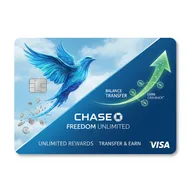
Chase Freedom Unlimited®
Chase Freedom Unlimited combines balance transfer capability with strong ongoing rewards. While the 15-month intro period is shorter than leaders, you'll continue earning valuable cash back after paying off your transferred balance.
Pros
- ✓15 months 0% APR on balance transfers and purchases
- ✓Earn 1.5% cash back on all purchases
- ✓3% back on dining and drugstores
- ✓5% on Chase Travel bookings
- ✓Easy $200 welcome bonus
Cons
- ✗Shorter 15-month intro period
- ✗5% balance transfer fee
- ✗Foreign transaction fee
Blue Cash Everyday® Card
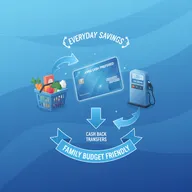
Blue Cash Everyday is ideal if you're transferring debt while maintaining high grocery spending. The 3% grocery rewards help offset interest savings, and Amex purchase protections add extra value.
Pros
- ✓15 months 0% APR on balance transfers and purchases
- ✓3% cash back at U.S. supermarkets (up to $6k/year)
- ✓2% at U.S. gas stations and select stores
- ✓No annual fee
- ✓$200 welcome bonus
Cons
- ✗Amex acceptance limitations
- ✗Grocery rewards capped at $6,000/year
- ✗Foreign transaction fee

Wells Fargo Active Cash® Card
Wells Fargo Active Cash offers a straightforward 2% flat rate on everything, making rewards simple while you pay down transferred debt. The included cell phone protection is a valuable bonus most balance transfer cards lack.
Pros
- ✓15 months 0% APR on balance transfers and purchases
- ✓Simple 2% cash back on all purchases
- ✓No annual fee
- ✓Cell phone protection up to $600
- ✓Easy $200 welcome bonus
Cons
- ✗Foreign transaction fee
- ✗15-month period shorter than top cards
- ✗No bonus categories

Capital One Quicksilver®
Capital One Quicksilver keeps things simple with straightforward 1.5% cash back on everything and no foreign fees. While not the longest intro period, it's a solid option for those wanting uncomplicated balance transfer terms and rewards.
Pros
- ✓15 months 0% APR on balance transfers and purchases
- ✓Flat 1.5% cash back on all purchases
- ✓No foreign transaction fees
- ✓$200 welcome bonus
- ✓Simple, easy-to-understand rewards
Cons
- ✗Shorter intro period
- ✗3% balance transfer fee
- ✗Lower rewards rate than competitors
How We Evaluate Balance Transfer Cards

Our expert team uses a comprehensive methodology to evaluate balance transfer credit cards. Here’s what we analyze:
Transfer Terms and Costs
We calculate the true cost of transferring balances:
- Intro APR period: How long you have at 0% (12-24 months)
- Transfer fees: Typical range of 3-5% of transfer amount
- Transfer window: Time allowed to complete transfers (30-120 days)
- Transfer limits: Maximum amount you can transfer
- Combined value: Total savings considering fee and intro length
Regular APR
We evaluate what happens after the intro period:
- Post-intro variable APR ranges
- How APR is determined based on creditworthiness
- Penalty APR policies for late payments
- Whether the regular APR is competitive
Rewards and Benefits
We assess additional value beyond balance transfers:
- Cash back or points earning potential
- Welcome bonuses and spending requirements
- Purchase protections and insurance benefits
- Annual fees vs. value received
User Experience
We consider practical factors:
- Application and approval process
- Transfer request procedures
- Mobile app functionality
- Customer service quality
Frequently Asked Questions
How do balance transfers work?
After approval for a balance transfer card, you provide details of your existing card debt. The new issuer pays off those balances, transferring the debt to your new card. You’ll typically have 30-120 days from account opening to request transfers and qualify for the 0% intro rate.
What is a balance transfer fee?
Most cards charge a fee of 3-5% of the transferred amount. For example, transferring $10,000 with a 3% fee costs $300. While this seems expensive, you’ll still save substantially compared to paying 20%+ interest on your original card.
Is a balance transfer worth it?
Yes, if you have significant high-interest debt. For example, a $5,000 balance at 20% APR costs about $1,000 in interest annually. Transferring to a 0% card with a 3% fee ($150) saves $850—even more if you pay off the balance during the intro period.
Can I transfer a balance from any card?
You can transfer balances from most credit cards, store cards, and even some personal loans. However, you typically cannot transfer balances between cards from the same issuer (e.g., you can’t transfer a Chase balance to another Chase card).
What credit score do I need?
Most balance transfer cards require good to excellent credit, typically a FICO score of 670 or higher. Having a strong credit history and income helps, as issuers want assurance you’ll pay off the transferred debt.
Should I close my old card after transferring?
Generally, no. Closing a credit card reduces your available credit and can hurt your credit utilization ratio. Keep the old card open with a zero balance, which helps your credit score. Just avoid putting new charges on it.
What happens if I don’t pay off the balance in time?
Any remaining balance after the intro period ends will accrue interest at the card’s regular APR, typically 15-29%. Create a payment plan to eliminate the debt before the intro period expires to maximize savings.