Article
Best AI Courses in 2026
Master artificial intelligence and launch your AI career. We reviewed the top AI courses and certifications to help you gain in-demand skills from leading institutions.
Artificial intelligence is transforming every industry, with the global AI market projected to grow at 37.3% CAGR through 2030. Whether you’re a beginner exploring AI concepts or a professional seeking advanced certifications, the right course can accelerate your career.
Our team evaluated leading AI courses from top universities and platforms, assessing curriculum quality, hands-on learning, instructor expertise, and career outcomes. Here are the best AI courses for every skill level and career goal.
Quick Comparison
| Course | Best For | Price | Rating |
|---|---|---|---|
| 1. Andrew Ng's AI For Everyone (Coursera) | Best for Beginners | Free (audit mode) | ★4.9/5 |
| 2. IBM AI Engineering Professional Certificate | Best Professional Certificate | $39-49/month | ★4.8/5 |
| 3. DeepLearning.AI TensorFlow Developer | Best for Deep Learning | $39-99/month | ★4.8/5 |
| 4. Udacity AI Programming with Python Nanodegree | Best Hands-On Program | $399/month | ★4.7/5 |
| 5. Johns Hopkins AI Business Strategy | Best for Business Leaders | $2,600 | ★4.7/5 |
| 6. Google AI Essentials | Best Free Course | Free | ★4.6/5 |
| 7. MIT Professional Education AI Programs | Best University Program | $2,500-4,700/course | ★4.7/5 |
| 8. NVIDIA Deep Learning Institute | Best for GPU/Hardware AI | $90-250/course | ★4.6/5 |
| 9. Kellogg Executive Education AI Program | Best for Executives | $2,600-2,900 | ★4.5/5 |
| 10. Udemy AI Courses Bundle | Best Budget Option | $9.90-12.99/course | ★4.4/5 |
Our Top Picks in Detail

Andrew Ng's AI For Everyone (Coursera)
Andrew Ng's AI For Everyone remains the most accessible introduction to AI, specifically designed for non-technical professionals. The course provides a holistic view of AI's capabilities and future prospects without requiring any mathematical or programming background.
Pros
- ✓Perfect for non-technical professionals
- ✓No math or programming required
- ✓Taught by AI pioneer Andrew Ng
- ✓Free to audit (certificate requires payment)
- ✓Excellent introduction to AI concepts and strategy
Cons
- ✗Lacks hands-on technical skills
- ✗Certificate requires Coursera Plus subscription
- ✗No coding or implementation training
IBM AI Engineering Professional Certificate
IBM's AI Engineering certificate provides comprehensive training in deep learning and neural networks using industry-standard tools. The program emphasizes applied learning with IBM Watson and includes hands-on projects that build job-ready skills for AI engineering roles.
Pros
- ✓Industry-recognized IBM certification
- ✓Hands-on experience with IBM Watson
- ✓Covers multiple frameworks (TensorFlow, PyTorch, Keras)
- ✓Real-world projects with Jupyter Notebooks
- ✓Strong focus on practical application
Cons
- ✗Requires Python programming knowledge
- ✗Subscription-based pricing ($39-49/month)
- ✗Takes 3-6 months to complete

DeepLearning.AI TensorFlow Developer
DeepLearning.AI's TensorFlow Developer certificate offers world-class instruction in deep learning frameworks. The program covers computer vision, NLP, and time series forecasting with practical TensorFlow implementation, preparing you for advanced AI development roles.
Pros
- ✓Taught by Andrew Ng and deeplearning.ai experts
- ✓Many courses free on new learning platform
- ✓Comprehensive TensorFlow training
- ✓Industry-standard deep learning skills
- ✓Excellent for career advancement
Cons
- ✗Requires machine learning foundation
- ✗Coursera subscription needed for certificate
- ✗Challenging for absolute beginners

Udacity AI Programming with Python Nanodegree
Udacity's AI Programming Nanodegree provides structured, mentor-supported training with emphasis on real-world applications. The program covers essential AI topics from Python fundamentals to neural networks with PyTorch, including career support and project reviews.
Pros
- ✓Structured mentor-supported program
- ✓Real-world AI project portfolio
- ✓Covers essential Python libraries (NumPy, pandas)
- ✓Career services and code reviews included
- ✓Focus on practical, industry-ready skills
Cons
- ✗Higher price point ($399/month)
- ✗Requires time commitment (10 hours/week)
- ✗Some coding experience helpful

Johns Hopkins AI Business Strategy
Johns Hopkins' AI Business Strategy program combines theoretical knowledge with practical business applications, led by distinguished faculty and industry mentors from leading companies. Perfect for executives and business leaders implementing AI strategies.
Pros
- ✓Taught by distinguished Johns Hopkins faculty
- ✓Industry mentors from Google, Samsung, Equifax
- ✓Focus on AI business strategy and ROI
- ✓No technical expertise required
- ✓Payment plans and financial aid available
Cons
- ✗Expensive at $2,600
- ✗No hands-on technical training
- ✗Requires significant time commitment

Google AI Essentials
Google's AI Essentials provides free, expert-led training in generative AI and practical applications. The workshops offer flexible, hands-on learning designed by Google experts, making it perfect for beginners exploring AI without financial commitment.
Pros
- ✓Completely free from Google
- ✓Taught by Google experts
- ✓Practical, hands-on training
- ✓Includes Gemini (Google's AI) training
- ✓Flexible, self-paced learning
Cons
- ✗Less comprehensive than paid programs
- ✗Limited career support
- ✗No in-depth technical training

MIT Professional Education AI Programs
MIT's Professional Education AI programs offer world-class instruction in AI foundations and advanced techniques. The intensive courses provide prestigious certification and access to cutting-edge research, ideal for professionals seeking top-tier credentials.
Pros
- ✓Prestigious MIT certification
- ✓Cutting-edge AI research and methods
- ✓Taught by MIT faculty
- ✓Intensive, focused learning format
- ✓Strong networking opportunities
Cons
- ✗Very expensive ($2,500-4,700 per course)
- ✗Requires multiple courses for certificate
- ✗Intensive time commitment

NVIDIA Deep Learning Institute
NVIDIA's Deep Learning Institute provides specialized training in GPU-accelerated AI, covering autonomous vehicles, robotics, and edge computing. The courses offer real-time, hardware-based learning environments ideal for performance-critical applications.
Pros
- ✓Real-time GPU-based learning environments
- ✓Hardware-specific optimization training
- ✓Valuable for performance-critical applications
- ✓Discounts for institutions and enterprise
- ✓Industry-leading GPU expertise
Cons
- ✗Requires technical background
- ✗Focused on NVIDIA hardware ecosystem
- ✗Not suitable for beginners
Kellogg Executive Education AI Program
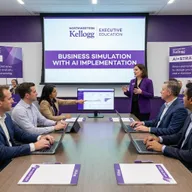
Kellogg's Executive Education AI program delivers practical AI business strategy through simulations, case studies, and a capstone project. The eight-week online program requires no technical background and focuses on strategic AI implementation.
Pros
- ✓Northwestern Kellogg brand recognition
- ✓Business simulations and real case studies
- ✓Weekly assignments and capstone project
- ✓No technical expertise needed
- ✓Strong focus on practical implementation
Cons
- ✗Expensive ($2,600-2,900)
- ✗No technical skills training
- ✗Requires significant weekly time commitment
Udemy AI Courses Bundle
Udemy offers budget-friendly AI courses covering everything from Python basics to advanced LangChain applications. While quality varies by instructor, the platform provides accessible entry to AI learning with lifetime access and money-back guarantees.
Pros
- ✓Extremely affordable ($9.90-12.99 per course)
- ✓Lifetime access to purchased courses
- ✓30-day money-back guarantee
- ✓Wide variety of topics and levels
- ✓Learn at your own pace
Cons
- ✗Quality varies significantly by instructor
- ✗No mentorship or career support
- ✗Certificates less recognized than university programs
How We Evaluate AI Courses

Our evaluation methodology assesses both educational quality and career impact:
Curriculum Quality
We examine course content and structure:
- Topic coverage: Breadth and depth of AI concepts
- Current relevance: Updated for 2026 AI trends
- Learning progression: Logical skill building
- Practical application: Real-world projects and labs
Instructor Expertise
We assess teaching quality:
- Industry experience: Practical AI implementation
- Academic credentials: Research and publications
- Teaching effectiveness: Student ratings and feedback
- Support availability: Q&A and mentorship
Hands-On Learning
We evaluate practical training:
- Project quality: Real-world applications
- Tool proficiency: Industry-standard frameworks
- Portfolio building: Demonstrable skills
- Lab environments: Access to compute resources
Career Outcomes
We track professional impact:
- Job placement rates: Employment after completion
- Salary increases: Compensation improvements
- Career advancement: Promotions and role changes
- Networking opportunities: Industry connections
Choosing the Right AI Course
For Complete Beginners
Andrew Ng’s AI For Everyone or Google AI Essentials:
- No technical background required
- Free or low-cost options
- Understand AI concepts and terminology
- Decide if technical AI training is right for you
For Career Changers
IBM AI Engineering or Udacity AI Nanodegree:
- Structured learning paths with support
- Hands-on projects for portfolio
- Industry-recognized certificates
- Career services and mentorship
For Technical Professionals
DeepLearning.AI or NVIDIA DLI:
- Advanced deep learning techniques
- Framework-specific training (TensorFlow, PyTorch)
- Specialized applications (NLP, computer vision)
- Performance optimization skills
For Business Leaders
Johns Hopkins or Kellogg Executive Education:
- AI strategy and business applications
- No technical background needed
- ROI and implementation focus
- Executive-level networking
Key Features to Consider
Essential Features
- Instructor credentials: Expert instructors with AI experience
- Hands-on projects: Practical application of concepts
- Certificate value: Industry recognition of credential
- Up-to-date content: Current AI technologies and trends
Advanced Features
- Mentorship: One-on-one guidance and code reviews
- Career support: Job placement assistance
- Community access: Peer learning and networking
- Specializations: Focus areas like NLP or computer vision
Premium Features
- University credentials: Degrees from top institutions
- Industry partnerships: Company connections and internships
- Compute resources: GPU access for training models
- Lifetime access: Ongoing learning and updates
Frequently Asked Questions
Do I need a math background for AI courses?
It depends on the course level. Beginner courses like AI For Everyone require no math. Intermediate courses need basic algebra and statistics. Advanced deep learning courses require calculus, linear algebra, and probability. Check prerequisites before enrolling.
Are AI certifications worth it?
Yes, especially from recognized institutions. IBM, Google, and university certificates demonstrate commitment and skills to employers. The AI market is growing 37.3% annually, creating strong demand for certified professionals. Expect average salary increases of $21,000+ after certification.
How long does it take to learn AI?
Beginner courses take 4-8 weeks. Professional certificates require 3-6 months at 10 hours/week. University programs span 8-10 weeks intensively. Deep expertise takes 1-2 years of focused learning and practical application.
Can I learn AI for free?
Yes. Google AI Essentials is completely free. Coursera allows auditing courses like AI For Everyone for free (certificate requires payment). DeepLearning.AI offers many courses free on their platform. However, paid programs often provide better structure, support, and credentials.
What programming language should I learn for AI?
Python is the dominant language for AI and machine learning, used in 90%+ of courses and industry applications. Most courses teach Python alongside AI concepts. Some specialized courses cover R, Java, or C++ for specific applications.
Are online AI courses as good as university degrees?
Professional certificates from IBM, Google, and DeepLearning.AI provide practical skills employers value. University programs offer deeper theoretical knowledge and research opportunities. For most professionals, online certificates plus practical projects are sufficient for career entry and advancement.
What’s the best AI course for 2026?
For beginners: Andrew Ng’s AI For Everyone (free). For professionals: IBM AI Engineering Professional Certificate ($39-49/month). For executives: Johns Hopkins AI Business Strategy ($2,600). For budget learners: Udemy AI courses ($9.90-12.99 each).
Do AI courses help with job placement?
Many do. Udacity Nanodegrees include career services and code reviews. IBM certificates are industry-recognized. University programs offer strong networking. However, success requires building a portfolio of projects and demonstrating practical skills beyond just completing courses.